Why Study Classics? Part One
Updated: Sep 1

Fred Dagg was the icon of my youth fifty years ago. The country bumpkin is a familiar caricature in urban societies. He is a butt for lampoons and jokes. The unique difference in New Zealand was he became a venerated sage figure. He appeared in a television skit with the Prime Minister. Thus he demonstrated New Zealand intellectually was the stupidest country in the world. But not technically. The New Zealanders' unique mastery over technology kept New Zealand as an advanced first world country. But since the New Zealand political earthquake in 1984, the chickens have come home to roost on Dagg's head.
In my Classical Greek history class in 1974 at Victoria University, the Junior Lecturer predicted. "One day, we will all press a button that will determine the Government and the laws of the land." In my Ancient Roman class at Auckland University in 1975, the Classics Professor said, "Economists always give splendid justifications for Government deficit spending. But all through history, deficit spending ends in public bankruptcy and ruin." Both predictions by the most ignored and mocked people in New Zealand, Classicists, will turn out exactly right. To this day, I cannot read or hear the word, Classics without wincing. Such is my legacy in New Zealand. Should I ever make a riposte to a sneering public comment about my kind of University degree, the media will disgustingly not publish it.

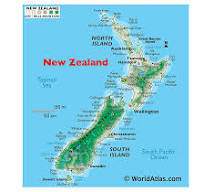

Ancient Greece reached her apotheosis in Aristotle. New Zealand reached her apotheosis in Dagg.


This book will focus on Athens and its region Attica. It is in Athens that the first direct ballot rule by male free citizens was implemented. It was termed in Athens in the fifth century B.C. Democracy. People's Government. All Governments in the world unless they are absolute Monarchies claim to be Democracies. The Westminster Parliamentary forms of Government have fooled their peoples by calling themselves Democracies despite that word rarely appearing in their legal codes. Likewise the self proclaimed Republics such as the United States claim to be Democracies but real power resides in their elected politicians and their State institutions. Republics were invented by the Romans Res Publica, the public thing. That is Roman history and belongs to another blog. In approximate 510 B.C, in Athens and in Rome, tyrannies were overthrown in Athens by Democracy the people, in Rome by the public thing, the Brutus family and the Senate.

Attica, as is all of central and southern Greece, is made up of localities large and small divided by mountains, hills and rivers. In such a land, centralised control was rarely implemented and never lasted long even under the Roman peace. Local identities and cultures flourished instead. Each locality had its own local God and shrines. Likewise New Zealand. The Maori tribes established their identities in their whanau family and their hapu, their resource areas. Later comers to New Zealand established their identities in their localities of towns and rural districts. Life in both Ancient Greece and New Zealand was a constant struggle for survival in unforgiving lands. The gold mines gave the South Island of New Zealand a reprieve from poverty until they ran out. The Ancient Greeks had to sail the Argonaut with Captain Jason to find in Georgia the golden fleece.
War was a constant experience in Ancient Greece as their cities, poleis fought for resources and excellence arete. As it was for the Maori for resources, excellence mana and vengeance utu. In every year, Greek and Maori war parties ventured out to engage in hand to hand combat. With the coming of the British and their imposition of Crown rule, wars ended in New Zealand. But the war spirit as expressed in politics and sport has endured. The Maori war dance haka precedes every sport engagement and in 2025 in a contentious debate in Parliament.
In 2008, I flew over the Dardanelles Straits on my way to Istanbul. I looked down from my seat. I felt my heart leap with joy. There was the ancient Hellespont. To my left, there was the Aegean sea, to my right, Anatolia. On a shore of Anatolia (Turkiye) was the battleground of the Trojan war and the Gallipoli campaign. In the legendary Trojan war, the ancient Greeks discovered their national culture. In the Gallipoli campaign, the Kiwis discovered their national culture. From the Trojan war, there came Homer's Iliad, from the Gallipoli campaign, there came the epitaph to the buried dead by Kemal Ataturk. Homer wrote his epic in homage to the Greek dead invaders. Kemal wrote his epitaph to the Gallipoli dead invaders. Homer wrote his first lines in Homeric Greek. "Rage: Sing, Goddess, Achilles' rage, Black and murderous, that cost the Greeks Incalculable pain, pitched countless souls Of heroes into Hade's dark, And left their bodies to rot as feast for dogs and birds." Ataturk wrote in Turkish. "Those heroes that shed their blood and lost their lives. You are now living in the soil of a friendly country." A Kiwi radio broadcaster burst into tears when he read the epitaph. Kemal may not have written it being a soldier and statesman, not a poet. Homer may not have written it being maybe a legend. I saw a Gallipoli cartoon. A soldier declaims in the Gallipoli trenches, "Gallipoli is the birth place of the New Zealand nation." A fellow soldier in his bed mutters. "Someone put a bullet in him.."
The naming of the Hellespont is derived from the sea of Helle. The mythological Princess Helle drowned while fleeing on a golden ram. The naming of New Zealanders as Kiwis is derived from the boot polish brand of New Zealand soldiers in the Gallipoli campaign. The Ancient Greeks being always poetic. A word derived from doing. The Kiwis being always prosaic and practical. It took the Greeks ten years to conquer Troy by sword in the wooden horse ruse. It took the Kiwis one campaign season to depart proud but defeated by Ottoman courage and cannon
When I landed in Istanbul, I longed to go west to Athens. But there was no employment in the European Union for me as a Kiwi English teacher. Instead I went east into the poisoned land of Iraq. All my life I have gone in the opposite direction from where I should go.
The Earliest Humans In Attica
Discoveries of Upper palaeolithic tools conclude that homo sapiens first inhabited Attica between the 11th and 7th millennia B.C. Hominid tools around 700,000 years ago have been found in southern Greece. It seems these hominids never ventured to Attica. Attica is uninvitingly hilly for land foragers. Permanent organised settlements began to appear in Attica during the Neolithic period around 6000 B.C. It is unclear if the Palaeolithics had a genius inventor who taught them neolithic tool making and to organise into village settlements. Or they were invaded and genocided by Neolithic invaders. Prehistoric history is merciless to its inferiors. Greek mythology is full of images and stories of Satyrs. They were depicted as part - man human torso and part goat lower body. They were noted for their wine, music, revelry and pursuit of rape. They inhabited remote locales, such as woodlands, mountains, and pastures. In the male society of Ancient Greece, they were considered harmless and amusing. Satyr plays were written about them from which the Latin word satire may have been partly derived. Are the satyrs the historical memory of the Palaeolithics? The great God Pan, leader of the satyrs, shared their goat-like features and connection to primordial forests and the earliest festivals. Pan is the original monotheistic all spirit of the universe.
Satyrs in Pauline Baines' Narnia images

What was he doing the great god Pan
Down in the reeds by the river?
Spreading ruin and scattering ban,
Splashing and paddling with hoofs of a goat,
and breaking the golden lilies afloat
With the dragon-fly on the river.
By Elizabeth Browning
Evidence for pre Maori settlement
Maori legends have brought about much alternate scholarly speculation the Patupaiarehe were of Celtic descent who arrived in New Zealand 3000 years ago. If one tries to examine this more realistically when did Celtic populations acquire maritime skills that might in a pre Abel Tasman era have got them to New Zealand? I would suggest via the Irish currachin in the sixth century A.D. The curragh was made of a wicker-work frame covered with hides which were stitched together with throngs. By the sixth century, Ireland was converted to Christianity and there were thriving monasteries and scripture study. Saint Brendan in the early sixth century is legendary for his Irish voyage with fellow monks to the Isle of the Blessed in a currach. In recent history, theories arose that these Irish monks were the first Europeans to reach the Americas. An adventurer Tim Severin in the 1970s demonstrated that it is possible for a currah to reach North America from Ireland.
"Could a sixth century currach sail from Ireland in the sixth century to New Zealand? If its seafarers were determined, skilled and lucky enough over a period of years, I suppose they might. In 2013, an Irish couple completed a 15,000 miles sailing expedition from New Zealand to Ireland in a five foot cruising yacht.
"What reason would motivate a curragh voyage to New Zealand in the sixth century? To take part in a sea voyage without hope of return. Did something of an environmental nature happen in that century for such a drastic undertaking and who might have done so? In 2018, a medieval scholar Michael M McCormick nominated 536 as “the worst year to be alive” because of the extreme weather events caused by a volcanic eruption in Iceland early in the year, causing, average temperatures in Europe and China to decline and resulting in crop failures and famine for well over a year. This was the coldest decade in the past 2300 years. The Chronicle of Ireland, ecclesiastical records of Irish events from 432-911 AD, record “a failure of bread from the years 536-539”. The Icelandic volcanic eruption spread ash across the Northern Hemisphere, blocking out the sunlight for over a year. ‘For the sun gave forth its light without brightness, like the moon, during the whole year,” wrote the contemporary Byzantine historian Procopius. The world endured a decade of famine and the Plague of Justinian, the Byzantine Emperor. In Ireland without bread, where was there to go except as in Ireland thirteen hundred years later, out to the ocean? Did a flotilla of curragh led by a millenarian prophet embark to find the Isle of the Blessed? Saint Brendan was in his eighties when he sailed to the Isle. That was the 560s. However Saint Brendan’s voyage was not the first voyage to the Isle of the Bless. Another Saint had done the voyage and told him about it. Saint Brendan’s curragh was in the tradition filled with eighteen monks. So half a dozen curraghs would make up about over a hundred men, women and children refugees. The curragh seafarers were simple fishermen. Only their prophet might have been literate in Latin. His followers knew weaving for their fish netting and their boats. Some were skilled in metal work for their tools. Metal weapons they did not know, having always relied on their Irish Lords and Abbots to protect them. But they were well versed in sailing, fishing and singing Christian psalms in Gaelic. They sing them accompanied with the Irish bagpipes.
"In the original tenth century manuscript of the Voyage of Saint Brendan, it is recorded thus.” Brendan and his companions, using iron implements prepared a light vessel, with wicker sides and ribs such as is usually made in that country, and covered it with cowhide, tanned in oak bark, tarring the joins hereof, and put on board provisions for forty days, with butter enough to dress hides for covering the boat and all utensils need for the use of the crew.” This report does not mention a sail. Later the report mentions that with breeze a sail was employed. Otherwise under the commands of their Saint, the monks heaved with the oars.
"They sailed looking for the Isle of the Blessed. But every land they encountered was occupied and the sun remained gloomy. Darkness still settled over the world as at the beginning of Genesis. It seemed this was end times as prophesied in the Book of Revelation. They sailed around Cape Horn. As they sailed out into the Pacific, they took with them sturdy roots of the kumara and rats. They learnt in their longest voyages to catch rainwater, and drink their urine, and eat fish, rats and semen as fresh food. Then when they were in near complete despair, and the winds were driving them back down into a chilly environment, they sighted a bountiful land empty of people and even of large animals. At the same time as they landed, the sun began to regain its lustre and light returned to the earth. Their prophet announced a miracle. They embarked and sang their Christian psalms to the accompaniment of their pipes. Here, announced their prophet would be their Canaan, their land not of milk and honey but of teeming bird life, rich vegetation and its seas filled with marine life. They built their huts and their stockades. Their smiths fashioned out of fire their tools. Weapons they did not make. There seemed to be no human enemies and their prophet had taught them to live in peace as like their Irish Saints. They took their currachin out to fish in the sea and the rivers and streams. They were master fishermen. The birds were so plentiful and tame they could kill with stones, wooden implements and traps. They planted their kumara and learnt to eat the edible vegetation. They found out many plump birds could not fly. One flightless bird was larger than a man. As pilgrims, they had traded with the peoples they had encountered but had never fought with, enslaved nor raped them. When they were threatened, they promptly took to their boats and the ocean. Their encountered peoples they traded with their fish and their kumara roots. But their metal implements they never traded. Their prophet made them take a vow to always hide them from the native peoples and to never let them see their manufacturing. If the natives acquired these implements and learnt how to manufacture them, they would be exterminated, said their prophet. They also vowed not to teach the natives how to weave their boats and nets. This skill would take away their fishing resource and trade. Each evening, they gathered together and sang their psalms to the accompaniment of their pipes. The native peoples learnt how to cultivate the newcomers’ kumara and preserved legends of fairy white people who arrived in peace, and spoke a strange language in a hissing sound. That sibilant sound they had only heard before from the reptiles.
"Generations passed in their new settled islands that were empty of any other people. When their populations grew beyond their resources, groups departed to the next fertile land. Their prophet died. As only he was literate, his bible was neglected and lost in the bush. Gradually over the centuries, Christianity was lost except for their psalms still sung in their Gaelic. Their Gaelic became more primitive and most of the meanings of their psalms were lost. Eventually their psalms only sang of the sky and earth, and life and death. They carved abstract images of flora and fauna, and non tattooed people."
a

Mysterious reliefs in New Zealand
The reliefs above do look like leprechauns.

The Pelasgians

Arcadia is a mountainous land locked region in the heart of the Peloponnese in southern Greece. It is unique in Greek history as a secluded refuge where ancient traditions and dialects survived for millennia.
The Arcadians considered themselves the most ancient people in Greece. They claimed to be Proselenoi (pre-lunar) -existing before the moon was created. Their Greek neighbours identified them with the Pelasgians, the indigenous people of Greece who predated the Greeks.
Arcadia is named after Arcas, the son of Zeus and the nymph Callisto. It was the mythological home of Pan, the God of nature and shepherds.
Due to its isolation, Arcadia was not conquered by the Dorians during their migration (c. 1100-1000 B.C. ) This allowed the ancient Arcado-Cypriot dialect to survive long after it disappeared elsewhere in Greece.
Arcadia was a mythical pastoral paradise, symbolising harmony with nature, untouched by urban life, and a sanctuary for the Gods.
Arcadia has become a poetic idyllic in Western culture. That started in Classical Greece as it became more urban and sophisticated. From the third century B.C., poets began idealising Arcadia's simple, pastoral life. Greek and later Latin poets transformed Arcadia into a literary ideal. It became a setting for pastoral poetry- shepherds, flutes, love songs, and idyllic landscapes. From Virgil's Eclogues, Arcadia is a universal symbol of rustic innocence and natural beauty.
In the Renaissance Revival, Arcadia became a major theme in European art and literature, restoring its image as a pastoral utopia.
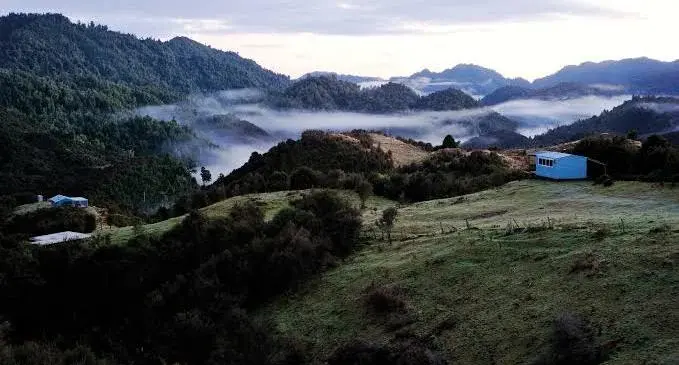
Tuhoe ( Ngai Tuhoe) is a Maori tribe from the rugged, forested Te Urewera region in New Zealand's North Island. They are known as "Children of the Mist" for their deep connection to the land and strong independence. Like the Arcadians, their history is marked by resistance and self-governance. The Tuhoe have fought many battles with the British Crown and the New Zealand Government for their independence. Their last resistance was in 2007. Armed police raided Te Urewera amid claims that Tuhoe had run guerrilla training-camps there. This claim was debunked by a Maori politician who said, no one there gets up until 10 A.M.
The Bronze Age
The earliest bronze artefacts in Greece appear at the very beginning of the Early Bronze Age, around 3300–3000 BC, based on archaeological evidence from the Cyclades, Crete, and the mainland.
The Proto Greeks
The Proto-Greeks probably arrived at the area now called Greece, in the southern tip of the Balkan peninsula, at the end of the 3rd millennium BC between 2200 and 1900 BC. The sequence of migrations into the Greek mainland during the 2nd millennium BC has to be reconstructed on the basis of the ancient Greek dialects, as they presented themselves centuries later and are therefore subject to some uncertainties.
There were at least two migrations, the first being the Achaeans, and Ionians which resulted in Mycenaean Greece by the 16th century BC, and the second, the Dorian invasion, around the 11th century BC, displacing the Arcadocypriot dialects, which descended from the Mycenaean period. Both migrations occur at incisive periods, the Mycenaean at the transition to the Late Bronze Age and the Doric at the Bronze Age collapse.
Mycenaean Greece was the last phase of the Bronze Age in ancient Greece, spanning the period from approximately 1750 to 1050 BC. It represents the first advanced and distinctively Greek civilisation in with its palatial states, urban organisation, works of art, and writing system.
The Homeric Epics. History or Legend.

Homer
Homeric epics are the two ancient Greek epic poems in the eighth century B.C. traditionally attributed to Homer: the Iliad and the Odyssey. They sit at the foundation of Western literature and continue to shape storytelling, heroism, and cultural imagination.
The Iliad: An epic set during the Trojan War, focusing on the wrath of Achilles and the tragic cost of honour, pride, and conflict.
The Odyssey: A wandering, imaginative tale following Odysseus’ long journey home after the war, exploring identity, cunning, hospitality, and the struggle to return.
They shaped ancient Greek identity and became core texts for education, rhetoric, and philosophy.
Epic style: Their formulaic language, extended similes, and oral-poetic structure reveal how ancient bards composed and performed long narratives.
Enduring themes: Heroism, fate, mortality, loyalty, and the tension between human agency and divine intervention still resonate.
Key Features of Homeric Poetry
Dactylic hexameter: A rhythmic structure that supported oral performance.
Formulaic expressions: Repeated phrases like “rosy‑fingered Dawn” or “swift‑footed Achilles” that aided memorisation.
Epic similes: Long, vivid comparisons that slow the narrative and deepen emotion.
Interplay of gods and mortals: Divine characters shape human destinies while revealing human flaws in cosmic form.
The Search For Troy
Ancient writers from Herodotus in the early fifth century B.C. treated the Troad (the region reputedly around Troy) on a shore of the Hellespont as a tourist attraction. Pilgrims, poets, and generals traveled there to honour the Homeric heroes . Its reputed location is part of Greek cultural memory.
Alexander’s visit to Troy
When Alexander crossed into Asia in 334 BC, he made a deliberate stop at the reputed ruins of Troy. Ancient sources describe this moment vividly: He crossed the Hellespont and entered the Troad. He visited the ruins believed to be Troy, convinced he stood where the heroes fought. He offered sacrifices to Achilles and other Homeric heroes He used the visit to join his Asian campaign to the epic tradition, creating himself as a new Achilles. Over a century earlier, the Athenian general Pericles had compared himself favourably to the high King Agamemnon. He boasted he conquered Samos in nine months, while it took the Homeric heroes ten years to conquer Troy. Pericles after he was accused of losing Athenian soldiers in a war against Greek allies by the elderly sister of his former chief political rival, declared in his 431 B.C. funeral oration to the fallen Athenian soldiers "The greatest glory for a woman is to be least talked about among men, whether for good or for bad." This demonstrated Greek women had no political rights. But they weren't door mats nor bed mattresses either.
The first person to excavate the site now identified as ancient Troy was Heinrich Schliemann, a German archaeologist and businessman. His initial excavation campaign began in 1870, marking the first major archaeological work at the site.
Heinrich Schliemann famously declared:
“I have gazed upon the face of Agamemnon.”

Schliemann was driven by a desire to match archaeology with Homeric epic. When he found something impressive, he often linked it to the Iliad — sometimes too eagerly. The mask was simply the most spectacular of several royal graves. It belonged to a powerful Mycenaean ruler, but not one we can name. It’s still one of the most iconic artefacts from Bronze Age Greece.
Where Was Troy?
Where Troy Once Stood is a book by Iman Wilkens that argues that the city of Troy was located in England and the Trojan War was fought between Celtic tribes. Wilkens claims that Homer's Iliad and Odyssey, thought products of ancient Greek culture, is originally orally transmitted epic poems from Western Europe.
Wilkens argues that Troy was located in England in Cambridgeshire. Celts living there were attacked around 1200 B.C. by fellow Celts from Europe to battle over access to the tin mines in Cornwall as tin was an essential element for bronze production.
Wilkens writes that there are similarities between the river names in the Iliad and in England.
Wilkens hypothesises that the Sea People found in the Late Bronze Mediterranean were Celts who settled in Greece and the Aegean Islands as the Achaeans and Pelasgians. They named new cities after the places they had come from and brought the oral poems that created the Iliad and the Odyssey with them from Western Europe. Wilkens writes that, after being orally transmitted for about four centuries, the poems were written down in Greek around 750 B.C.
The Greeks who had forgotten about the origins of the poems, located the Mediterranean's stories, where many Homeric place names were found. But these names weren't known in ancient pre Sea People's records. They were later named from supposed locations in the Homeric poems. The poems' descriptions of towns, islands, sailing directions and distances were not altered to fit the reality of the Mediterranean setting.
The climate described by Homer is cold and stormy: mist and wind often appear, and storms are heavy. The characters are usually covered with thick cloaks and are never described as sweating because of the heat. The Homeric weather conditions are difficult to adapt to the Aegean area, especially considering that the Trojan war is likely set in Summer. This Homeric description fits perfectly the Baltic region.
In the Homeric and Scandinavian poems such as Beowulf, there are parallel features regards traditions, mythology and literature. There are the customs of assembling for a meeting and the magnificent banquets. Aphrodite parallels Freyja, Ares with Thor, Zeus with Wotan.and the Keres who come down on the battle field to take the souls of dead warriors, with the Valkyries.
The Achaeans built 1186 ships for their attack on Troy. They could have traveled the short distance overland far quicker if Troy had been in the Hellespont.
The legendary location for Troy is far too small to accommodate the invading army of about 100, 000 men and the long pursuits in horse-drawn chariots.
The first century A.D. Greek geographer Strabo wrote that ports in the Odyssey should be found in the Atlantic because of the mention of tides that do not exist in the Mediterranean.


The Maori Epics. History or Legend
D.R. Simmonds, in his 1976 book The Great New Zealand Myth, re-examined the commonly understood stories of Maori origins. In turning to Maori tradition he found a treasure-house of fascinating information about what Maori elders believed to be their origins.
"Europeans and some younger Maori were not content to leave the prehistory of New Zealand to await further discoveries. They looked to Maori tradition to explain the who, what and where of ancient times. The European passion for calendar dates for the various events was satisfied by taking the genealogies accompanying the traditions and using these as a basis for obtaining dates.
"The most notable figure in this search was Stephenson Percy Smith, Surveyor General, founder of the Polynesian Society and a considerable Maori scholar. He it was who presented a prehistory for New Zealand based on Maori tradition. In his book published in 1910 usually called Taranaki Coast but also known as History and Traditions of the Maoris of the West Coast of the North Island of New Zealand, Smith 'fixed' the dates of the first explorer Kupe at 925 AD, Toi the early settler at 1150 AD, and the Great Fleet of the Maori at 1350 AD. This prehistoric framework was accepted by such a noted Maori scholar as Sir Peter Buck (Te Rangi Hiroa) and used by historians as an introduction before dealing with the history of New Zealand.
"This framework was not seriously questioned for fifty years - in public at least. Learned Maori elders had their own traditions relating to their own tribes which did not accord with this framework at all.
"It is this traditional prehistory that I set out to examine in my book. A search for the sources of what I now call 'The Great New Zealand Myth' of Kupe, Toi and the Fleet, had surprising results. In this form they did not exist in the old manuscripts nor in the whaikorero of learned men. Bits and pieces there were. Kupe was and is known, in the traditions of the Hokianga, Waikato, East Coast and South Island: but the genealogies given did not tally with those given by S. Percy Smith. The stories given by Smith were a mixture of differing tribal tradition.
"In other words the whole tradition as given by Smith was pakeha, (European) not Maori. Similarly, the story of Toi and Whatonga and the canoe race leading to settlement in New Zealand could not be authenticated except from the one man who gave it to Percy Smith. Learned men of the same tribe make no mention of this story and there are no waiata celebrating their deeds. Tribal origin canoes are well known to the tribes belonging to them: but none of them talk as Smith did of six large sea-going canoes setting out together from Raiatea. The Great New Zealand Myth was just that. And moreover, it was only fifty years old!
A more important task, though, was to find out just what the tribal traditions were as regards their own origin. As I progressed so my respect grew for the learned elders of olden times whose manuscripts and songs I was seeing and for the truly learned men of today, to whom I had the privilege of listening. I found that their knowledge was such that when they said that the Tainui canoe brought karaka trees, or that the Tama Te Kapua of Arawa released saddlebacks when he arrived, they meant what they said. It was not my task to contradict them and say that this was a figurative way of saying something else. No, their words are clear. The Hawaiki or homeland of the Tainui was a place where people had karaka trees and knew their value. Similarly the Hawaiki of Arawa was a place where saddlebacks bred. The Hawaiki of the Takitimu canoe is pretty clearly within New Zealand. It is not unlikely that the last Hawaikis (home lands) of some of the other canoes are there as well.
"Perhaps Muriwhenua of Northland is this last Hawaiki. Maybe: but tribal tradition starts when the tribe becomes a tribe and has chieftainship, mana and land to validate by tradition. Tainui tradition starts when the canoe landed at Kawhia. The genealogies give a cryptic summary of gods and men before that landing: but they are now only a prelude to the main story.
"Tribal traditions are each peculiar to a tribe. As sources of information they can bring up people of the past whom we can meet as the stories are retold or whose thoughts and emotions we can share in their poems five thousand or more of them. The traditions are the stories of a people. From them we can learn so much, provided we greet them sympathetically. The voices of the past can be heard when the Maori version of Grey's Polynesian Mythology is read out loud. The same spoken rhythms can be heard on the marae (Maori meeting centre)." D.R. Simmonds

Polynesian Mythology and Ancient Traditional History of the New Zealand Race as Furnished by Their Priests and Chiefs is an 1855 collection of Māori mythology compiled and translated by Sir George Grey, with significant assistance from Te Rangikāheke. The English edition is a translation of Ko ngā mahinga a ngā tūpuna Māori (The Deeds of the Ancestors), published in 1854
Ngā Mahinga a Ngā Tūpuna (1854) is the Māori‑language version that Grey compiled largely from manuscripts written by Māori experts—especially Te Rangikāheke. Because of this, it occupies a unique and complicated place in the history of Māori literature.
Decades ago, I read in its original version with a crib, Nga Mahinga a Nga Tupuna (The Deeds of the Ancestors). In the eighth century B.C. in Greek legend, two great poets wrote the cosmology and the deeds of the Greek heroes. They were Hesiod, cosmology, Homer, the deeds of the Homeric heroes. According to legend, Hesiod won the first prize in a poetry contest, Homer won second prize. Hesiod was thought to celebrate peace, Homer was thought to celebrate war. Between them, the literary foundations of Greek mythology and Homeric legends were laid.
Hesiod

Hesiod was a poet active around the eighth century B..C era. He is one of the earliest authors in Western literature whose works survive in full. His poetry blends mythology, moral teaching, and everyday rural life, giving us some of the most important early sources on Greek myth and worldview.
His Most Important Work:
Theogony
A genealogy of the gods.
Describes the creation of the cosmos, the rise of Zeus, and the structure of divine power.
The primary sources for Greek mythology.
The Athenian tyrant Pisistratus in the sixth century B.C. standardised the legends of the Trojan war into their final edition. Pisistratus was a prototype of Grey, and the Iliad and the Odyssey were the prototype of Nga Mahinga a Nga Tupuna.
In my reading of Nga Mahinga, I became aware how the mythology of the demigod Maui were south Pacific tales. I recall how Maui as a bird alighted on a tree while the people slept and basked in the tree's shade. Then the mythology turns to the legends of the Maori settlers in New Zealand. The stories become darker and colder. However there are brighter periods. A warrior travels the land to Tairawhiti (land of the rising sun) to find a run away wife. A warrior looks at his image in a drinking pool and decides he is too ugly for his young wife. The maiden Hinemoa floats to Mokoia island on hollow gourds to join her lover in an hilarious scene with her lover's slave. I can imagine that given full play by a Maori orator comedian.
The Homeric poems and Nga Mahinga serve as the foundation legends. The Iliad has its Catalogue of Ships on passage to Troy. Their commanders were the Royal heroes of Greece. Their invasion of Troy gave prime prestige to their cities. There is an ancient legend that Pisistratus inserted lines that include Athens in the Catalogue.. Ajax the hero of Salamis attached his twelve ships to the Athenian contingent.. Pististratus was in a war over ownership of Salamis. The fame of Athens came after the Trojan war. Likewise, the heroes of Nga Mahinga became the ancestral heroes of the Maori tribes.
The retiring Classics Professor of Auckland University in the 2000s said in a media interview.. Only Maori Studies were given a metaphysical status at Auckland University. Far from it for her to set up a rivalry between Classical Studies and Maori Studies. Yet when she read about the Maori Studies' focus on the Maori language, and their pride in their history and culture, she often recognised it in the ancient Greek culture.

White armed, fair haired, gleaming eyes Helen of Troy in Homer's descriptions. This seems to confirm that the Homeric poems originated in Northern Europe and Helen whose "face launched a thousand ships" was a Nordic Princess. However such thoughts are taboo as Neo Nazi.
In debunking the legend of the Great Fleet of the Maori migration to New Zealand, Simmonds leaves a giant lacuna. How did Maori reach New Zealand from the Pacific Islands? He did not try to solve that. Maori had lost the skills of deep sea voyaging when Captain Cook reached New Zealand in 1769. In mainland New Zealand there are no deep sea waka (canoe) artefacts nor legends of long sea voyages. The voyages in Nga Mahinga are not more than a few days. Distant but not nearly so far voyages between the Pacific islands are well documented in oral records and Western scientific evidence. Not so with Maori. As Simmonds showed. Maori tribal history begins with tribal leaders established in their settlements in New Zealand.
There has been much "fringe debate" about how Maori reached New Zealand. I recall a very earnest young Maori museum guide telling me of the racism of white people claiming Maori in a leaky boat drifted to New Zealand in a half starved condition . He pointed out to me a famous painting of such a voyage. He also nonchalantly told me there was a law that forbade doctors to care for Maori patients. When I took him up on this, he brought up something else that to me was completely unrelated. Now that Maori academia has abandoned Western knowledge as irrelevant or racist, there is no hope for a New Zealand national history.
A "fringe theory" is: In the great Chinese voyage explorations in the fifteenth century. Maori were black birded from the islands to mine the South Island sands for gold and jade. There is no real physical evidence or Chinese written records for this. Nor do Maori show Chinese DNA of this era.
My personal surmise is: Island refugee families from wars or natural disasters sailed into the sun rise, and waka by dint of the astronomical and maritime skills of their priests reached New Zealand. They settled on the land in a communist condition. After several generations, rangatira (chiefly classes) arose. Their history in New Zealand began with them. Eighteenth century contacts with Europeans despite strenuous efforts, did not get anything out of them about long distance sea voyages or of island history. In Nga Mahinga, there are many references about the mythological island cultural hero Maui. But there is nothing about Kupe, the legendary Polynesian discoverer of New Zealand. Maori oral history is entirely hierarchical chiefly based. There is no Maori Adam who dug and Eve who spun.
In 2024, a pre European waka was discovered in the Chatham Islands which is five hundred miles east of the lower South Island. That is almost a miraculous find in the physical conditions of the Chathams sea coast.
The Dorian Invasion
The “Dorian invasion” is considered a myth, not an historical event
The traditional story—Dorians sweeping south after the Trojan War and overthrowing Mycenaean kingdoms—is now seen as a later Greek narrative, not a record of real events.
Modern archaeology finds no evidence of a coordinated invasion or a single ethnic group suddenly appearing in the Peloponnese (southern Greece)..
The collapse of Mycenaean civilisation had multiple causes
Mycenaean palaces and settlements were destroyed in the 12th century B.C. but this occurred amid wider upheavals across the Eastern Mediterranean—including the fall of the Hittite Empire and disruptions linked to the “Sea Peoples.”
Population decline, internal instability, climate stress, and shifting trade networks are all considered contributing factors.
Migration did occur—but not necessarily by “Dorians” as described in myth.
These were gradual migrations, not a single invasion.
Linguistic evidence (e.g., the spread of Doric Greek) show new dialect groups emerged in the Early Iron Age, but this does not require a violent conquest.
Archaeologists now view the Dorian invasion model as a 20th‑century construct that tried to force archaeological data into a mythic framework.
There was no single Dorian invasion—only a later myth attached to a real but complex period of migration, cultural change, and systemic collapse in the 12th century BC.
The myth of "the Dorian invasion" became very popular among Europeans in the nineteenth century until the middle twentieth century. It coincided not at all coincidently with the myth of "The great migration of the seven canoes" to New Zealand . Nineteenth century Western science was obsessed with single origins of peoples. The Nordic peoples were unapologetically believed to be the most evolved migrators to warmer climates in the South and displacing in natural law inferior peoples. This myth or at least distorted history was transferred to non European cultures. The Polynesian migrators became The Vikings of the Sunrise to quote the title of a popular book published in 1938 by part Maori Sir Peter Buck.
These origin stories began as justifications for national movements. In New Zealand, by the 1860s, they were used to justify the British settlement of New Zealand. A pillow for the dying Maori race it was unkindly put by a New Zealand statesman.
At the Nuremberg Judgment in 1945, such history was discarded and German leaders were executed for it. The consequence has been, disinterested history in human origins has not been possible until the rise of social media from the 2000s. But social media is Stalinesque dealt with in official history.
So one might surmise. Yes "the Dorian invasion" was not a single homogeneous invasion into Greece. But judging from archaeology, it happened in a migratory desultory way. Indeed as migrations characteristically do.
The “Return of the Heracleidae
This refers to the mythic return of Heracles’ descendants—alongside the Dorians—to reclaim and conquer the Peloponnese (southern Greece) after being exiled. It’s a foundational legend used to justify the Dorian conquest. They divided the Peloponnese into major Dorian kingdoms (e.g., Sparta and Corinth). The story served as an origin myth for Dorian dominance in the region. Ancient historians like Herodotus and Thucydides treated the myth as a real invasion. Thucydides dated it to 80 years after the fall of Troy.
The Thucydides Trap
This term coined at Harvard describes a deadly pattern in history. A rising power threatens to displace a ruling power. It's named after Athenian Thucydides. He wrote that the Peloponnesian war was caused by"the rise of Athens and the fear that this installed in Sparta." War unless it is somehow diverted is inevitable.
Thucydides served as both a historian and a general, fighting in the Peloponnesian War and later being exiled for twent years after a military defeat. This exile gave him the distance and access to both sides that shaped his historical work.

Thucydides (c.460- c.400 B.C.)
Thucydides is considered the father of “scientific history” because he rejected mythological explanations and instead emphasised eyewitness testimony, factual accuracy, and cause‑and‑effect analysis. His work is also foundational to political realism
His only known work History of the Peloponnesian War covers the conflict between Athens and Sparta from 431–411 B.C..
How did Athens rise from villages in Attica to a rising power in Greece and the Mediterranean.
Attica is characterised by a large, fertile plain surrounded by mountains and a long coastline. This brought about political centralisation around the naturally fortified Acropolis hill which became a citadel and a central gathering point. The surrounding mountains gave Athens natural protection. Access to the sea facilitated trade and contact with other regions, making Athens a maritime power.
In New Zealand regions, there remain plenty of signs of former Maori tribal settlements. Maori hill forts lie above coastal resource settlements. But here the comparison with Athens ends. The Maori Atticas developed no further. British settlement, missionary and industrial, swept in a few generations over the New Zealand islands. New Zealand was pushed kicking and screaming from neolithic to nineteenth century civilisation.
However linguistic scholars might note the Maori name for a village, pa has the same p initial sound as polis, the ancient Greek city and politics. In both Greece and New Zealand, human community began with a pop sound.
Initially, Attica consisted of numerous small villages. Each village had its own shrine and cultic god. The conflict between Poseidon (God of he Sea) and Athena (Goddess of Wisdom) is the foundational myth of Athens. The first King of Attica, Cecrops (a half man, half serpent) declared that whichever god bestowed the most useful gift upon the city would be its permanent protector and name sake. Poseidon struck the rock of the Acropolis with his trident. A spring of water instantly welled up. However the water was salty and undrinkable. Athena planted a seed and an olive tree instantly grew up. The olive tree provided food, oil for fuel, and wood. Cecrops judged Athena's gift to be the winner. To appease Poseidon's revenge of droughts, the Athenians later built a temple on the Acropolis. The Erechtheion housed both Athena's olive tree and the marks of Poseidon's trident. Thus Athens would be represented by both land cultivation and naval and water power. This myth told to every Athenian child likely represented a clash between the two dominant villages of Attica. The village shrine of Athena on the coast defeated the village shrine of Poseidon on the acropolis. But in perhaps a historic compromise, the Government of Athens would be for ever on the acropolis. Cecrops was likely a shaman between human and natural world who lived on the Attica plains.
The legendary hero Theseus is traditionally credited with the unity of Attica, the political unification of these villages into a single polis by the 8th century BC. This centralisation allowed for coordinated defence, shared religious practices, and unified economic resources.
Athens’ political structure evolved through stages:
Monarchy: Early rule by kings, typically heads of noble families controlling land and resources.
Oligarchy: Power shifted to councils of wealthy aristocrats to share governance responsibilities.
Tyranny: Individuals promising reforms, fulfilled or not, for the masses, seized power
Democracy (510 B.C.): Following the expulsion of the Athenian tyrant, Athens emerged as a democracy under leaders like Cleisthenes, where male citizens participated in decision-making via the Assembly and Council of 500.
Greek Colonisation
Greek colonisation wasn’t a single event but a centuries‑long movement that reshaped the Mediterranean world and helped spread Greek culture far beyond the Greek mainland. It refers to the establishment of new Greek settlements outside the Greek mainland between about 800 and 500 BC. They were independent city‑states founded by Greeks who left home for economic, political, or social reasons.
Pressures and opportunities pushed Greeks to migrate: Over population in small mountainous homelands. Limited farmland and food shortages. Internal political conflicts. Trade opportunities with non‑Greek peoples. The search for metals, especially in the Black Sea and Italy.
Where they went
Greek settlers spread across three major regions: Southern Italy and Sicily (Magna Graecia). Southern France. Spain. Western Turkiye (Ionia). Aegean Islands.Coastlines of the northern Black Sea region:Ukraine, Russia, Georgia, Bulgaria and Romania. The northern Black Sea region was rich in grain, fish and metal.
How the colonies functioned
Each colony was founded by a mother city (metropolis), which chose a leader. Once established on their new land, the colonies were independent However, they maintained cultural ties—religion, language and festivals with their metropolis.
Greek colonisation had enormous consequences: The spread of the Greek language, art, architecture and religion. The exchange of ideas with Phoenicians, Egyptians, Persians, and others. The expansion of trade networks across the Mediterranean. The access to grain, metals, timber, and luxury goods. The growth of wealthy merchant classes. The rise of new powerful city‑states like Syracuse, and Byzantium. The increased competition and conflict with other powers, especially the Persians and Carthaginians.
Greek colonisation helped create the interconnected Mediterranean world that later allowed classical Greek culture—and eventually Hellenistic culture after Alexander the Great—to flourish.

The Foundation of Syracuse
Syracuse was one of the most powerful and influential Greek cities. It was founded by Corinth in 734 B.C. on the island of Ortygia, and quickly expanded onto the Sicilian mainland. Its strategic location gave it control over trade routes across the central Mediterranean. At its height, it rivaled Athens in size and influence.
Alcaeus (around 620-580 B.C.) the lyric and satiric poet

Alcaeus lived on the island of Lesbos in a period marked by intense political conflict. Born into an aristocratic family in Mytilene, he was deeply involved in factional struggles and spent periods in exile. His poetry reflects this turbulent life with unusual directness.
He was a contemporary of Sappho.
His surviving fragments fall into a few clear thematic groups:
Political poems — sharp, partisan, often attacking rivals or lamenting the instability of the city.
Exile poems — reflections on displacement, loss, and longing for home.
Sympotic songs — drinking songs celebrating camaraderie, wine, and the fleeting pleasures of life.
War and martial imagery — drawing on his aristocratic warrior identity.
Even in fragmentary form, his voice feels bold, personal, and emotionally immediate.
Alcaeus’ reputation in antiquity was immense. His blend of public and private themes helped shape the development of Western lyric poetry.
Although most of his work is lost, the fragments that remain—preserved through quotations, papyri, and later anthologies—continue to be studied for their linguistic richness and historical insight. Modern scholarship often pairs him with Sappho as the two great voices of early Lesbian lyric.
Alcaeus recounts in a poem a battle in which he and his companions were routed. In the chaos, he dropped his shield and fled. This is striking because, in Greek warrior culture, losing your shield was considered deeply shameful—“come back with your shield or on it” was the Spartan cry of their women folk before a battle..
Yet Alcaeus treats it with a kind of wry, almost humorous candour.
A scholarly reconstruction (paraphrased into English) reads :
“In the tumult of battle we were driven back, and my shield—well, it lies somewhere among the enemy’s spears. But what of it? I saved myself. Another shield I can buy just as good.”
Denis Glover (1912-1980)

Denis Glover helped shape the country’s modern literary identity through his poetry, publishing, and cultural leadership.
He became known for his sharp wit, irreverence, and commitment to New Zealand writing.
His work championed local voices, landscapes, and vernacular speech
Some of his most enduring poems include:
The Magpies — famous for the magpie refrain Quardle oodle ardle wardle doodle.
Sings Harry — a sequence about an archetypal rural New Zealander.
Arawata Bill — a long narrative poem about a solitary gold prospector.
His poetry blends humour, melancholy, and a deep affection for ordinary people.
Denis was known as:
a raconteur and wit,
a lover of drink,
and a larger‑than‑life personality whose public image became legendary.
Once I followed horses
And once followed whores,
And marched once with a banner
For some great cause,
sings Harry.
But that was thistledown planted on the wind.
Sings Harry has been put to song cycle and musical instrument thus restoring modern lyric poetry to its foundations.
Sappho
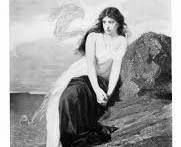
Sappho was a lyric poet, renowned for her intimate, emotionally rich poetry centred on love, longing, and the lives of women. She lived on the island of Lesbos Later writers called her the Tenth Muse. She is renowned for her:
Vivid emotional expression
Personal, intimate themes
Focus on women’s experiences.
She was exiled from Lesbos to Sicily where she became most famous for her song poetry, celebrating and lamenting milestone events of her patrons. She was a companion to her country man, Alcaeus.
Ancient writers admired her genius but also criticised her for defying gender norms. Lesbian is derived from her name and birthplace to the ongoing disgust of the Lesbos islanders.
Sappho’s voice feels startlingly modern: direct, vulnerable, and deeply human. Even in fragmentary form, her poems continue to influence literature, queer history, feminist thought, and the broader understanding of ancient Greek culture.
In legend, she died by casting herself from Lesbos rocks because of the death and her thwarted love of a Lesbos ferryman.
Katherine Mansfield (1888-1923)

Katherine Mansfield was a groundbreaking New Zealand-born modernist writer whose short stories reshaped 20th‑century literature. Her psychologically rich, style made her one of the most important voices of early modernism.
Genres: Short stories, poetry, diaries, letters
Mansfield spent her early years in Wellington before moving to London, where she immersed herself in the literary world and became associated with writers like D H Lawrence and Virginia Woolf, who admired her talent.
Mansfield is best known for her short stories, many of which explore memory, class, childhood, and fleeting emotional moments.
These stories are celebrated for their subtle psychological insight and impressionistic detail.
I think of you often. Especially in the evenings, when I am on the balcony and it’s too dark to write or to do anything but wait for the stars. A time I love. One feels half disembodied, sitting like a shadow at the door of one’s being while the dark tide rises. Then comes the moon, marvellously serene, and small stars, very merry for some reason of their own. It is so easy to forget, in a worldly life, to attend to these miracles. - A Katherine Mansfield letter.
Katherine through her short life had many lovers. Perhaps her most intense was Maata Mahupuku. They went to the same private school in Wellington. They met again as young women in London. Katherine's mother found blown through Katherine's window a letter of Katherine about making love to Maata. Her parents were shocked not because Maata was Maori but because it seemed they were lesbians. Katherine wrote later her lover was a sailor which was exceedingly unlikely in Wellington in 1908. Maata's father was a wealthy Maori land owner. Her mother was white. A large biography of Katherine published in 1980, treats Maori as invisible except when briefly referenced. Maata is briefly referenced five times. After the pivotal events of the 1981 Springbok rugby tour, when New Zealand liberals experienced the terror of State power, a book about a New Zealand male author would be a great deal about Maori issues in a sack cloth tone. But because Katherine was not a man and therefore a feminist author, more a token sack cloth.

Solon law giver, poet and general (638 B.C.)

Solon was born into a noble Athenian family. He was a merchant by profession and a poet. He won first fame with his military leadership in the conquest of Salamis from a rival city Megara. His patriotic poem was said to inspire the victory. In 594 BC, he was elected an Archon, (Governor) in Athens. The society of Athens was facing an economic and moral depression due to an agricultural crisis. Farmers who could not repay their debts to the wealthy landowners were sold as slaves, with their wives and children.
This caused political instability. As Athens was divided into regions and rival families, there was bitter sectarian conflict. Solon passed the necessary reforms to save society in its institutions, economy and morality.
The laws of Solon
Solon's first act was to set all enslaved Athenians free and to relieve them from their debts. This made him very popular among the people. Also, as farming alone couldn't sustain the Athenian population, he envisioned making Athens a powerful trade centre with Athenian ships traversing the entire Mediterranean.
He prohibited exporting any other product than olive oil and he gave incentives for foreign tradesmen to settle in Athens. He set the foundation for the economic growth of Athens, which would also grant the city its cultural and military supremacy.
A new political system
Depending on their income and not their family origins, Solon divided Athenian society into four classes. Only the top three classes could be elected to public offices.
Solon permitted all male citizens to participate in the Ekklesia, the council that discussed public issues, and had the right to vote for any particular issue. Also, some of them by turns would become members of the Heliea, the court that could call the officials into account, when needed.
Solon also tried to morally reform the Athenians. He restricted dowries so marriages should not just be business deals.. Also, he gave any male citizen the right to take legal action on behalf of another citizen and compelled every man to take part in wars. This way he stressed the importance to be politically active for the good of the state.
Travelling around the Mediterranean
When Solon completed his reforms, he left Athens for foreign travel. Before he left he made the Athenians sign a contract that they would keep his reforms for at least 10 years before they made any changes.
However, only four years after Solon had left, Pesistratus took over in Athens and established a tyranny.
During his foreign travels, Solon met illustrious non Greeks. In Egypt, as Plato narrates, Solon met a priest who told him the story of a prosperous city that got submerged by sea in a single day and night due to the wrath of the gods. This city is today known as the lost Atlantis.
In a journey to Lydia in Turkiye, Solon met King Croesus who bragged that he was the happiest man on earth. Solon replied, "Call no man happy until he dies". A few years later, Croesus lost his kingdom to the Persians.
After his death, Solon was remembered as one of the ten wisest men in Greece.
Sir George Grey (1812-98)

The last time I recall a reference about George Grey Governor and Premier of New Zealand was a cartoon in a Government Department of him putting Maoris into a sack. Clearly, historical interpretations of him have widely varied from saintly to ogre. The ogre has been the prevailing one since 1984. So, like Winston Smith, I will go into thought crime but without Julia.
George Grey became in legend the exemplary British Colonial Governor. His career had been a British military officer. Unlike his two navy officer predecessors, he had in New Zealand the support of a large military force recruited from Australia "to fight the daring Maoris". Prior to his appointment as New Zealand Governor in 1845, he had served as Governor of South Australia for four years. He was credited by the Colonial Office as an expert on Aboriginal culture and assimilation. The Colonial Office probably said something along the lines of, "George Grey is a gentleman and a scholar. When necessary, he knows how to deliver grapeshot too." George was born prematurely in Lisbon in 1812 after his mother overheard about the death of his father in the Napoleonic war in Spain. George was English and Protestant Irish. He served as a military officer in Ireland in the 1830s. His experience of Irish poverty gave him a life long hatred of laissez faire politics. He became a Gladstone liberal. That is he believed in and fought for social reform but never for higher taxes nor revolution.
He served twice as New Zealand Governor from 1845 to 1853 and from 1861 to 1868. He was summarily dismissed from his Governorship in 1868 for protesting at the withdrawal of British troops from New Zealand. He returned to New Zealand and served as Premier from 1877 to 1879. His military actions in the 1861 to 1864 Waikato war have made him a highly divisive figure. His statues have been defaced in New Zealand since 1981. No one dares to publicly like him in New Zealand now despite his many generous bequeaths to New Zealand and his establishment of New Zealand's first political Constitution in 1853. The mainstay of that Constitution, an elected Parliament and rule of law still endures despite Covid depredations.
The 1852 New Zealand Political Constitution
How Tyre Founded Carthage

Tyre the Phoenician city in Lebanon was also a great coloniser of Mediterranean lands. Until Alexander the Great, Tyre never clashed with Greek colonisers. There was plenty of free space for colonisation in the Mediterranean. The Greeks were ruthless colonisers. They brought their city populations of all classes and their local gods into their new colonies. The native peoples were not protected by the Greek gods and had to like it or lump it. However, the Phoenicians, being a mercantile people, made sharp business settlement deals with the native peoples.
Tyre was always maritime, commercially driven, and looking for new trading posts across the Mediterranean. Their expansion was about: securing safe harbours, accessing metals, creating long distance trade, and avoiding political pressure at home.
So Tyre established small trading stations along the coasts, which sometimes grew into large colonies. In Greek legend, Tyre founded the Greek city Thebes in the late second millennium B.C.. That became the most important city in Northern Greece. The Phoenician alphabet was adapted in Greece to become the Greek alphabet and adapted again to become the Latin alphabet. Thebes became briefly the most powerful city in Greece and its most famous King was Oedipus. He was celebrated in Thebes as a great King and his murder of his pederast father King Laertes exorcised. He was damned in Athens for incest of his mother but also given sanctuary.
Carthage’s founding story
Carthage (Qart-Ḥadašt, New City) was founded around 814 B.C. by settlers from Tyre. The traditional story—recorded by Roman and Greek writers—centres on Queen Elissa (Dido), a Tyrian Princess fleeing political turmoil.
While the legend is embellished, the core historical pattern is consistent: A Tyrian elite group left the city. They established a new settlement on the North African coast The settlement maintained religious and cultural ties to Tyre. This was typical of Phoenician colonisation. The site of Carthage was perfect for a trading hub: A large, defensible peninsula, excellent natural harbours, close to trade routes between the western and eastern Mediterranean, and mostly fertile hinterlands for agriculture.
The relationship between Tyre and Carthage
Early Carthage was politically and religiously subordinate to Tyre: it sent annual tribute to Tyre, maintained Tyrian gods, and its elite families traced their lineage back to Tyre.
But over time, Carthage grew richer and more powerful than its mother city. By the 6th century B.C., Carthage had effectively become independent and soon the dominant Phoenician power in the western Mediterranean.
Once independent, Carthage dominated the other Phoenician settlements in North Africa, Sicily. Sardinia and Spain. Carthage built is own empire and became Rome's greatest rival.
The Carthage founding legend
Dido secured the Carthaginian land using a clever geometrical trickery. She approached the local Berber chief and asked to purchaes a small amount of land. The chief thinking he was making an easy profit at the expense of desperate refugees, mockingly agreed to sell her only as much land as could be encompassed by the hide of an ox. Dido agreed immediately. She took an ox hide and sliced it into slither strips. She tied the strips together to make one very long thin rope of leather. She then used this rope to encircle a large, strategic hill. This hill became the citadel of the new city and was named "Brysa," which means hide in Greek.
What the Berber tribes thought about this is not recorded. According to A.I., the Berbers gained access to Mediterranean trade networks, new markets for agricultural product, civilised goods and opportunities for employment as soldiers and labourers. A.I. concluded. "It was a commercial partnership, not a conquest."
The Treaty of Waitangi that gave freedom of movement and freedom from tribalism to New Zealand.

In his initial address to the Maori at Waitangi on 5 February, Captain Hobson proclaimed. "The people of Great Britain are, thank God, free, and so long as they do not transgress the law, they can come and go where they please, and their sovereign has not power to restrain them." Hobson had that translated into Maori. The Maori chiefs at Waitangi were schooled in the Maori bible. So the Maori terms were scripture. Freedom is not an expression in the bible. So where did it find its Maori expression? Freedom translates in google Maori as Rangatiratanga. So Hobson was selling the British brand. All signatories of the Treaty would become as Britons acquire supreme chiefly power. In the Maori bible, Rangatira is the translation for God and sovereignty. The law was the Ten Commandments. Rangatiratanga was in the Treaty ambiguous from the start. The new Treaty promised Rangatiratanga (freedom of movement). Maori needn't now fear an enemy attack . But what would be the response of British officialdom if they were accused of breaking the Ten Commandments? For the only time in New Zealand history, the Crown, the colonists and the Maoris gathered together in 1840 to freely argue out New Zealand's destiny. Only the European women and Maori slaves appeared to have no direct participatory role in the Treaty negotiations. The European women because they ostensibly stuck to house keeping affairs, the slaves because they were dogs bodies. Seven years before in 1833, slavery had been abolished in the British colonies. Chiefs were already liberating slaves who were returning to their homelands as missionaries and advocates for British colonialism. So many a slave's heart must have been fluttering for freedom. The translations of the missionaries gave concepts to the Maori language that enabled the Treaty of Waitangi English terms to be understood by Maori. Unfortunately for Maori, they were misled to understand the opposite of the meanings of the English terms sovereignty and ownership. They thought they kept rangatiratanga (sovereignty) but only were granted kawanatanga (ownership). In the English version kawanatanga is translated sovereignty and rangatiratanga is translated ownership. A sleight of hand that the Crown officials and missionaries were not above pursuing in interests of high State. The 1835 Maori bible published in Northland translated the text from the English bible. "Na i te tekau ma rima o nga tau o te rangatiratanga o Taipiria Hiha i a Ponitio Pirato, e kawana ana i Huria." My italics. "Now in the fifteenth year of the reign of Tiberius Caesar, Pontias Pilate being Governor of Judea." The Egyptian Pharaoh Ramesses 11 hood winked the Hittite King Muwatalli 11 in 1274 B C in the same way to bring an eighty year peace treaty before the dissolution of the Hittites. Both Williams brothers from a once rich and then impoverished family, and fathers of five children, became notorious for land shark purchases.
On 5 February, about 500 Maori chiefs, Hobson's retinue and settlers gathered on the lawn in a marquee in front of James Busby's house. An elderly Maori lady mentioned in 1990 that she was told while the adults debated and argued the Treaty, the children played on the Waitangi shore. One might imagine under the watchful gaze of their mothers and guardians, the innocent Maori and European children taught each other how to make sand whare nui, (meeting houses) and castles.
In his 1890 History Of The Signing Of The Treaty Of Waitangi, Colenso wrote. "February 5th -
The day was particularly fine, and the spectacle of the most animated description. On the water were to be seen the numerous canoes gliding from every description towards the place of assembly. >>>The boats of the many settlers and residents living on the shores of the bay, together with those from the different ships and vessels at anchor in the harbour; and the ships and vessels decorated with the flags of their respective nations. On shore, in the centre of the delightfully-situated lawn at Waitangi, a spacious tent was erected, which was tastefully adorned with flags, &c., &c., over which England's banner streamed proudly in the breeze; the whites >>>were comfortably walking up and down in different little parties, socially chatting with each other a lAnglais; whilst the countenances and the gestures of the Natives, who were squatting grouped together according to their tribes, bore testimony to the interest which they if not in the business, in the gaiety and life of the day."
Colenso may have well felt nostalgia for an English country fair fifty years ago mixed in with former cannibals and now Anglican Christians. No steam boat disturbed the tranquil settings. The Natives didn't know but this would be their last day of independence.
An hour and a half after the arrival of Hobson, Pompallier arrived in his Bishopric robes. Hence followed a sectarian burlesque. Pompallier walked straight into Busby's house and entered the room where Hobson and others were engaged. The CMS missionaries who hurried after the Catholics were blocked entry to the room. That awed the chiefs that the Bishop was the only friend of the Kawana, (the Governor). Hobson was only officially a Consul in New Zealand. He Whakaputanga o te Rangatiratanga o Niu Iireni (The United Tribes of New Zealand) still had a rattling corpse existence. However the chiefs seemed to have forgotten about this five year old aborted creation. Hobson left no bones to the chiefs that he was Kawana, the Governor. He insisted the whites address him with his New South Wales official title, Lieutenant Governor. The history books call Hobson before his Governorship, Captain Hobson.The only previous Kawana the chiefs likely knew about was the biblical Pontias Pilate. They knew what happened to him when he tried to obstruct a blood lust from the temple elders. When Hobson and his entourage preceded by mounted police left the house to proceed to the tent, "the Catholic bishop and his priest stepped briefly up close to the heels of the Governor, so shutting us (the CMS missionaries out) unless we chose to walk behind them." 'Brethren', I (Colenso) exclaimed, 'this won't do, we must never consent to this position.' 'No', rejoined the Rev. R. Taylor. 'I'll never follow Rome.' When Hobson entered the tent, the bishop and the priest occupied the seats next to him on his left. Henry Williams was directed to a chair placed on Hobson's right, and the other CMS missionaries were arraigned behind Henry to support their cloth." It would not have been lost to the Anglican officials and missionaries that the Catholics had unwittingly taken the left diabolical side of Hobson. The British comedy, Dad's Army could have performed the scene no better.
The Catholic Emancipation Act was eleven years old. The presence of the Catholic Bishop at the 1830 London coronation had been a likewise contentious symbol. Anglicanism and Catholicism had been at war for three hundred years. Clergy on both sides saw the other as anti-Christ. By 1840, the more educated clergy were not entirely literal in their beliefs.
In 1984, the Northland Maori elder, Sir James Henare, spoke publicly to the historian Michael King on the signing of the Treaty. "I had the privilege of hearing from the sons of the men who had actually signed the document. >>>To them it was a tapu (sacred ) document, that's why they put their moko (signature mark) on it. The actual decision to sign the treaty was made the night before down on the marae, (meeting place). The later discussion in front of Busby's house, including the token opposition was pure ritual."
Sir James came from a dynasty that were Kupapa (loyalists) to the Crown. That was his oral version of Northland history. If the discussion in front of Busby house was pure ritual, the chiefs put on a superb show as Aristotles' critique of drama as catharsis. Catharsis is the purification and purgation of emotions through dramatic art. Even if the chiefs intended to finally sign the treaty, they would put on a show demonstrating their anxieties and hopes for their future. Henry Williams held huge mana (prestige). All the chiefs on the second day February the sixth, signed. However, that could not be taken for granted. The chiefs owed no allegiance to anyone. There is clear evidence of anxiety by the Crown officials and missionaries throughout the Treaty proceedings. Should the chiefs have grasped what was being planned for them, they would have erupted in murderous fury and a generation of missionary and Crown prestige would have been lost. The French or the Americans, Great Britain' s historic enemies, might have moved into their space in Southern Oceania. The moment the tribal assembly unanimously signed on February sixth, they were no longer their own masters. But relying on the words of the Maori text they signed, they did not know that. They would soon find out in the Flagstaff war.
In the exact same time period, the British Crown was enforcing its opium wars on China. Chinese territory was seized, and Hong Kong island was transformed from fishing villages to a British port outpost in 1841, a year after the birth of colonial Auckland. In my peregrinations through Hong Kong, I was constantly struck with its street name and lay out resemblances to Auckland. However Hong Kong was founded on a British East India trade narcotic, New Zealand on Colonial Office evangelical fervour. After the chiefs signed the Treaty, they were supplied with tobacco. So perhaps after all both foundations depended on a narcotic.
Colenso concluded the end of the 5 February debate. "Te Kamara, imitating a man handcuffed, addressed Hobson. 'Let us all be alike. Then o Governor remain. But the Governor up! Te Kamara down, low, flat! No, no, no.' Rewa spoke a matakite (prophecy). ' What this land to become like Port Jackson and all the other land seen (or found) by the English.' Rewa then seized hold of the Governor's (sic) hand with both his and shook it most heartily, roaring out with additional grimace and gesture (in broken English), How d'ye do eh, Governor? How do ye do, eh, Mister Governor? This he did over and over, and over again, the Governor evidently taking it in good part, the whole assembly of whites and browns, chief and slave, Governor, missionaries, officers of the man-o-war, and indeed, "all hands" being convulsed with laughter."
This incident ended this day's meeting."
Te Kamara was likely imitating the legendary address of Hongi Hika to King William twenty years before. "How do you do Mr King George?" His humour may have had an edge. Hongi Hika addressed the King of England and the Maori are still independent.
At the end of the day of February 5, Hobson in his report to the Governor of New South Wales, George Gibbs, wrote that he "began to apprehend an unfavourable impression would be produced on the treaty". Hobson's fears might not have been misplaced. But once the consensus was reached, the Maoris acted unanimously. A Maori assembly passionately debated a full spectrum of opinion, but "under the sway of orators would conclude with at least a show off unanimity," according to the Dame.
The first chief to address the 5 February Waitangi assembly was Te Kamara who as noted above had ended the days' proceedings. He began "Health to thee o Governor." He likely said. "Kia ora, e Kawana."Kia ora is now the official compulsory address in New Zealand. Sometimes history does rhyme. >>>"I will not consent to thy remaining here in this country. If thou stayest as Governor, then perhaps Te Kamara will be judged and condemned. Yes indeed, and more than that-even hung by the neck." Te Kamara most likely let out a choking sound and rolled his eyes into a hangdog look to uneasy public laughter. To the British, public hangings was a natural part of British justice. By 1840, hangings were confined mostly to murder and treason. The Maoris after the Treaty signing would be vulnerable to both. The first hanging of a Maori happened two years later for murder. Hangings shocked Maori. The cold blooded British justice was deeply alien to them whose conflicts were sourced from anger, (ira). In 1805, Te Pahi had acted as attorney to three white men sentenced to death for stealing food from a Government store in Port Jackson. His unsuccessful petition was: food was to be shared.
Three white deplorables interrupted the 5 February treaty discussions. Johnson said he did not fully understand Maori but he knew what Maoris were saying, and they could understand him. He accused Henry Williams of not translating Maori complaints against the missionary land sales. Henry riposted that if it wasn't for the missionaries none of the whites would be in New Zealand. The British commoners had not abandoned their common law right to petition the Crown. However this interruption at Waitangi came to nothing. This was a Maori show. But the white settlers in New Zealand were biding their time.
In Colenso's History, "His Excellency then gave public notice that on Friday, the 7th instant, at 10 a. m. the meeting would be reassembled.
Three cheers were then given for the Governor, in which all lustily joined."
On the embarkation of Hobson to his man-o-war, an odd event happened. An elderly Maori chief raced up to Hobson and laid his hands on his launch, stopping his departure. He stared at Hobson's face and said. 'Auee! he koroheke! Ekore e roa kua mate." Colenso evaded translating the chief's words. But under the duress of Hobson and his retainers, Colseno translated. "He says. 'Alas! an old man. He will soon be dead.' "His Excellency thanked me (Colenso) for it, but a cloud seemed to have fallen on all the strangers present, and the party embarked in silence for their ship." Three weeks' later, Hobson suffered a severe stroke. On 10 September 1842, Hobson died from a second stroke. He was forty nine years old. Colenso described this spooky incident as serio-comic. But versed as he was in Maori spiritualism, Colenso would have recognised a makutu, (a curse).
In the afternoon, tobacco was distributed among the Maori visitors. That ended in a near fight. The Maoris would have been ravenous as they had not thought of bringing food. They took the bible literally and perhaps recalled the parable of the loaves and fishes.
Public notice had been given by Hobson that the next meeting would be held on Friday, 7th. However several of the chiefs said they could not possibly remain so long at Waitangi: that they should be "dead from hunger". The chiefs decided that the second meeting would be held on the next day, Thursday.
On Thursday morning, three to four hundred chiefs gathered at Waitangi. Some had returned home. Colenso attributed their absence to the previous day tobacco fight and a previous "murderous affray". Colenso appeared not to consider some had decided to decline the Treaty but not to upset the mana of the British. Colenso described them in small parties, "talking about the treaty, but evidently not clearly understanding it". Hobson had failed to receive the message of this early Thursday meeting. He arrived hurriedly in his boat in plain clothes except for his hat. He said he would take the signatures of the chiefs who were present, but a public meeting must still be held the next day, "pursuant to the notice he had already given". Lieutenant -Governor Hobson would not take orders from the chiefs. But the 6 February meeting concluded with the treaty signing and in the new territory of the New South Wales colony, no such further meeting took place.
When everyone present had assembled in the marquee, Hobson rose and said. "I can only receive signatures this day. I cannot allow of any discussion, this not being a regular public meeting." This was a shrewd tactic by pirate fighter Hobson. Having collected the crowd signatures, Hobson would declare the Waitangi proceedings as closed. The chiefs were now faint with hunger and anxious for their breakfast. At this moment, Pompallier arrived with his priest and they were ushered to the same diabolical left of Hobson. Hobson was persuaded by Pompallier to add on a pencil and paper scrap, the protection of the Catholic faith. Then Colenso on his path to Maori spiritualism and likely to offset Rome, persuaded the hesitant Reverend Williams to add on the paper scrap, "me te ritenga Maori hoki". "And Maori custom". That paper scrap last in the hands of Reverend Williams was lost.
As Hone Heke upon the prompting by Busby was the first to the table to sign, Colenso interrupted proceedings and addressed Hobson. >>> "I have spoken to some chiefs concerning it, who had no ideas whatever as to the purport of the treaty." The day before, Hobson had read the treaty to the chiefs in English and Williams had read the Maori "translation". Now Colenso, who had stayed quiet except for his machinations against Pompallier, would be briefly the troublesome priest.
Colenso expressed worries for the missionaries after the treaty was signed. " 'The missionaries should explain the thing to the Natives, so that it should be their own very act and deed. Then in case of a reaction taking place, The Natives could not turn around on the missionary and say, 'You advised me to sign that paper, but never told me what were the contents thereof'." After Hobson's meaningless and likely irritable reply, Colenso concluded his words. >>> " 'Having said what I have I consider that I have discharged my duty.'" Heke then signed the treaty, followed by the other chiefs. Marupo, after a passionate speech against the treaty, seized Hobson's hat and wished to put it on. Was that uplifting or inspired clowning? I suspect one followed the other. Heke in his address at Waitangi the day before, had said. >>> " 'We Natives are children.>>> We do not know: do you then choose for us. You our fathers-you missionaries.'" Two chiefs declared along with their signing, that Pompallier had urged them not to sign. "Not to write on the paper, for if he did he would be made a slave." Pompallier had left before the signing, most likely back to his mission station in Hokianga. That would have increased British paranoia about French and Catholic incursion into New Zealand. This would climax in a race of a British man- o-war and a French man-o-war to Akaroa in the South Island six months later. The British man-o- war arrived two days before the arrival from France of the French. The British man-o- war raised the Union Jack and British settlement of the South Island was assured. Thus the South Island Maoris were spared the semi slavery of a French colony, and all in New Zealand missed out for a hundred years on the charms of French culture and food
Colenso recorded. Forty-five Northland chiefs signed the treaty. Most were not chiefs of the first rank. Colenso left unclear what he meant by that.
Colenso continued. "As each chief affixed his name or sign to the treaty, the Governor shook him by the hand, saying (in Maori) 'He iwi tahi tatau' ('We are (now) one people') at which the Natives were greatly pleased."
All that were disposed having signed, the Natives gave three cheers for the Governor."
At Hobson's request, Colenso distributed a bale of blankets and a cask of tobacco to the Natives. Each chief signee got two blankets and tobacco. Colenso makes no mention of providing breakfast. Thereupon all the chiefs left, presumably home for breakfast. The somewhat passive proceedings that day may be partly explained for want of food. The treating of the chiefs with blankets and tobacco seems rather mercurial. Treating of voters in contemporary British elections was not less. The Victorian age had not yet started. There is no mention of settler attendance at the February 6 meeting. Maybe like Hobson in the morning, they had not been warned the meeting would take place.
A footnote about Hobson's final address to the chiefs. "He iwi tahi tatau." Hobson most likely was supplied those legendary words by Colenso. Colenso's history is the only primary record of them. Colenso was a Christian humanist. The Maori words meant literally, "We are one bones". That is we are all descended from Adam. In 1890, the year of publication of Colenso's history, New Zealand was a prospering self confident British colony. Racial assimilation of the settlers and the Maoris was the ruling ideology. Official evangelical Christianity was in decline being replaced by secular reform. In 1840, there was no doubt the British and the Maori were two eternally separate peoples. Colenso's history was official propaganda for the New Zealand governing class. They were all British and imperialist.
Another footnote. In the First Article of the Treaty herein is written. "Ko nga Rangatira o te Wakaminenga, me nga Rangatira katoa hoki, kihai i uru ki taua Whakaminenga, ka tuku rawa atu ki te Kuini o Ingarani ake tonu atu te Kawanatanga katoa o o ratou wenua." In the English version, it is written. The Chiefs of the Confederation of the United Tribes of New Zealand, and the separate and independent Chiefs who have not become members of the Confederation, cede to Her Majesty the Queen of England, absolutely and without reservation, all the rights and powers of Sovereignty which the said Confederation or Individual Chiefs respectively exercise or possess, or may be supposed to exercise or to possess, over their respective Territories as the sole Sovereigns thereof." The English version is completely transparent as to the intentions of the British. The rattling corpse of the United Tribes of New Zealand was finally officially laid to rest. No more invented by Busby tribal independence paper pellet as Governor Bourke of New South Wales had unkindly described it. In the same year as the Waitangi Treaty signing and the blocking of a French colony in Akaroa, an attempt to revive The United Tribes of New Zealand in the new Wakefield settlement in Port Nicholson was ruthlessly expunged and its flag torn down by Hobson's mounted police. Yet curiously in the Maori treaty version, Whakputanga o Niu Tirani is not mentioned. Instead there is Wakaminenga. Whakaminenga translated in the 1838 Maori bible as congregation and was the expression used by Maori in the 1830s to mean their public meetings.
Hobson signed both the English and the Maori versions of the Treaty. Then the Treaty went as a Crown document both metaphorically and literally into cold storage. A chief might have called February 6 1840. "Te kaikaiwaiu o nga maripi roa." The treason of the long knives." That is an allusion to the Anglo -Saxon conquest of the Britons. But that was done with knives. The treaty was done with ink and Christian morality.
Missing from Colenso's history, there is a quote from the 5 February final declamation of Waka Nene in Hobson's letter written on the same day to the New South Wales Governor, Gipps. "You (Hobson) must preserve our customs, and never permit our lands to be wrested from us." Colenso either missed it or it was edited out. Colenso had said earlier in his 5 February address. Hobson must stay to guide the Maori as "a peacemaker". Waka Nene represented liberal Maori opinion. There was no turning back from the new age. Hobson would be the great white father who would protect the traditional Maori way of life but stop their wars. There were many scores to settle against Nga Puhi.
Most chiefs envisaged the perpetuation of British guardianship. It would be more effective, but they would still have the final sanction. Many were decidedly uneasy but eventually signed the treaty. A minority of chiefs never signed and rumours circulated that Queen Victoria was a girl. That is outside the counsel of men with mana. Mananui (great mana) Te HeuHeu persuaded his tribe Arawa in the isolated centre of the North Island to return the blankets. Mananui pronounced a whaktauki (proverb). "Hau wahine e hoki i te hau o Tawhaki". (That petticoat government should replace the fame of Tawhaki.) Tawhaki was a demi God identified with thunder and lightening. Mananui also spoke out: "Look at me for I do not hide when I say I am Te HeuHeu. I rule you all just as my ancestor Tongariro, the mountain stands over all this land" The mana of the traditional chiefs was identified with the mana of the natural world. In 1846, an avalanche buried Te HeuHeu, his six wives, his eldest son and fifty-four others in his village.
As the British representatives canvassed treaty signatures in the North and later South Islands, the proceedings increasingly degenerated into the jobbery in character with British Parliamentary elections before the 1834 Reform Act. The glass of grog for the working class British voter had its substitute in the coveted blanket. However the practical value of the British red blankets should not be underestimated in the New Zealand climate.
British representatives were at pains in the first months of the road show to convey that the presents were not payments for signatures. "I have forborne to adopt even the customary measure of propitiating the consent of the chiefs by presents or promises; and not until the treaty has been signed did I give them anything," wrote Hobson to New South Wales Governor George Gipps on 6 February 1840. By May 1840, William Williams wrote to officialdom from Poverty Bay. "The blankets have been given at the rate of one to each leading chief and it will require at least 60 more to complete the bounty throughout." The Maori signatories who were successful in signing furthered their mana and became -in British eyes- the local rangatiratanga, (native proprietors). That would have fitted the British squirearchy but made no sense in New Zealand where every non slave male Maori exercised power normally only in conflict. "However for some years after the treaty was signed, the red blanket was considered among the Maoris the hall-mark of distinction, and no chief who had not received the 'treaty blanket was admitted to the select circle of their counsels, " wrote historian Lindsay Buick in his 1914 book, Treaty of Waitangi.
On 21 May 1840, Lieutenant Hobson proclaimed sovereignty over New Zealand. Signatures continued to be gathered until September. British officialdom were no longer in the mood for constitutional niceties. There were rumblings of an independent New Zealand Company municipality being established at Port Nicholson and a French colonisation in the South Island. Both were attempted later in the year and blocked by the energetic but stroke- stricken Hobson. To confirm the British grip over New Zealand, the South Island was declared British by right of discovery two months before the French invasion. Stewart Island was also declared British in 1840 by right of discovery. The Royal Charter issued from London in November 1840 for "Erecting the Colony of New Zealand" was then promulgated on 3 May 1841. The Charter stated that "the Colony of New Zealand would be established as a Crown colony separate from New South Wales". 3 May 1841 has no resonance in New Zealand as the dry history of rich and powerful white men.
In March 1840, Bunbury, the former commandant of the Norfolk Island convict settlement, was dispatched with one hundred soldiers to uphold British law in New Zealand. He traveled down from Northland through New Zealand, unapologetically collecting treaty signatures and distributing blankets. He remained disappointed he was never offered the Governorship of New Zealand. He was always a soldier never a diplomat. He represented the backbone but never the brain of the British Empire. In June 1840, he arrived in Cloudy Bay South Island on the Waitangi road show. He expressed surprise in his letter to Hobson "at the very clear manner in which he (a chief) explained to another chief the second article of the treaty," the Crown right of pre-emption (sole purchaser of Maori land sales). Right of pre-emption was to protect Maori from land sharks but it restricted their freedom as British subjects. Investigation found out the chief spoke "a little English and had been outside New Zealand". The South Island was ceded by right of discovery in Cloudy Bay. This apparently unnecessary act was perhaps induced by this chief, like Oliver asking for more. I used to think the characters in Charles Dickens' early novels were caricatures. The puffed up and pompous language and actions of the British and French in New Zealand in this era has changed my mind.
After unsuccessful attempts to set up a German colony in the Chatham Islands by the New Zealand Company, the British Crown annexed the Chathams about eight hundred kilometres east of the South Island in 1842.
A Step Toward National Autonomy
New Zealand’s advance to a Crown Dominion in 1907 carried more symbolic than constitutional weight, but it still marked an important milestone in the country’s political evolution.
Although New Zealand remained patriotically within the British Empire, becoming a Dominion marked a move from the status of a colony toward a more self-governing nation.
The change was largely about identity. Dominion carried connotations of authority and maturity within the Empire. New Zealand’s leaders wanted recognition that the country had grown into a substantial, self-confident state rather than a remote dependency.
New Zealand’s consistent loyalty to Britain—militarily, politically, and culturally—played a role in the shift. The country had long supported imperial initiatives, and dominion status acknowledged that relationship while elevating New Zealand’s standing.
Dominion status didn’t grant full independence, but it set the stage for it. Over the following decades, New Zealand gradually gained greater legislative freedom, culminating in the adoption of the Statute of Westminster in 1947.
Until 1947, the British Parliament still had constitutional authority to make New Zealand laws. Adoption of the Statute of Westminster removed that last constitutional link.
However, the Windsors, despite their ongoing notoriety, have remained as the Heads of State of New Zealand. They remain represented in New Zealand by the Governor General.
The Jacinda Ardern Government from 2020-3 brought in the "bicultural" State of "partnership" between Parliament and the Maori tribal frauds, called Iwis. The present Chris Luxon Government is kicking against the pricks. They are encountering furious or covert resistance from the embedded judiciary and bureaucracy who are completely sold on "partnership". The New Zealand First Party led by Maori Parliamentarians has engaged in a shouting match with Judges in an alcohol fuelled club luncheon. The outcome of this constitutional imbroglio is not resolved.
Jason and the Golden Fleece

Jason and the Golden Fleece is one of the most enduring Greek legends—part adventure saga, part coming‑of‑age story, part political drama. It’s got everything: heroes, monsters, betrayal, and a ship full of questionable decision‑making.
Jason is the rightful heir to the throne of Iolcus, but his uncle Pelias has usurped it. When Jason comes of age, Pelias pretends to offer him a chance to reclaim the throne—if he completes an impossible task:
Brings back the Golden Fleece.
The fleece is a symbol of kingship and divine favour, guarded far away in Colchis at the edge of the known world.
The Voyage of the Argo
Jason assembles a crew of Greek all‑stars—the Argonauts—including Heracles and Orpheus. Their ship, the Argo, becomes the vessel for a series of trials. Jason succeeds only because of Medea, the King of Colchis' daughter—sorceress who falls in love with him
The fleece hangs in a sacred grove, guarded by a sleepless dragon. With Medea’s magic, Jason steals it and flees with her and the Argonauts.
Jason returns with the fleece, but the “happily ever after” never arrives. His relationship with Medea eventually collapses, leading to the derangement, infanticide and arson of Medea.
The Jason legend has become a source of story telling in drama, epic poetry and cinema from the fifth century B. C to the middle twentieth century. It has since appeared in popular video games.
The first frozen meat shipment to Britain

A paean to the white men who didn't hui much but did plenty of doey to make New Zealand in less than a hundred years one of the world most prosperous and technologically advanced countries. New Zealand's first successful shipment of frozen meat to Britain in 1882 had a huge impact on the colony, paving the way for the trade in frozen meat and dairy products that became the cornerstone of New Zealand's twentieth century economy. The Dunedin's voyage was organised by the entrepreneurial William Davidson. For six years, as general manager of an Australasian land company he had experimented with the science of shipping frozen meat around the world. William fitted out a passenger sailing ship, Dunedin with a coal-powered freezing plant. Mutton and lamb carcasses were sent by rail to Port Chalmers. The carcasses were frozen aboard the Dunedin. The Dunedin sailed with its cargo on 15 February. When the vessel became becalmed in the tropics, the crew noticed that the cold air in the hold was not circulating properly. To save his cargo, Captain John Whitson crawled inside and sawed extra air holes, almost freezing to death in the process. Crew members managed to pull him out by a rope and resuscitated him. When the Dunedin arrived in London, only one carcass was condemned. More than a single successful shipment was needed to create a new industry. William set to work creating a marketing and insurance structure to underpin refrigerated shipping. The new technology ultimately enabled the owner-operated family farm to become the standard economic unit in New Zealand for the next century. The Dunedin made another nine successful voyages before disappearing in the Southern ocean in 1890.
The Quest For Utopias
The Foundation of Thurii

Thurii was founded in 443 B. C. in southern Italy under the sponsorship of Pericles. Thurii stood out from the earlier Greek colonies. It was planned as Panhellenic. Most colonies were founded by a single polis. Thurii was designed to include settlers from all over Greece. It had a designed constitution. Protagoras, who coined "man is the measure of all things," drafted the laws. The earlier colonies usually copied the laws of their metropolis or improvised. Thurii's constitution was secular and rational. It aimed at balancing diverse Greek groups. That made it "a social laboratory" as was said about New Zealand at the turn of the twentieth century. In extraordinary contrast to ancient cities, it has a planned urban lay out of straight streets and zoning. Thurii was intellectual by design. It was meant to be a symbol of Greek unity amidst the turmoil of Greek internal wars. As one anticipates with anything Greek, factional conflict soon broke out. By the end of the fifth century, Thurii's Constitution was rewritten and it faded into obscurity, like New Zealand.
The Moriori Peace Pact (Nunuku's Law)

Nunuku's Law is a 600‑year‑old covenant of non‑violence established by the Moriori people of Rēkohu (the Chatham Islands). It is attributed to the ancestor and lawgiver Nunuku‑whenua, who forbade killing and warfare among his people. This covenant is one of the longest‑standing peace traditions in the world. Moriori oral history prior to Nunuku's Law was as savage as anywhere else in Polynesia. In the era of Nunuku, their confinement to a few small islands and isolation from the rest of the world threatened their survival. Their nutritional needs were fully supplied by seal and fish colonies. Nunuku did something that Donald Trump and his Board of Peace should follow metaphorically. He gave a curse to the Morioris. "If you continue your warfare, your bowels will turn to water."
In Nunuku's law,:
Killing and warfare were forbidden.
Weapons of war were placed on the tūahu (sacred altar) as a sign of renunciation.
Fighting, if it occurred, had to stop after first blood—a ritualised form of conflict that prevented death. All societies have adrenaline filled young men.
The power over life and death was restricted to the Moriori gods.
This pact became a tohinga—a sacred covenant—passed down through generations.
A Maori tribe invaded the Chathams after hijacking a sailing ship in 1835. They subjected the Morioris to a savage and enslavement treatment that made British colonialism in New Zealand look positively benign.
The man holding the staff among his Moriori kindred is Hirawanu Tapu. In 1862, he wrote a petition signed by the Moriori elders to Governor Grey, for the return of Rekohu to the Morioris.
British Colonisation in New Zealand
In 1837, Captain Hobson sailed on the Rattlesnake to the Bay of Islands to settle tribal disputes at a request from British Resident Busby. On his return to England in 1838, Hobson submitted an official report on New Zealand in which he proposed establishing settlements "factories" of British sovereignty over the islands as in Canada. New Zealand now was in international law ,The United Tribes of New Zealand with its own flag. The United Tribes of New Zealand had never assembled again after its foundation in 1835. The tribal leaders did not seem to know about it. But now the British authorities, somewhat hoisted, had to tread warily in New Zealand as a foreign power. In 1839, Hobson was appointed lieutenant-governor under the Governor of New South Wales Sir George Gipps, and later that year as British consul to New Zealand. In New South Wales he was ambiguously deputy to Gibbs. In New Zealand he was the official representative of a foreign power. However the day after his appointment as Consul, the British Colonial Secretary, Marquess of Normanby left no doubt with his detailed instructions to Hobson that he would be the great white chief and peace maker in New Zealand. He was directed to purchase land "by fair and equal contracts". The independence of the United Tribes was reaffirmed. However there was no suggestion that the European settlers lie under the government of the United Tribes chiefs. Such a thought would not have entered any European's mind in the nineteenth century. Rather, the land purchased from the chiefs would form settlements of British law and industry. Their industry would procure capital and labour to support a new British colony. But there was still the legal and practical hurdles of the United Tribes. Their legal existence had to be extinguished. The tribes had to be pacified. Having taken the tentative steps into a new colony in the South Pacific, the British authorities would move fast.
Marquess of Normanby is the unheralded father of civilised New Zealand. His clear instructions to Hobson laid the foundation for the Treaty of Waitangi. Normanby bore a distinct resemblance to Byron. Both were authors. Both were House of Lord members. Normanby was a novelist. Byron was a poet. Byron mythologised Greece, Normanby mythologised New Zealand into Arcadias they recalled from their public school days.
It is an appropriate time now, to reflect upon the contemporary culture and history of the soon to be rulers of New Zealand. In New Zealand, the British Crown was a Tory and sometimes Whiggish English Squire. It was fiercely hostile to radicalism and strongly evangelical. It was also pragmatic when confronted with intractable reality. New Zealand would be a testing time for its talents.
In Great Britain, 'the rights of Englishmen' was a rallying cry the British upper classes could never publicly repudiate. It resonated with ancient English traditions of liberty. In the nineteenth century it had acquired further unsettling meanings. The stage coach tempo of life of Dickensian England was fast losing its reality to a new more anonymous industrialised age. Factories and railway lines were devouring the country side into the poet Blake's Satanic Mills. This was the Reform era. Great Britain was being reset into a new normal and the common people had no say unless they rebelled. In 1832, the British Parliament passed an electoral reform Act. The ancient ad hoc electoral arrangements of "rotten boroughs" and voting eligibility was replaced with a streamlined class and economic suffrage eligibility. Urban working class voters would be disenfranchised. The prosperous middle class would now dominate the suffrage. But most British statesmen would remain from the upper class. No women had the vote. Politics was almost universally considered a male domain. It was however legally possible for a non European man to vote. Slavery had been abolished in Great Britain. Heavy racism belonged to the later Social Darwinian age. Then along came the visionary, felon and adventurer Edward Gibbon Wakefield and his famous younger brothers, William, Arthur and Daniel. The founders of the New Zealand Company that brought the gleam in the eye of Hobson to the stark reality of mass British immigration into New Zealand.
Edward Wakefield served a three year sentence with his brother William for attempted abduction of a fifteen year old heiress. In the same era, Britons were being hanged for small thefts. They were from a distinguished family and high society seemed to consider them toads or naughty boys.
William Wakefield is called the father of Wellington by his leadership of the Port Nicholson settlement, and his successful campaign for the capital of New Zealand to be moved from Auckland to Wellington. Generations of Parliamentarians have privately cursed him at cold wet windy moments in Wellington.
The Struggle For A New Zealand Constitution
In the 1840s, British policy in New Zealand was avowedly guided by the terms of the English version of the Treaty of Waitangi. The New Zealand Company and the settlers detested the Treaty as denying the natural rights of Englishmen. But the Crown was bound to the Treaty by reasons of honour and practical necessity. The Maori as the co-signature to the Treaty had first right in conflicts with the New Zealand Company and settlers over natural resources and self-government. That however did not stop the Crown officials from imposing Constitutions and the settlers from agitating for home rule. The first Constitution was imposed with the establishment of the new Crown colony New Zealand on 3 May 1841. It was made up of the Governor and Legislative and Executive Councils. The Executive Council made up of the most senior New Zealand Crown officials advised the Governor, and the Legislative Council of selected notables passed Ordinances subordinate to Crown Acts. This was the standard senior Government machinery in British colonies.
The 1840s was "the Hungry Forties" in Europe. This is most infamous in the Irish famine. There was mass hunger throughout Europe induced by over population and bad harvests. In David Copperfield, the waiter stole David's dinner because he was hungry. This led to the Chartist agitation in Great Britain. The Chartists were artisans and traders who looked back to the freemen Witan Councils in Anglo Saxon England and naively thought manhood suffrage in the British House of Commons would restore them. In reality, Great Britain was governed by privileged Royal and upper classes. They had no intention of surrendering their power to the common people. In the revolutionary year of 1848, the Chartists laid London to siege but at the last hour lost their nerve for a revolution. That has been written out of British official history. In 1848, the King of France, the Emperor of Austria and the Pope fled from their capitals. The Queen of England might have fled her capital too if Shelley and Lord Byron were still alive. The artisans and traders were the class that mostly emigrated to New Zealand where State coercive power was usually fragile and the air was much more free. The crushed municipality and successful trade unionism in Port Nicholson and Petone was colonial virulent Chartism. And there were plenty of other cases starting from the fifth of February 1840 at Waitangi where the deplorables agitated over the violation of their traditional English rights.
In 1847, Lord Ashley warned the British Parliament that if it failed to make a stand for a Christian Parliament and admitted non Christian Jews, it would soon have to make a stand for a white Parliament or even in the end for a male parliament. His final reference to Parliament's last stand most likely was facetious and drew laughter. Lord Ashley later became the legendary philanthropist and social reformer, the Earl of Shaftesbury. The right to suffrage was based on one's social and economic position in society.
The thwarted and forgotten New Zealand Republic
In 1834, twenty five chiefs gathered at Waitangi in the Bay of Islands in Northland. Missionaries, settlers and captains of thirteen ships also were present. The official British Resident Busby made a speech and then asked each chief to come forward in turn and select a flag from three choices. A Church Missionary Society flag based on the St. George's Cross won with twelve votes. Busby declared the chosen flag the national flag of New Zealand and had it hoisted on a flagpole to a 21-gun salute from HMS Alligator.

The first New Zealand official flag. The original version in 1834 had a black border. This flag has a chequered history. The version we see above was designed in 1839 in the New Zealand Company ship Tory whose passengers founded Port Nicholson (Wellington). This Wakefield settlement declared allegiance not to the new 1840 Government at Waitangi but to the 1835 Busby created Whakaputanga o te Rangatiratanga o Niu Tireni (United Tribes of New Zealand ) under this flag. In 1840, the Port Nicholson settlement elected New Zealand's first municipality. In same year 1840, a detachment of thirty soldiers and six mounted police under the orders of the new Lieutenant Governor Hobson arrived on a British warship at Port Nicholson and tore it down. In the uprising against the Covid regime in 2022, it figured prominently as a dissident European and Maori symbol. Again, it was torn down in Wellington by the police in same year. That goes to show the State quickly replaces its kindness with fury when its legitimacy is challenged.
The New Zealand Crown Constitutions
Governor Grey promulgated New Zealand's first home rule Constitution. On 28 August 1846, "an ACT to make further Provisions for the Government of the New Zealand Islands" received the Royal Assent from Queen Victoria. This has become known as the 1846 New Zealand Constitution Act. On 23 December, a Royal Charter was issued that divided the Colony into two provinces: New Ulster and New Munster. New Ulster and New Munster were originally the Irish names for the North and South Islands promulgated by Irishman Governor Hobson in the establishment of the Crown Colony in 1841.

'Instructions' in a letter from the Colonial Secretary Earl Grey, to Governor Grey was enclosed with the Charter. "The 'Instructions' were the practical manual to the Act. Issued through the British Executive Council (Privy Council), the 'Instructions' contained elements essential to the functioning of the Act. They were the contentious issues buried from the scrutiny of the British Parliament and press. The Earl Greys have nothing to do with Earl Grey tea except for the popular association of a posh tea with a sedate English upper class family.
In 1845, the House of Commons had debated the colonial question of New Zealand. Both the Parliamentary Parties, the Tories and the Whigs endorsed the principle of political representation for the settlers in New Zealand. The consideration of Maori representation did not appear to cross these statesmen's minds. In the enlightenment of that age, Maoris who lived as the propertied white settlers lived in New Zealand would have been included among them. But there weren't any. There was at least one middle class half caste living a European life, Hini Te Kiri. But Hini was even more excluded as a female. After the Waitangi Treaty signing, the British statesmen saw no need to translate British Constitutional documents into Maori. Maori saw no need to ask for consultation either if they were even aware of these new Constitutional developments. There would remain a European world and a Maori world in New Zealand for another two decades.
In this 1845 House of Commons debate, the Whig Opposition called for the imminent introduction of colonist self-government. The Opposition Leader, Lord Russel argued that only self-government could extricate the colony of its financial difficulties and embarrassments. The Tory Prime Minister, Sir Robert Peel, endorsed the seventeenth century municipalities in Colonial New England that would be the germ of New Zealand self-government, "widening their sphere by degrees according as the land becomes settled and peopled". Sir Robert meant British people. The only Party contention was the timing.
A steady barrage of petitions and newspaper articles from the New Zealand Company and its supporters had galvanised the parliamentarians into warm support for New Zealand self- government. Most parliamentarians were now amenable. In his A Letter from Sydney in 1829, Edward Wakefield was lyrical on colonial self-government: "The colonists might frame their own laws, in a Colonial Assembly under the eye of a viceroy, incapable of wrong and possessing a veto like the King of England, but whose secretaries like the ministers of England should be responsible to the people." Like the other Englishman, Lord Stanley, Edward seemed not to be aware of Scotland, Ireland and Wales in the British Crown. Edward's radical ideas were incorporated to an idealised image of the traditional English Constitution. In the following decades, Edward through the New Zealand Company would be directing these self-governing ideas to the developing colony New Zealand. The impecunious British middle class had natural attachments to these radical ideas which might make them successful and rich.
In the nineteenth century,"the rights of Englishmen" not only resonated with English traditions of Anglo Saxon liberty and Magna Carta, it had acquired radical meanings upsetting to the British ruling classes. In the years after the 1789 French revolution to the climax of the Chartist uprising in London in 1848, the British lower classes far from always accepted their historic deferential status. The French revolution brought to Britain revolutionary ideas and practical ways of demanding popular sovereignty. British "radicals" adapted these French examples to British conditions. Through public oratory and the printing press, they disseminated them into the culture. Augmented by the widespread impoverishment induced by the Napoleonic wars and in the unsettled conditions of the new industrial age, deference often broke down and was replaced by mass agitation and rebellions against the Constitution. The radical, Feargus O'Connor won a devoted following among the British masses for his public denunciation of "THE THING; the millocracy, the shopocrats or capitalists."
Since the early years of the nineteenth century, British radicals had been applying new radically rational ideas to Crown legislation and administration. The philosopher Jeremy Bentham's legacy of Utilitarianism was the source of many of the concepts of these philosophic radicals. Jeremy had based all his philosophy on his adage; 'the greatest good of the greatest number'. Now the philosophic radicals were applying Utilitarianism to the radical causes of Natural Rights and the rights of labour . Natural Rights emanated from the ideas of Thomas Paine that power that had any source other than the people was contrary to the rights of man. In 1820, James Mill published a reformist tract Government which argued for the reform of the House of Commons on Utilitarian principles. The radical Corbett in 1816 declared: "Suffrage commensurate with direct Taxation, seems to grant that property only ought to be represented: whereas labour makes property, and therefore in the name of common sense ought to be represented."
These ideas made a potent, sometimes explosive, mixture to the popular agitation of the era. They together with a revival of historical memory of the Witans the (Anglo Saxon Councils) inspired the mass Chartist movement that petitioned Parliament in the 1830s and 1840s for manhood suffrage and other causes such as cheap corn. When the Chartists' petitions failed, they resorted to intimidation and insurrection. Class consciousness grew as the 1832 Reform Act set a universal income limit between the franchised and the non franchised. Benjamin Disraeli in his 1845 social novel, Sybil wrote about the rise of two antagonistic nations of England, the rich and the poor.
The 1846 Constitution Act gave to the New Zealand settlers some concessions to their popular demands for Home Rule. The autocracy and prestige of the Governor would be preserved. Crown prerogatives in London of disallowance of colonial ordinances would remain. By an English literacy clause, a Maori role in colonial self-government would be denied. Radical ideas becoming the foundation of a radical self-government would be blocked. A graded property suffrage and the literacy clause would exclude self-government by 'mob' rule. It was estimated in 1848 half the European population in New Zealand could not write and nearly one third could not read. It was also estimated that the literacy rate of Maori was higher. They took to literacy as the path way to biblical Christianity. But their lack of English literacy excluded them from any further part in Constitutional Government since the Treaty of Waitangi.
The Act endowed a restricted colonialist self-government. It would supplant the colonial Governor and Legislative Council model established in 1841. Unlike the Mother country with its ancient traditions of local self-government, the New Zealand colony had to begin almost from scratch. Crown autocracy had disallowed all attempts at local self-government by the settlers. The small dispersed European settlements were under firm protection and governance but were lacking in municipal amenities. In his submission of the Bill to the House of Commons, Colonial Secretary, Earl Grey, stated that "the foundation of the new system would be the creation of municipal institutions from which the general government would evolve". In drafting the Act, British officials copied the contemporary British municipalities model. The 1836 Municipal Corporations Act had implemented their charter. Both the 1832 Reform Act and the 1836 Municipal Corporations Act belonged to an era of constitutional reform by the 1832- 1841 Whig Ministry. Utilitarian and radical principles had influenced their drafting.
The New Zealand municipalities would be governed by locally elected councils which annually elected a Mayor. "Every such common council as aforesaid shall have power at any such meeting as aforesaid to make and ordain bye-laws for the good order and government of the borough" The functions of the councils were policing, public utilities and rates. They also included "establishing schools, hospitals and other eleemosynary institutions". The Mayors and Councillors elected the Lieutenant Governor and the House of Representatives of the Ulster and New Munster Provinces. Each Province had a Crown appointed Legislative Council. The Provincial Assemblies elected the House of Representatives. Both the General Assembly and the Provincial Assemblies enacted ordinances. The voters for the councils were drawn from the burgess roll that required a property qualification of any six months' tenement occupation. This franchise excluded illiterates in the English language, aliens, felons and debtors to the borough. Therefore the franchise at the foundation level of the burgess roll included all male British subjects of sobriety, able to read and write in the English language, and sufficiently set up to at least occupy a shack. Men had to have established wealth to qualify for the Provincial and General Assemblies. All colonial officials were required to swear an oath of allegiance before discharging their duties. The Governor and the Lieutenant Governors were required to swear a traditional oath of allegiance to the established Church of England. All non Anglican British Christians could do so since 1829. So New Zealand never had the heritage of official exclusion of Catholics and dissenters.
The literacy clause excluded the Maori without any recourse to racially exclusive language. A Crown colony was the antithesis of a Native Government. Crown officialdom did not recognise any obligation to gift the suffrage upon any Maori. But it made Maori increasingly hostage to a hostile settler population. The evangelical Aborigines Protection Society promptly attacked the Constitution Act as "a deliberate violation of the Treaty of Waitangi and an incitement to racial conflict".
In his 1846 letter to Governor Grey, Earl Grey wrote:
"With the increase of Christian knowledge of civilisation, of the use of the English tongue, and of mutual confidence between the two races, these distinctions of law and legal customs will I trust, become unnecessary and obsolete."
Earl Grey was expressing a pious hope that that evangelical Christianity would overcome the Maori religion and customs before the inequities in the suffrage induced racial conflict. In the Colonial Office, guided by Governor Grey's glowing dispatches, the Maori were making rapid progress in their tutelage in British civilisation. In his February 1847 letter to Earl Grey, Governor Grey wrote, "The natives now resorted freely to our courts of justice and our character for justice stood far higher than at any previous time."
Earl Grey's December 1846 letter instructed Governor Grey to demarcate Maori and European settlements into provincial and aboriginal districts. The legacy of the New England municipalities merged with evangelical pieties when Earl Grey wrote:
"With an increasing British population and with the advance of the natives in the arts of civilized life, the provincial districts will progressively descend into the aboriginal, until at
length the distinction shall have entirely disappeared."
The British statesmen in their youth at the English public schools had been inculcated in the maxims of the Roman Empire. They could all recite famous Latin quotations. Veni, vidi, vinci. Came Saw Conquered. Parere subjectis et debellare superbos. To spare the vanquished and subdue the arrogant. Pax Romanus. The Roman peace.
But of practical knowledge, how to govern an Empire to the ends of the earth, they were exceedingly remiss. The high sounding phrases from the Colonial Office and Parliament did not match the reality of New Zealand many thousands of miles and months of time distant. That was left to the New Zealand officials to deal with. Governor Grey was the Colonial Office's instrument for the peaceful development of New Zealand for all her population. In his December letter, Earl Grey alluded to "topics of the greatest importance to the future good government of New Zealand. Governor Grey was ordered to next introduce British courts, political institutions, schools and churches. The 1846 New Zealand Constitution was designed by British officialdom to be the foundation of the transformation of a British colony of thirteen thousand European colonists and a much larger Native population into an antipodean idealised English civilisation.
The pre -1840s New Zealand settlers numbered only about two thousand and by 1846 were a small minority of the European settlers. They immediately became very unpopular as having "gone native". Their accommodation to Maori cultural practices and language made them suspect or even accused of treachery. The missionaries and a few officials sympathetic to Maori rights were derided. Philo-Maori was the most polite and educated accusation. The general British assumption was their Maori neighbours were savages. Both populations were rough in their dealings. Maori were now adopting European livestock and crops. There were constant feuds over land boundaries. In their trade dealings, Maori did not often grasp the principle of supply and demand. Trade was not in their culture. The Europeans would abuse them in degrading language. The New Zealand Company which represented general European opinion in New Zealand never deviated in its propaganda to encourage British settlement and imposition over the whole of New Zealand. It and the settlers unceasingly agitated for British colonisation and colonist home rule over the whole of New Zealand. In his December letter, Earl Grey had ordered all "waste land" in New Zealand to be registered as Crown property. The greater portion of Maori land usage was in this "waste land" category. This Crown decree was quickly revoked after an uproar by humanitarians and Maori leaders. The settlers had been jubilant. This was a sign how with growing British settlement, officialdom was moving to support settler interests. In its 1846 Report, the New Zealand Company had referred to the Treaty of Waitangi as "a fraud on the ignorant Natives and a sham towards more intelligent people".
In December 1847, the British Government decided to suspend the New Zealand Constitution Act for at least five years. The Suspending Act became law on 7 March 1848. The designated House of Representatives was replaced with a more inclusive appointed Legislative Council. The designated Provincial Lieutenant Governors and General Assemblies were replaced by appointed Provincial Legislative Councils. However, the designated municipalities were implemented, At the local level, elected Mayors and Councils flourished or foundered. A tradition was started of government and civic development at grass roots. Governor Grey in his letters to the Colonial Secretary had concertedly protested that the imposition of a minority settler population over the Maori population would cause the evils considered most harmful by officialdom. The Maori would feel insulted by their inferior position. This would encourage Maori separatism and nationalism.
This suspension of the now generally despised colonial "despotism" induced an eruption of organised movements for representative government. In Wellington, a public meeting composed a memorial to condemn "the longer postponement of a Representative government". The colonial newspapers and public meetings of constitutional associations orchestrated a campaign against "philo-Maori" politics, and the autocracy of Governor Grey. Settler leaders realised full home rule was not yet realistic. The colony was still rudimentary and marred with racial problems. However, Grey's non consultative approach engendered an alienation and anger at the colonial government. Grey's further constitutional reforms in preparation for home rule were always construed as sops to public discontent.
When the Constitution Act was promulgated in New Zealand, it was nowhere publicly greeted as a progressive step in the constitutional evolving of the colony. It was greeted with scorn by the newspaper editors and with apathy by their readers. The estimated illiterate third of the settler population most likely like the Maori knew nothing about it. A male British "respectable" gentry was the Crown's ideal for home rule. They were expected as the colonial aristocracy to be the best qualified. But New Zealand's circumstances did not fit. Established settler family wealth to dominate New Zealand had not developed. Most settlers were not amenable to "rule by the best". They had immigrated to New Zealand to build a less difficult and more equal way of life. The Maori still held the ascendancy in strategic occupation of the North Island and moral and Treaty claims on Crown favouritism.
In 1852, the Colonial Office and Governor Grey tried a new Constitution for New Zealand. The 1852 New Zealand Constitution Act. Between the suspension of the 1846 Constitution Act and its successor, there was organised public incitement against the Governor. At the Wellington Settlers' Constitutional Association meeting concerning taxation without representation, Mr Buckle's address was received favourably."We the legitimate source of all true power....Shall we tamely submit; quietly to receive the yoke of serfdom?" This was according to the Southern Cross newspaper 10 October 1851. At their 1851 public meeting, the Nelson settlers drew up a petition to the Crown for home rule with "universal suffrage" They were careful to point out in their petition, universal suffrage did not mean a Native representation. The Maoris "are not yet sufficiently advanced in civilisation to be able to exercise the franchise with but very few exceptions." However it might be noted they at least publicly did not preclude Maori suffrage when Maoris lived settlers' lives. They most likely thought that would never happen in significant numbers. The Nelson petition claimed its public meetings were attended "with scarcely an exception, by every male adult residing in the district". The exceptions were most likely drunks and a small number of Maoris. If women attended the meeting, their presence was not noted in the petition.
The 1852 Constitution Act checked the constitutional demands of these colonial demagogues. In his address in the House of Commons, the Prime Minister Lord Derby pronounced that property would continue to be represented in the New Zealand Legislative Council. This appointed Council would become "a valuable check on the democratic principle". The colonial "aristocratic element" would evolve to "approximate to the principles of the British Constitution". As with the 1846 Constitution Act, the 1852 Act was initially drafted by the Colonial Secretary Earl Grey with input from Governor Grey and settler leaders. The appointed Legislative Council and the lack of the secret ballot in the Act would make property represented as in the British Constitution.
On 30 June, 1852, the New Zealand Constitution Act received the Royal Assent. "An Act to grant a Representative Constitution to the Colony of New Zealand". The new constitution retained essential elements of the 1846 Act. But while the Legislative Council would remain Crown appointees, the House of Representative would be elected by direct vote. The number of Provinces would be increased to six. Provincial Governments would be by directly elected Provincial Councils and Superintendents. The Superintendents replaced the designated Provincial Governors. By title at least, the Governor need not fear rivalry from a provincial nabob.

The Provincial Governments made laws and ordinances for the "Peace, Order and Good Government of such Province". The provinces were responsible for minor civil and criminal law. They had no jurisdiction independent of the New Zealand Governor and Parliament. The municipalities remained to collect rates and run local utilities. The bigger municipalities were soon designated as cities. Christchurch was first in 1856. The different ethnic and cultural make up of the provinces was not recognised.
In the preamble of the 1852 Constitution Act , the constitutional history of New Zealand was told from its beginnings as a Dependency of New South Wales. A separate Maori historic and future constitutional role was not mentioned. The Treaty of Waitangi was a ghost in the Act. The Crown right of pre-emption of Native land remained. The Act prohibited the Provincial Governments from "Inflicting any Disabilities or Restrictions on persons of the Native Race to which Persons of European Birth or Descent would not also be subjected." The literacy qualification was abandoned. Instead to thwart "mob" rule, a small property qualification was included. As a temporary expedient measure, Native districts "should for the present be maintained for the Government of themselves". The electors would be every qualified "Man of the Age of Twenty-One or upwards". While the Constitution excluded non British subjects and felons, it unlike the former Constitution granted the vote to felons who had completed their sentence. Electoral districts would be proportionally equal to the number of electors. The new franchise would be male, partly democratic, and British (including an insignificant number of Maori descent),
All House of Representative and Legislative Council members were required to swear "true Allegiance to Her Majesty or at least an "Affirmation or Declaration".
There would be no Government by inherited wealth which in New Zealand scarcely yet existed. The colonial statesmen had cut their political teeth in the constitutional agitation against Governor Grey. They brought into the House of Representatives and Provincial Councils once radical ideology, now elitist.
From the first elections under the Act in 1853, the settlers generally treated wth contempt the property qualification. All settlers claiming the right to vote were allowed to vote. The scandalous electoral rolls were tolerated except when there were attempts to enrol Maori. If a Maori stepped up to vote, there is no record of it. The Maori semi- independent districts drafted in the Constitution Act were never gazetted. Crown law appeared settled that the Maori had no independent constitutional status.
In the 1853 New Zealand elections, the hustings went unnoticed among the Maori except in Auckland. On nomination of the candidates' day, large bodies of Maoris gathered in the Auckland streets to watch the proceedings. When the hustings were completed, several Maoris ascended the platform and addressed the crowd in comic mimicry of the speakers.
The New Zealand electorate from its beginning in 1853 until the end of the nineteenth century rarely voted for working class candidates and distribution of property. Working class were scarcely represented in Parliament. If they were, they were self made business men. As in England, men of property and superior education were voted into Parliament and were expected to set an example of sobriety and good governance. New Zealand was the land of rising expectations. Even the workers aspired not for class solidarity but to join the nobs. After 1858, the appointment of special revising officers enforced a more legitimate electorate and partially reduced this "crowd" politics.
The Constitutional reformers in New Zealand were opportunistic ad hoc radicals. By their superior income and class, they became the natural leaders in Parliament. Their agitation in public meetings and newspapers for "Englishmen's rights" in New Zealand made them democrats. Their demagoguery claimed public altruism. But their advocacy had the end result of development of a professional political class. They were in origin nearly all professional men and pastoralists.
After the 1853 election, London ceased to interfere in the political affairs of New Zealand except on Maori issues. The New Zealand Parliament made the laws which were signed off by the Governor. Sometimes the Legislative Council rejected populist House of Representative Bills. Or the Governor reserved Bills to London which fobbed them off. But over the second half of the nineteenth century, the radical element in Parliament worked to undermine the conservative checks. The checks were the rear guard actions of "respectable" political opinion. The Legislative Council was stymied from the start from real power and influence by the Governor's right to appoint and pack them. The Governor took the advice of the Secretaries (Ministers) drawn from the House of Representatives. The 1856 New Zealand Parliament was the first "Responsible Government". That meant the House of Representatives was able to get its act together and appoint a Colonial Secretary (Premier) and subordinate Secretaries with majority Parliamentary support to promulgate the laws and advise the Governor. Ever since, that has been the model of the New Zealand Parliament. In 1856, New Zealand had three Colonial Secretaries. The first one, the pacifist Henry Sewell lasted less than a fortnight. That seems a bad governance precedent. Or perhaps a good democratic precedent.
The Premier, by 1864, eclipsed the Governor. That was a lucrative but a morally dismal year in New Zealand history. The new settler Government moved rapidly to dispossess land from the Maori rebels, expel them and plant in their place British settlements.
In 1868, in a seminal symbolic event, Governor Grey was replaced by an ineffectual Governor and the British army withdrawn from New Zealand. New Zealand was left to sink or swim.
The Canterbury settlement

Also founder of Canterbury Province's biggest city and for two decades its capital, Christchurch. Canterbury is in the heartland of the South Island. Canterbury in England is the centre of Anglican Christianity. John graduated in Classics at Oxford University. There is a fire in his eyes and a stern mouth that seems uncharacteristically Anglican. Perhaps that came from his Irish religious and social environment. He appears neither to be a high Anglican nor a low Anglican. Maybe he was a God fearing pioneer and theologian. He was appointed by Edward Wakefield to found a settlement in New Zealand that would be modelled on the ideals of the Church of England. His political connections as a candidate in a British election helped to secure funds for this new settlement. He and his family arrived in Canterbury in 1850. Eight months later, the four ships of pilgrims that founded the new colony and its leading families arrived at Port Cooper (Lyttelton). Each year on their anniversary landing in December 1850, Canterbury people do the historic walk over the hill from Lyttelton to Christchurch. John Godley's statue was toppled alongside the crashed Cathedral in the 2011 Christchurch earthquake. It is now restored.
The Otago Settlement

Thomas Burns. The Free Presbyterian Scottish founder of Otago Province and Dunedin for two decades its capital. Thomas was the nephew of Robert Burns. He became much loved when dead. In Scotland, he abandoned his privileged Presbyterian Ministry to live as a poor parish Minister to preserve the freedom of the schism Free Presbyterian Church from the British Crown. He set up in 1848 the Free Church settlement Otago in the Winter frigid southern South Island. Otago is derived from Otakou which is an unknown Maori word. The Presbyterian Scots regarded native cultures as the devil but sometimes appropriated its words. Thomas as the Minister of the settlement was legendary for his hardness and his charity. The name Dunedin is Scottish Gaelic for New Edinburgh. The attitudes of the Free Presbyterian was covertly Scottish nationalist. When the provinces of New Zealand were annulled in 1876, there is a legend the New Zealand Government threatened to send a gunboat to quell agitated Otago. They might fight for their Kirk. Thomas Burns' statue stands in Otago Square.
Te Whiti and Parihaka

Te Whiti was born in about 1830. A warrior, later pacifist and prophet. He founded the village of Parihaka in Taranaki as a refuge for Maori dispossessed by the wars and Crown land confiscations. Te Whiti after the defeat of the rebels, renounced war. A tohunga (expert in Maori culture) he envisaged a New Zealand future with European skills but Maori rule. The Europeans had other ideas. His pacifist followers had a reputation for threatening and riotous behaviour against the local white farmers. In 1881, around fifteen hundred armed constabulary and volunteers, led by the Native Affairs Minister John Bryce, invaded Parihaka. Rumours had abounded that Parihaka had guns. Whether co-incidence or design, the invasion happened on Guy Fawkes anniversary day. The soldiers were greeted by singing children. Parihaka had become nationally notorious for its unsanitary conditions and sheltering of men considered dangerous The women were solicitous to the soldiers with food and comfort. Parihaka and its food crops were destroyed by the soldiers and an estimated sixteen hundred followers were expelled. The leaders Te Whiti and Tohu were imprisoned in the South Island for two years. In 1903, William Baucke met Te Whiti. In their previous encounter, William and his brother as small boys had crouched together at their home all night in terror in the Chathams during a "Maori scare" led by the warrior Te Whiti. Te Whiti pointed to mount Taranaki and said to William. "Ask that mountain, Taranaki saw it all." Te Whiti and his followers adopted the Raukura (albatross feather) as the symbol of their commitment to pacifism. The Chatham Island Moriori had made the albatross feather the symbol of their pacifism. Their Maori slave masters adopted Christianity from a German missionary, the father of William Baucke. Most returned to Taranaki after the establishment of the British peace after 1840. The former savage slave masters adopted the Christian pacifism and symbols of their former Moriori slaves.
Te Whiti has become a folk legend since Dick Scott wrote his Cultural Marxist history, Ask That Mountain in 1975. Parihaka has grown to mammoth proportions as the unsourced inspirer of Gandhi and the first town in New Zealand to have electricity. The latter indeed is entirely fake history. Poetry, songs and paintings have honoured Te Whiti.

1972. Monuments To Te Whiti and To Tohu. Colin McCahon. In same year my mother and I gazed out the glass door of our Manutuke citrus farm, near Gisborne, and sighed that i n New Zealand, everyone lived prosaic peaceful lives. Unlike other less fortunate nations, we had no history.
Hippies and Communes

Young University educated white people protested against the Vietnam war, and for issues once fringe such as feminism and environmentalism. They characteristically "dropped out" of society and formed communes where they drank herbal tea, took illegal drugs, and made pottery. Many waited expectantly for a doomsday nuclear war that never happened. Over the decades, some returned to society perhaps wiser, others merged with the derelicts.
The War Of The Worlds

The Greco‑Persian Wars (499–449 BC) were a series of conflicts in which the Greek city‑states—led primarily by Athens and Sparta—repelled two massive invasions by the Achaemenid Persian Empire. The Greeks ultimately won, preserving their independence and shaping the future of Western civilization.
Persia under their high King Darius had already expanded into Ionia, Thrace, and Macedonia.
The conflict began with the Ionian Revolt (499–493 BC), when Greek cities in Asia Minor rebelled against Persian rule.
The First Persian Invasion (490 BC)
The goal of Persia was to punish Athens and Eretria for supporting the Ionian Revolt. The Key Battle: the Battle of Marathon
At Marathon, Athenian hoplites defeated a much larger Persian force, proving Persia could be beaten.
The Second Persian Invasion (480–479 BC)
It was commanded by Darius' son, High King Xerxes This was a massive, multi‑front invasion.
Thermopylae (480 BC) — The Spartan King Leonidas and a small Greek force made a legendary stand.
Salamis (480 BC) — A decisive naval victory for the Greeks, commanded by Themistocles, crippling the Persian fleet.
Plataea (479 BC) — The Final land victory that forced Persia to retreat.
The Aftermath & The Delian League (479–449 BCE)
Greek forces, led by Athens, drove Persia out of the Aegean.
The Delian League formed to continue the fight and secure Greek freedom.
The wars ended with Greek dominance in the Aegean
Why These Wars still resonate
They preserved Greek political independence.
They enabled the flourishing of Athenian democracy, classical art, architecture, drama, and philosophy.
They became foundational to Western historical identity.
Nature | Persia | Greece |
Type of Power | Centralised empire | Independent city‑states |
Military Strength | Huge armies, strong cavalry | Elite hoplites, superior naval tactics |
Key Leaders | Darius I, Xerxes I | Miltiades, Leonidas, Themistocles |
Outcome | Failed to conquer Greece | Maintained independence; later dominated Aegean |
Lord Byron wrote several works in support of Greek independence. The poem most famously associated with the Greek struggle for freedom is "The Isles of Greece" which appears in Don Juan (Canto III).
In this poem, Byron laments the fallen glory of ancient Greece and calls for the modern Greeks to rise up and reclaim their liberty. It became a rallying cry during the Greek War of Independence (1821–1829), in which Byron himself participated. It would be an exaggeration to say, Lord Byron invented modern Greece from Balkan traders, peasants and bandits.
The isles of Greece, the isles of Greece!
Where burning Sappho loved and sung,
Where grew the arts of war and peace,
Where Delos rose, and Phoebus
sprung!
Eternal summer gilds them yet,
But all, except their sun, is set…
The mountains look on Marathon—
And Marathon looks on the sea;
And musing there an hour alone,
I dreamed that Greece might still be free;
For standing on the Persians' grave,
I could not deem myself a slave.
A king sat on the rocky brow
Which looks o'er sea-born Salamis;
And ships, by thousands, lay below,
And men in nations—all were his!
He counted them at break of day—
And when the sun set, where were they?
And where are they? And where art thou?
My country? On thy voiceless shore
The heroic lay is tuneless now—
The heroic bosom beats no more!
And must thy lyre, so long divine,
Degenerate into hands like mine?
'Tis something, in the dearth of fame,
Though linked among a fettered race,
To feel at least a patriot's shame,
Even as I sing, suffuse my face;
For what is left the poet here?
For Greeks a blush—for Greece a tear….
Fill high the bowl with Samian wine!
Our virgins dance beneath the shade—
I see their glorious black eyes shine;
But gazing on each glowing maid,
My own the burning teardrop laves,
To think such breasts must suckle slaves.
Place me on Sunium's marbled steep,
Where nothing, save the waves and I,
May hear our mutual murmurs sweep;
There, swanlike, let me sing and die:
A land of slaves shall ne'er be mine—
Dash down yon cup of Samian wine!

New Zealanders run the Marathon race. Most would have a faint notion of its origins.
So, to this day, when friend meets friend, the word of salute
Is still "Rejoice!"—his word which brought rejoicing indeed.
So is Pheidippides happy forever,—the noble strong man
Who could race like a God, bear the face of a God, whom a God loved so well;
He saw the land saved he had helped to save, and was suffered to tell
Such tidings, yet never decline, but, gloriously as he began,
So to end gloriously—once to shout, thereafter be mute:
"Athens is saved!"—Pheidippides dies in the shout for his meed. - Robert Browning
The Modern Olympic Games
The modern Olympic Games were deeply shaped by a 19th‑century European “Hellenic cult”—a cultural movement that idealised ancient Greece, its aesthetics, and its athletic traditions. This revivalist fascination helped inspire Pierre de Coubertin and others to resurrect the Olympics as a modern international festival.
During the eighteenth and nineteenth centuries, European intellectuals, artists, and educators developed a powerful admiration for ancient Greece—its art, philosophy, and athletic ideals. This movement, often called Antiquarianism or the Hellenic revival, treated ancient Greek culture as a model for modern civilisation. Scholars and travellers rediscovered Greek sites and texts. Ancient athletics were praised as expressions of harmony between mind and body, a core Greek ideal.
This cultural climate made the idea of reviving ancient Greek games increasingly appealing.
Late‑ eighteenth and nineteenth‑century excavations at Olympia in northern Greece revealed the physical remains of the ancient Games. These discoveries captured the European imagination and made the ancient Olympics feel tangible and reconstructable.
Historians and artists began reconstructing what the ancient Games looked like, fueling public fascination. This archaeological momentum helped transform the Olympics from a romantic idea into a practical project.
Rise of Physical Education Inspired by Greek Ideals
The eighteenth–nineteenth centuries saw a major shift in European education:
Physical exercise became part of school curricula.
Educators explicitly linked gymnastics and athletics to ancient Greek models of citizen training.
This made athletic competition seem not only healthy but culturally prestigious.
This educational movement created the social foundation for organised sport—and for the Olympic revival.

Achilles bandages his adolescent lover Patroclus
In my first class in Victoria University, a student asked why do Greek statues have small penises. The junior Lecturer refused to reply.
The Marathon Race
The marathon race is a long‑distance running event covering 42.195 km, rooted in ancient Greek legend and now one of the most iconic endurance challenges in global sport. It is run mostly on roads, features thousands of recreational and elite athletes, and follows standardised rules set in the twentieth century century. It originated in the first modern Olympic games in Athens in 1896. The race is based on the legend of Pheidippides who ran 42.195 kilometres from Marathon to Athens in 490 B.C. to shout and expire "Athens is saved" before the arrival of a Persian ship falsely claiming a Persian victory and capitulation of Athens.
"Go tell the Spartans" is a famous epitaph by the Dorian poet Simonides, honouring the 300 Spartans and their allies who died at the Battle of Thermopylae in 480 BC. It is a short,, stoic, three-line poem emphasising obedience, duty, and honour, asking a passerby to report their sacrifice.
The Poem:
"Go tell the Spartans, stranger passing by, that here, obedient to their laws, we lie."
It has a laconic tone that suitably most befitted the Spartans. Laconic is derived from the legendary speech of the Spartans who dwelt in Laconia in the Peloponnese.
The Athenian poet, Aeschylus composed the still extant tragedy, The Persians. It celebrated the great Greek naval victory at Salamis.
I recall in 1991 choking up at a high school in Hamilton New Zealand. I was a student teacher and was telling a Maori girl in the library the story of the battle of Thermopylae. Neat she kept saying as she carefully listened. I wondered if she was recalling the battle at Orakau, in her Waikato district. If she did, she was too well mannered to mention it.
In 490 B.C. Darius King of Persia sent his army and navy into Greece. The Persian Empire had not been motivated to extend militarily into Europe. Persia was the Asian super power. The Persian perspective is shown in the Book of Esther, "Xerxes who ruled over one hundred and twenty seven provinces stretching from India to Ethiopia". From 499 B.C. to 493 B.C., Greek armies had invaded Asia Minor to assist their Ionian kindred's rebellion against Persia. They had ravaged the Persian domains, including the burning down of the Provincial capital, Sardis. Darius was reportedly so enraged he tasked a slave to whisper in his ear, "Master remember the Athenians," three times every day at dinner. After their two defeats in Greece in 490 and 480 B.C., the Persians treated Greece, akin to the British Empire's treatment of Afghanistan after also two military defeats. It wasn't worth the bother to rule those pesky hill tribes. Then in 331B.C., Macedonia with Greek allies under Alexander The Great usurped the Persian Empire.
The Maori Fight For Independence

The Battle of Ōrākau (31 March–2 April 1864) was a pivotal, final conflict in the Invasion of the Waikato, where about 300 Māori defenders, including women and children, resisted over 1,400 British troops. Led by Rewi Maniapoto, the defenders refused to surrender, uttering the famous defiant phrase: "Ka whawhai tonu matou, ake, ake, ake" (We shall fight on forever, and ever, and ever).
In reports published in Parliamentary records, Governor Grey from his return to New Zealand in 1861, repeatedly warned the rebellious tribes of dire consequences and seizure of their land, if they could not stop blood curdling threats, and random attacks on law abiding settlers. Men, women and children were wantonly murdered. The Maori King movement set up a separate, independent State in the Waikato, the heart of the North Island. Peaceful co-existence might have ensured if the attacks on settlers had stopped. The British Empire was not then in an expansionist mood, and was generally content to rule indirectly through Native Kingdoms, rather than conquer them. Mass lethal munitions war had not started. War was a risky and expensive business in an Empire mindful of costs. But the Maori warrior spirit was stirred to restore Te Ika a Maui (North Island) to tribal rule. In parallel, British patriotism was stirred at the progress of her new colony, New Zealand. No person, such as the gentle Henry Sewell, or the peace maker and statesman, Tamihana could stop a flagration that ravaged most of the populated rural districts of the North Island. Few buildings in the war districts were left standing. Populations mostly Maori and also European were rendered destitute, and made refugees. A British army was brought in from Australia to fight the Maori rebels. The conflicts began in Taranaki when settlers arrived to take up their lands purchased from conquering tribes, only to find the tribes defeated in the musket wars had returned to reclaim their ancestral lands. The blood feuds characteristic of wars happened. However, after the Maori King Tawaio declared a cessation of conflict in 1865, the Waikato war ended..
The Overthrow of the Maori Kingdom
In this 1890 event reported in the press as "The Pukekawa Affair," the Maori Kingdom was overthrown. Heri Kaihau was Secretary to the King. He made a proverbial joke which aroused uneasy laughter among the Pakeha (white people). "While the Maori's eyes were raised to Heaven, the Pakeha snatched the land from under his feet." King Tawhiao had converted to pacifism. He complained that under the peace agreement the Kingites had destroyed all their guns. Pukekawa was the headquarters of the King in the Waikato war. After the 1882 settlement, the king moved to Pukekawa and made it his capital. The Maori Kingdom had its own laws and policing. The Pukekawa Affair was a cryptic code for the final crushing of Maori independence. It was celebrated by the conservatives as progress that it was achieved peacefully, and condemned by the liberal press as "electioneering tactics". I personally regret the lost Maori Kingdom. That turned its proud subjects into catchment labour.
An inverse cynical view is: A Maori Kingdom in the Waikato would have most of its educated and younger subjects desperate to escape to the opportunities and bright lights in New Zealand. The Maori Sovereign would be a despot like the Royalty of Tonga which has never been colonised. In the 1970s, Auckland cops would be hunting down like dogs the Maori "overstayers".
What Arnold Toynbee said about the Persian wars?
Toynbee saw civilisations as rising when they successfully respond to major external challenges. The Persian invasions (490–479 BC) were, in his framework, a civilisational challenge to the Greek world.
The Greek poleis, especially Athens, responded with creativity, unity, and institutional innovation.
This successful response helped propel the Greek civilization into its classical “golden age.”
The summing up of Plutarch
In the second century A.D. six centuries after the Persian wars when Greek politics was confined to feuding Romanised towns, the Greek philosopher and moralist Plutarch wrote in his treatise On The Glory of the Athenians.
"Other cities have produced men who were admirable in some single excellence; but the men of Athens were versatile, and in them were combined all the qualities of greatness.
"The power of the Athenians has passed away, but their glory remains, and will remain for ever.”
Plutarch highlighted Marathon as the moment when Athens first demonstrated its unique excellence. He treated the battle as a moral turning point: the Athenians stood alone, without the rest of Greece, and defeated the Persians through courage and civic unity.
Plutarch referred to Salamis as the battle where Athens saved Greece by its naval power and strategic intelligence. He used the Persian Wars to argue that Athens’ later achievements in philosophy, drama, architecture, and statesmanship were built on the same civic virtues that won the wars. A city capable of Marathon and Salamis was also capable of producing Socrates, Sophocles, and Pericles. Military glory and cultural glory are intertwined.
“The battles against the Persians are known to all people, and even children learn of Marathon and Salamis; but of the ancient wars of the Greeks against one another, the memory has faded and is scarcely known.”
Toynbee the great scoffer.
In his A Study of History, Toynbee emphasised encounters between civilisations as pivotal turning points in world history. The Persian Wars represented a clash between two independent civilisations: the Hellenic and the Achaemenid. Such encounters often catalyse growth, transformation, or decline. Victory over Persia was not just survival—it was a creative stimulus.
Unlike conventional historiography until the woke age, Toynbee did not frame the Persian Wars as a triumph of “the West” over “the East.” He saw Persia as a fully developed civilisation in its own right, not a foil for Greek exceptionalism.
He leaned towards the view that the Persian defeat was, in some ways, a loss for civilisation, because he regarded the Achaemenid Empire as a more mature, humane, and cosmopolitan civilisation than the fractious Greek city‑states. He admired the Achaemenid Empire for qualities he saw as markers of an advanced civilization: Persia allowed subject peoples to keep their religions, customs, and local elites.
Persia enjoyed a unified imperial system, standardised taxation, and efficient communication (the Royal Road). Persia was a cosmopolitan and multiethnic empire that integrated diverse cultures rather than suppressing them.
Toynbee repeatedly contrasted Persia’s integrative imperial model with the Greeks’ parochialism and political fragmentation. Persia, in his view, represented a universal state, a stage of civilisational maturity. He did not deny the brilliance of Greek culture, but he believed: The Greek city‑states were politically immature, prone to internecine conflict. Their victory over Persia preserved a system that soon collapsed into the Peloponnesian War. A Persian victory might have produced a more stable, unified eastern Mediterranean world.
This is why readers interpret Toynbee as “regretting” the Persian defeat: he believed the Persians embodied a more advanced civilisational ethos, while the Greeks squandered their victory in destructive internal wars.
Toynbee argued that civilisations grow by responding creatively to challenges.
The Persian invasions were a challenge that stimulated Greek cultural and political creativity.
But the Greeks failed to convert that creativity into long‑term political unity.
Persia, by contrast, had already achieved the integrative stage the Greeks never reached.
So he saw the wars as a moment where the less mature civilisation (Greece) defeated the more mature one (Persia), with long-term consequences that were not entirely positive.
The End Game
The Persian Empire was saved from catastrophe when the Greek armies dallied and allowed the Persian army to sail over the Hellespont to their domains in Asia. The Persians continued to meddle in Greek affairs. By their mighty power and bribery of the easily bribed Greek leaders, they mostly had the upper hand. But their final downfall came in 334 B.C. 166 years after the Persian wars. Alexander The Great and his mostly Macedonian army crossed the Hellespont. Alexander esteemed everywhere else as a god, hero and liberator is hated as an evil spirit in Persia and its successor Iran. A judgment that is less deserved than Netanyahu and Trump because Alexander also spread Greek civilisation. After the conquests and predations of Alexander, Persia ceased to exist. Greek armies and colonists occupied its territories which were truncated into rival Greek Kingdoms. Persia was restored as an Empire under a Parthian dynasty in 141 B.C. after almost two hundred years in Greek hegemony.
Hitler's War or Churchill's War?
In his history book Phoney Wars. New Zealand Society In The Second World War by Stevan Eldred Grigg, the blurb reads. "Were we in going to war, really on the side of the angels?... To argue that New Zealand need not have involved itself in the war at all... Contrary to the propaganda of the time-and subsequent memory-going to war did not unite New Zealanders: it divided them, often bitterly. people disagreed over whether or not we should fight, what we were fighting for and why, who was fighting, who was paying, and who was dying." News reports in New Zealand in 1939 were dominated by water front strikes. This disgusted my war veteran father when he learnt about that in 1989. This book was published by the Otago University Press. No publishing house outside New Zealand, except maybe Iran would have published it. It seems Steven was following and was in sympathy with English World War Two revisionist historian David Irving. David was denied entry into New Zealand in 2004 because he was described by an English Judge as "pro-Nazi, anti-Semitic and a Holocaust Denier".
After World War One, statues of the soldiers with their listing of their dead occupied every town and district in New Zealand. After World War Two, memorial halls were erected instead. The ANZAC landing in Gallipoli on 25 April 1915 has been made from 1916 a public holiday. In 2010, in a backpackers I overheard, "Why are people walking around in the street wearing paper flowers". In the Covid era, the two World Wars have been propagated by the rebellious as wars for freedom. "Freedom" is inscribed on the war statues. It is now a seditious word.
Because of the great distance from the battle fields, the New Zealand soldiers only came back on one furlough. The war created an alienation in society. The men became hardened soldiers. Civil life back in New Zealand made them "restless sleepers" Their wives and children experienced their oppression in drunkenness and abuse. When the soldiers came back on furlough, they discovered war profiteers had taken over. The country was under heavy censorship. The Prime Minister Peter Fraser who had been gaoled in World War One for sedition in particular for opposing conscription was now enforcing an even harsher conscription. To the Labour Party leaders, it was easily explained. This time they were fighting for Democracy and Socialism, not for the Empire. To the soldiers, their toil and wounds were the same. 500 soldiers on furlough traveling back to the war refused to disembark from their train. They were released and court martialed.
Nazi Germany and Imperial Japan as the anticipated future
In the prelude to World War Two, the two most prestigious and surging nations were Germany and Japan. Germany in the West and Japan in the East were most often judged as the glorious future. The Zionists worked together with the Nazis for the replacement of Palestine with the State of Israel. They were figuratively and even literally two sides of the same coin. Sun Yat- Sen in Japan plotted Chinese independence. The traditionally most prestigious nations had been Britain in the West and China in the East. Britain was now stagnant and muddling along. China was in chaos under war lords and foreign rule. At the end of World War Two, Germany and Japan were in ruins and occupation by their enemies.. That is the official history of the end of World War Two. Certainly, Germany and Japan took heavy punishment both physically and morally as now pariah nations. Germany and Japan were restored as great technological nations and industrial heartlands two decades after World War Two but remain as yet lap dogs for the Anglo Zionist Empire.
I saw on youtube an American black comedian in a comedy club skit. He said he visited Germany. Everywhere he went, the Germans showed off the foundations of their magnificent twentieth century public constructions. He kept musing to himself. "Isn't that in Hitler's time?" I had a parallel experience in South Korea. All their twentieth century foundation constructions were by the hated Japanese. I have been assured that Nazi Germany murdered millions and Japan raped Korea. Things don't seem right from the black man and my observations.
Athens and America: Democracy, Empire, and the Paradox of Power

Athens in the fifth century BC and the United States in the twentieth and twenty‑first centuries occupy analogous positions. Each emerged from an existentialist war as the super power —Athens after the second Persian War, the United States after World War II. Each championed a democratic political identity at home while exercising hegemonic influence abroad. And each discovered that democracy and empire generate tensions that shape political life, foreign policy, and long‑term stability. Although separated by millennia, the two societies reveal recurring patterns in how democracies behave when they become dominant powers.
Athens’ rise followed its central role in defeating the Persian invasion of 480 BC. With Sparta retreating into isolationism, Athens took command of the resistance to Persia, Delian League, transforming it from a voluntary alliance into a maritime empire. Its navy, wealth, and prestige made it the cultural and political centre of the Greek world.
The United States emerged from World War II with unmatched industrial capacity, a global military presence, and ideological prestige as the defender of democracy. It built a network of alliances—NATO, the UN system, Bretton Woods institutions—that functioned as a modern equivalent of the Delian League: a coalition led by one overwhelmingly powerful state. In both cases, victory created a vacuum that the democratic hegemon stepped in to fill.
Athens practised direct democracy: male citizens debated and voted on policy in the Assembly. Yet the same city that celebrated freedom at home imposed tribute, garrisons, and political control on its allies. It promoted “democracies” in other cities, but these were often dependent regimes installed to secure Athenian interests.
The United States, with its representative democracy, faces a similar contradiction. It promotes democratic values globally, yet maintains alliances with authoritarian states, intervenes in foreign governments, and exerts economic and military pressure to shape outcomes abroad. Like Athens, it has had to reconcile its ideals with the realities of strategic influence.
This tension creates fertile ground for demagogues. In Athens, figures like Cleon rose by appealing to fear, pride, and resentment. In the U.S., modern populists like Trump have mobilised similar emotions, often in response to globalisation, war fatigue, and perceived elite failures. Democracies under imperial strain tend to produce volatile internal politics.
Athens’ empire reached its breaking point with the Sicilian Expedition (415–413 BC), a catastrophic attempt to expand influence far beyond the Aegean. The defeat destroyed its fleet, emboldened its enemies, and triggered revolts among its allies. Athens survived another decade, but the momentum of decline was irreversible.
The United States has not yet suffered a single catastrophic defeat of this scale, but it has experienced strategic overextension. Long wars in Vietnam, Iraq, and Afghanistan drained resources, polarised domestic politics, and eroded global confidence. The global war with Iran risks American forces becoming trapped in Iran with "boots on the ground" as American forces are already trapped in the Gulf. Maybe Iranian intellectuals are pumping their chests at the prospect of their final victory over the West as the successors of the Persian Empire.
Hegemonic democracies often believe their power is self‑sustaining, only to discover its limits through costly foreign commitments.
Soft Power
Athens’ most enduring legacy was not its empire but its culture. Even cities that resented Athenian domination admired its playwrights, philosophers, and artists. Euripides and Aristophanes, often critical of their own society, became beloved across Greece. This cultural prestige helped Athens survive political defeat; Sparta could break its walls but not its influence.
The United States enjoys a similar form of soft power. American music, film, technology, fashion, and brands shape global culture. Even societies critical of U.S. foreign policy consume American entertainment and adopt American cultural norms. Dissident voices—artists, comedians, filmmakers—often enhance this appeal, just as Athenian critics did.
Soft power outlasts hard power. It is the reason Athens remained a cultural capital long after losing its empire, and it is likely why American influence will persist even in a multipolar world.
Decline, Transformation, and Legacy
Athens’ decline was rapid after Syracuse, culminating in defeat by Sparta in 404 BC. Yet within a year, Athenian democracy was restored, and its cultural influence continued for centuries. Its political model inspired later republics and modern democratic thought.
The United States has faced a slower, more complex form of relative decline. Its power is challenged by rising states, economic shifts, and internal polarisation, but it has remained militarily and culturally dominant. Its institutions have continued to influence global governance, and its cultural output has remained unmatched.
Both societies demonstrate that the legacy of a democratic hegemon is not its empire but its ideas.
Public Celebratory Monuments of War
The Athenian artwork that celebrated the victory at Marathon was a set of major public monuments—most famously the Marathon painting in the Stoa Poikile and the sculpted friezes and trophies later erected on the Acropolis. These works commemorated Athens’ triumph over Persia in 490 BCE and became central to Athenian civic identity.
Although now lost, ancient writers describe a large painted panel in the Stoa Poikile (Painted Porch) in the Athenian Agora ( civic centre and market place). It depicted the Battle of Marathon, including Gods and the combatants. It was one of the most famous public artworks in classical Athens and a major patriotic symbol. The Stoa Poikile became a civic gathering place, and the painting helped embed Marathon into Athenian cultural memory.

A copy of the Marathon painting in the Stoa Poikile. This became the meeting place of philosophers later called Stoics for their identification with the heroes of Marathon.
Peter McIntyre as an official artists painted the art works of the New Zealand army in war operations in World War Two. They still grace the halls of the New Zealand"s war veterans' clubs.

Bill Pearson wrote in Fretful Sleepers. "Once in a hotel lavatory an art student and I were talking of Peter McIntyre's drawings when a little man piped up that he was a returned man from the first war and he knew that we knew what we were talking about but there was no need to let the whole lavatory know about it. We explained that the place had been empty when we entered, we hadn't seen him come in, and we left with his blessing."
Athens and America illustrate a recurring pattern in world history: democracies that rise to dominance face unique tensions between their ideals and their power. They inspire admiration and resentment, produce demagogues and visionaries, and shape global culture even as their political influence wanes. Their stories show that the most enduring form of power is not military or economic, but cultural and ideological. The comparison between Athens and America is not a prediction of collapse, but a reminder that democratic hegemony carries both extraordinary potential and profound contradictions.
The Workers' Paradise And The Consumers' Purgatory
After World War Two, New Zealand seemed settled into a "workers paradise". New Zealand products continued to be shipped to war ravaged Great Britain. The prices were high and the demand seemed to be insatiable. Problems in New Zealand seemed now to be existential rather than deprivation. Life seemed to be perfectly dull. Consumer goods were of low quality and usually impossible to purchase from overseas. Café society was severely restricted by licensing laws. Outside the main cities it was virtually extinct. It was said the Prime Minister knew the names of every unemployed person in New Zealand. When New Zealand's debts were becoming insurmountable, the Government with apparent ease borrowed more. When a private sector got into difficulty, the Government would bail them out. The private sector was sometimes embarrassed at the Government's generosity. Present generations are now paying for that.
By 1949, the New Zealand people except among Labour Party devotees were tired of the Labour Government. The bureaucracy weighed oppressively down on enterprise. There was a national feeling the Government especially Prime Minister Peter Fraser, was too doctrinaire. The Opposition Party, the National Party was getting traction as the Party that supported home ownership and employer capitalism for the national good. It was said, the Crown in Court cases always ruled out for Jury service, authors, show performers, and Maoris. They represented a mostly passive dissidence. My mother told me the Victoria University drama club in the post war era, put on a show called Peter in Bumbleland. Peter Fraser, despite his international reputation as a founder member of the United Nations, and now a stalwart champion of liberal "Democracy" against Communism, was seen to be bumbling in a morass of mindless bureaucracy. A new populist champion arose from the grass roots National Party, a real not metaphor magician, Sydney Holland. He was elected Prime Minister in 1949. My father called him, "that bloody Sydney Holland" who advocated "The sky's the limit," to any questions about public debt. However my parents were enthused with Sydney's crushing of the dock workers' union in the 1951 waterfront strike. But everyone except leftist ideologues were sick of the "wharfies". They were considered to be "lazy buggers," chronic strikers and thieves on the docks and ships. That was demonstrably true. Former Communists, the post war prosperity and apparent triumph of capitalism had left them with no cause except dog in the manger to their bosses. To leftist idealists like Ralph Fairburn, Syd Holland was Hitler bringing in the brown shirts. Sydney employed World War Two emergency Acts to crush the union. However the National Party leadership made up mostly from RSA,( returned servicemen) did not like the Nazis either. The New Zealand police, many recruited from Labour Party families, confined their oppressive tactics to arresting and breaking the heads of a few wharfies and intellectuals. The more draconian laws such as forbidding giving charity to wharfies' families, they ignored. New Zealand after 1951 settled down to a social torpor. In 1951, the Legislative Council annulled itself via its "suicide squad" of stacked National Party members. The Council members linked arms and sang, God Save The King at their last meeting. The notion of an Upper House of wise Legislators never took hold in "democratic" New Zealand. Its members were always either hack stacked politicians or honourary members. The Government in 1962 brought in the Ombudsman office to represent the citizens from martinet bureaucracy. That was at first treated skeptically. But it quickly won respect as the human face above Leviathan.
Many of the older generations looked back nostalgically to the post war years. Few of them are still alive. People made up their own entertainment. Crime scarcely existed except among a few big time criminals who were known to every policeman. Even a son of a criminal got a short shift from the police. These days they would likely be keen to recruit him. Christian morality was very strict. New Zealand was, except for denial from a few eccentrics, a white English speaking country that had absolved itself from colonial wars and now all was at peace with the Maoris. They seemed to be the greatest Royalists. The name Hori from King George became the byname for cheerful, happy go lucky Maori men. If a Maori man worked himself into a passion about his lost lands and identity, the Europeans clapped politely and didn't understand a word of what he was saying.
The Critique of Poets in Athens' Golden Age
Aeschylus

Aeschylus stands as one of the foundational figures of Western drama, widely regarded as the father of tragedy. His work marks the earliest stage of Greek tragedy for which complete plays survive, and much of what we know about the genre’s origins comes from studying his texts.
Aeschylus was born around 525/524 BC in Eleusis, Attica. He died around 456 BC in Gela, Sicily. He came from an aristocratic Athenian family and fought as a hoplite soldier, including at the Battle of Marathon. He was the earliest of the three great Athenian tragedians—before Sophocles and Euripides—and wrote between 70 and 90 plays, though only seven survive.
Aeschylus transformed Greek theatre in several lasting ways. He introduced a second actor, allowing direct conflict and dialogue onstage rather than relying solely on the chorus.
His plays explore justice, divine order, human responsibility, and the transition from vengeance to lawful judgment. He shaped Western dramatic tradition. Later tragedians built on his innovations, and his surviving works remain central to classical performance today.
His extant plays represent a wide range of themes and dramatic experimentation :
Persians :The only extant Greek historical tragedy depicting the Persian court after its defeat at Salamis.
Seven Against Thebes : Focuses on the curse of Oedipus and the fratricidal conflict of his sons.
Suppliants : One of the oldest surviving tragedies, centred on asylum and divine justice.
Prometheus Bound : A powerful mythic drama about the Titan punished for giving fire to humanity.
The Oresteia: (Agamemnon, Libation Bearers, Eumenides) – His only surviving trilogy, tracing the cycle of blood‑revenge in the House of Atreus and culminating in the establishment of the Athenian court system.
Aeschylus’ tragedies often revolve around:
The relationship between gods and mortals
Justice versus vengeance
The evolution of moral and civic order
Human suffering as a path to wisdom
His work frequently portrays a world governed by divine forces yet moving toward human institutions of justice.
His plays continue to be performed worldwide, studied for their poetic language, mythic power, and exploration of political and moral transformation. Modern directors often reinterpret his works to address contemporary issues such as war, justice, and collective responsibility.
The Suppliants 450s BC.
Chorus.
Zeus, the Suppliant's God, be gracious to us, Pitifully behold us, for fugitives are we; Where the blown sand-dunes silt the mouths of the Nile,There we took the highway of the blue, salt sea; There looked our last at the land of Zeus, her borders lapped and lost in the Syrian marches wild, Fleeing, not as outlaws banned for blood-guilt Lest a people perish, but self-exiled. No way but this to escape abhorred embraces, Marriage rites unholy that true love shuns; Better far lands and unfamiliar faces Than wedded and bedded with King Ægyptus' sons.
Euripides

Euripides was one of the three great tragedians of Athens, alongside Aeschylus and Sophocles. He lived from around 480 to 406 BC and became known for reshaping Greek tragedy by focusing on psychological depth, human emotion, and social critique.
Euripides was a playwright whose career unfolded during the city’s cultural peak in the 5th century BC. Although he wrote around 90–95 plays, only 19 survive in full, more than any other ancient tragedian.
He was known in his own time for being innovative, provocative, and sometimes controversial. Unlike his predecessors, he often questioned traditional values and portrayed gods and heroes as flawed, conflicted, and deeply human.
His characters wrestle with inner turmoil, moral ambiguity, and intense emotion. He focuses on marginalised voices — Women, slaves, foreigners, and victims of war often take centre staHe frequently depicts divine figures as capricious or unjust, prompting audiences to question religious norms.
He uses twists, reversals, and sometimes the “deus ex machina” device to resolve complex situations.
These qualities made his plays feel modern and relatable.
Euripides was born in Salamis. By a neat irony, Salamis abandoned its independence as the Kingdom of the Homeric hero Ajax to be absorbed into the polis of Athens. The Athenian culture and politics completely absorbed Euripides. However he wrote two plays Teucer (lost) and Helen that focused on Teucer, the half brother of Ajax, the outsider and exile from Salamis. Euripides reportedly wrote his plays in a cave in Salamis to escape the urban life of Athens.
A few of his best‑known tragedies include:
Medea : A woman takes shocking revenge after her husband betrays her.
Hippolytus : A story of desire, honour, and divine vengeance.
The Trojan Women : A searing anti‑war drama showing the suffering of women after Troy’s fall. This is history's first anti war drama.
Bacchae: A powerful exploration of ecstasy, identity, and the dangers of denying the divine.
After the Dionysian performance of The Trojan Women, Euripides took self exile in Macedonia where in legend he was killed by the King's dogs.
Sparta and her allies in 405 B.C. conquered Athens, they resolved to destroy the city and sell the Athenians into slavery. Then they were moved by a Euripides song, likely from The Trojan Women and spared Athens to live and flourish for another nine hundred years.
These plays remain staples of world theatre and are still performed today.
Euripides became even more popular after his death, especially during the Hellenistic period, when his works became central to literary education. His influence runs through later Greek drama, Roman playwrights like Seneca, and modern theatre, psychology, and feminist interpretations.
Money is far more persuasive than logical arguments- Euripides


Comments