Why Study Classics? Part Two
Updated: 3 days ago
The Critique of Poets In New Zealand's Workers' Paradise
Allen Curnow (1911-2001)

Allen Curnow was one of the most influential voices in 20th‑century New Zealand poetry, shaping how the country understood its own landscape, history, and cultural identity.
Allen grew up in a deeply religious Anglican family, which strongly influenced his early writing. He initially trained for the clergy but shifted to journalism and poetry, eventually becoming a central figure in New Zealand’s literary life.
His career spanned more than six decades, and he remained active until his death in 2001.
He is widely regarded as a foundational modern New Zealand poet. His work helped define a distinctly New Zealand voice in literature at a time when the country was still culturally tied to Britain.
He explored national identity, questioning what it means to live in a young, isolated country.
He Engaged with landscape, as something psychologically and historically charged.
Major works
Some of his most significant collections and poems include:
Valley of Decision — early work showing his religious background.
Continuum: New and Later Poems 1972–1988 — one of his most celebrated collections.
House and Land — a key poem examining colonial inheritance.
The Skeleton of the Great Moa in the Canterbury Museum, Christchurch — a meditation on history, extinction, and identity.
Landfall in Unknown Seas — written for the 300th anniversary of Abel Tasman’s arrival.
Allen is often described as the poet who helped New Zealand literature “grow up.” His influence continues through:
HOUSE AND LAND (1941)
Wasn’t this the site, asked the historian,
Of the original homestead?
Couldn’t tell you, said the cowman;
I just live here, he said,
Working for old Miss Wilson
Since the old man’s been dead.
Moping under the blue gums
The dog trailed his chain
From the privy as far as the fowl house
And back to the privy again,
Feeling the stagnant afternoon
Quicken with the smell of rain
There sat old Miss Wilson,
With her pictures on the wall,
The baronet uncle, mother’s side,
And one she called The Hall;
Taking tea from a silver pot
For fear the house might fall.
People in the colonies, she said,
Can’t quite understand…
Why, from Waiau to the mountains
It was all father’s land.
She’s all of eighty said the cowman,
Down at the milking-shed.
I’m leaving here next winter.
Too bloody quiet, he said.
The spirit of exile, wrote the historian,
Is strong in the people still.
He reminds me rather, said Miss Wilson,
Of Harriet’s youngest, Will.
The cowman, home from the shed, went drinking
With the rabbiter home from the hill.
The sensitive nor’west afternoon
Collapsed, and the rain came;
The dog crept into his barrel
Looking lost and lame.
But you can’t attribute to either
Awareness of what great gloom
Stands in a land of settlers
With never a soul at home.
James Baxter (1926-72)

James Baxter stands as one of Aotearoa’s most influential and recognisable poets, a writer whose life and work shaped New Zealand literature and cultural identity across the mid‑20th century. His impact comes not only from the sheer volume of his writing but also from the way he wove spirituality, politics, Māori culture, and personal struggle into a distinctive poetic voice. I say Aotearoa instead of New Zealand because New Zealand in the new age he largely created is identified with wicked colonialism.
He was born in Dunedin and became a major figure in New Zealand poetry. He wrote prolifically—poetry, plays, criticism, and social commentary—and was widely regarded as the leading poet of his generation. His life was as public and controversial as his writing, marked by activism, spiritual searching, and a deepening engagement with Māori communities. Note all his angels above are white hippies.
The Jerusalem commune
One of the most defining chapters of Baxter’s life was the establishment of a commune at Hiruhārama (Jerusalem) on the Wanganui River in 1969. He envisioned it as a place of spiritual community, simplicity, and service, especially for those on the margins of society. The commune became both a cultural symbol and a source of controversy.
James' writing is remembered for its emotional intensity, moral urgency, and willingness to confront personal and national contradictions. He remains a central figure in New Zealand’s literary canon, studied widely and continually reinterpreted.
James considered Auckland "a great arsehole" and Wellington "a sterile whore of a thousand bureaucrats". He lamented. "How can I live in a country where the towns are made like coffins/And the rich are eating the flesh of the poor/ Without even knowing it? "I explained to my Chinese students in China, "The modern poets did not mean it literally about Western society". But maybe James in his chronic drugged haze did. James compared the health inspectors bothering Hiruharama to the invading British army in the previous century. He popularised the Maori as spiritual redemption. That idea was as old as Joseph Banks in New Zealand. James who had a Maori wife, author Jackie Sturm and Maori children took it to new heights or depths. In 1975, James would prove Shelley's saying, "Poets are the unacknowledged legislators of the world". The Waitangi Tribunal was set up in 1975 by the Bill Rowling Government.
Herodotus (c.484- c.25 B.C.)

Herodotus was born in Halicarnassus, a Persian ruled Greek city in Anatolia. Herodotus came from a prominent family. He traveled extensively across the world known to the Greeks, including Egypt, the Near East, the Black Sea region, and various Greek city-states. These journeys provided much of the material for his writings.His only surviving work is The Histories (from the Greek word historiai, meaning "inquiries" or "investigations"). This text, written around the mid-5th century BC, is the first major prose narrative in Western literature to systematically investigate and explain past events. It primarily recounts:
The rise of the Persian (Achaemenid) Empire under rulers like Cyrus the Great.
The causes and course of the Greco-Persian Wars (499–479 BC), including famous battles such as Marathon, Thermopylae, Salamis, and Plataea.
Cultural, geographical, and ethnographic details about the peoples involved, from Persians and Egyptians to Scythians and Greeks.
Herodotus pioneered the approach of gathering information from multiple sources, questioning eyewitnesses, comparing accounts, and attempting to explain why events happened — moving beyond mere chronicles or myths to a more analytical form of history. He famously stated his purpose: to preserve great deeds from being forgotten and to explain the conflicts between Greeks and "barbarians" (non-Greeks). While praised for his engaging storytelling, curiosity about customs, and broad scope, he has also been criticised (even in antiquity) for including unverified stories, exaggerations, or what some called tall tales — earning him the nickname "Father of Lies" from detractors like Plutarch. Modern scholars recognise that much of his information has been corroborated by archaeology and other sources, and his work remains invaluable for understanding the ancient world. Later in life, Herodotus became a citizen of Thurii and likely died there around 425 BC. Herodotus transformed how people recorded and understood the past, laying the foundation for historiography as a discipline. His Histories is still read today for both its historical insights and its lively, almost novel-like style.
Lloyd Gretton (1953 -)

Relaxing on a Covid-19 day
Lloyd Gretton is a New Zealand author, independent publisher, and long-time English (and occasionally history) teacher, currently based in Auckland, New Zealand. He was born in Tarawa, Gilbert Islands (now Kiribati in Micronesia), to New Zealand parents. After growing up in New Zealand, he began an international teaching career from 2001, working in :
South Korea
Mongolia (a University position)
China (University positions)
Iraq (a University position)
Oman (a University position)
Thailand
Japan
Mexico
He has taught English and history across Asia and the Middle East for two decades. As a writer, Lloyd self-publishes primarily through Amazon Kindle Direct Publishing (often under his company name Sargon Press). His books span fiction, history, true crime reinterpretations, and opinionated non-fiction, frequently with a contrarian or revisionist angle on New Zealand topics.
Notable works include:
The Widow’s Party (re-examining the 1970 Crewe murders in New Zealand and the Arthur Allan Thomas wrongful conviction case, proposing an "explosive new scenario")
New Zealand: From Stone City To Jacindastan (critiquing developments including the Jacinda Ardern era) ; updated.
Cæsar’s Loaded Dice
Kiwi (an imagined extra final chapter to D.H. Lawrence's novel Kangaroo, set in 1920s Wellington)
Various other titles (he has listed works on platforms like Goodreads and Amazon)
He maintains Facebook pages and an X account.
On X, he posts about New Zealand politics, international affairs, current events, and shares news links—often with skeptical, critical, or non-mainstream commentary (e.g., on vagrancy laws, foreign policy, or global conflicts). His fiction was shortlisted for traditional publication but ultimately rejected due to political correctness. He describes himself as "famous for not being famous," with praise from a Professor of English and a customs official. His writing style tends toward direct, unfiltered perspectives outside mainstream ideological lines. He Is a globe-trotting Kiwi educator turned self-published author who focuses on New Zealand history/crime, literary excursions and personal takes on politics and society, with a consistent online presence.
He also owns an Internet site, sargonpress.com where he advertises his literary works and has a free blog memoir of his life in China.
The Comic Poets
Aristophanes and his politician nemesis Cleon

Aristophanes was an Athenian comic playwright whose career unfolded during the Peloponnesian War and its aftermath. Only 11 of his about forty plays survive, making them invaluable records of Athenian society, politics, and theatre.
His plays are notable for:
Fearless political critique, often targeting powerful figures like Cleon.
Inventive, absurdist humor that blends slapstick, parody, and lyrical poetry.
Social commentary on war, democracy, gender roles, education, and cultural change.
Aristophanes’ surviving comedies span a wide range of themes:
The Clouds — A satire of Socrates and Socratic philosophy.
The Birds — A fantastical escape from Athens into a utopian bird-city.
Lysistrata — Women withhold sex to force an end to the Peloponnesian War.
The Frogs — A journey to the underworld to bring back a great tragedian.
The Wasps — A critique of the Athenian legal system and jury culture.
The Knights— A direct attack on the politician Cleon.
These plays combine political satire with imaginative scenarios, often using humour to reveal deeper anxieties about democracy, war, and cultural identity.
Aristophanes is central to our understanding of:
Athenian democracy — his plays comment on its strengths and flaws.
Everyday life in classical Athens — from festivals to jury service.
The evolution of comedy — he shaped the foundations of Western comedic tradition.
Ancient debates about education, philosophy, and gender — often through exaggerated caricature.
His work remains widely studied because it blends entertainment with insight, offering a vivid, humorous window into a society wrestling with war, political upheaval, and cultural change.
Aristophanes and Cleon had a deeply adversarial, politically charged relationship, with Aristophanes using the stage to attack Cleon and Cleon using the courts and Assembly to retaliate.
Aristophanes portrayed Cleon, a powerful Athenian demagogue, as corrupt, violent, and self‑serving. Cleon, in turn, saw Aristophanes’ satire as a political threat and responded with legal and political pressure.
Aristophanes repeatedly mocked Cleon as venal, dishonest, and rapacious, a view that later ancient writers also echoed.
Cleon was a dominant political figure, aligned with the poorer citizens and advocating aggressive war policies.
Their clash reached its peak in Knights a play that caricatures Cleon as the “Paphlagonian,” a loud, corrupt flatterer of the Athenian people.
Knights was written specifically to attack Cleon, portraying him as a bullying, manipulative demagogue.
The play depicts Cleon as someone who exploits the Athenian people (Demos), contrasting him with a humble sausage‑seller who ultimately defeats him.
Aristophanes’ depiction was so pointed that historians like Thucydides appear to echo some of the same themes
Cleon did not take these attacks lightly:
He prosecuted Aristophanes, likely accusing him of slandering the city or undermining morale during wartime.
Ancient sources suggest Cleon used his political power to harass or intimidate the poet.
Despite this, Aristophanes continued to target him, which shows both Cleon’s prominence and Aristophanes’ boldness.
Their conflict reveals several important dynamics in Athenian society:
Freedom of speech: Comedy had wide latitude to criticize leaders, but not without consequences.
Political polarisation: Cleon represented radical democracy and aggressive war policy;
Aristophanes represented a more traditional, elite‑leaning critique.
Cultural memory: Much of Cleon’s negative reputation in later antiquity comes from Aristophanes’ portrayals, which became culturally influential.
Satirist Tom Scott and his politician nemesis Muldoon

Tom Scott is a New Zealand political cartoonist, writer, and satirist, His work spans newspapers, magazines, television, film, and theatre, and he has been a major voice in New Zealand public life for more than five decades.
He became known for his sharp political wit, often blending humour with pointed critique. His cartoons have appeared in major New Zealand publications.
Scott’s cartoons are known for:
Political satire targeting New Zealand politics, global affairs, and social issues
Caricature with expressive, exaggerated features
Moral clarity, often critiquing hypocrisy, injustice, or government missteps
Humour with bite, mixing comedy and commentary
His work often reflects New Zealand’s political climate and cultural identity, making him a key figure in the country’s visual storytelling.
Tom Scott’s influence extends beyond cartooning. He has shaped public discourse, mentored younger creatives, and contributed to New Zealand’s cultural memory through journalism, theatre, and film. His cartoons remain part of the national conversation, frequently referenced in discussions of politics and media.
Scott’s relationship with Robert Muldoon was defined by sharp political satire, open antagonism, and a long-running cartoonist–Prime Minister rivalry. Scott often used Muldoon as a central figure in his work, and Muldoon in turn reacted strongly—sometimes personally to Scott’s critiques.
Scott’s cartoons regularly targeted Muldoon throughout the 1970s and 1980s, portraying him as authoritarian, combative, and out of touch. Muldoon was known for his thin skin toward criticism, and Scott became one of the public figures he most disliked.
Examples include:
A 1983 cartoon depicting Muldoon as a woolly mammoth encased in melting ice, symbolising political stagnation.
Numerous cartoons caricaturing Muldoon’s personality and leadership style.
Scott’s work was so pointed that Muldoon reportedly tried to have him removed from the press gallery—an unusual step that underscored how personally he took the satire.
Their relationship became emblematic of:
Press freedom vs. political power
The role of satire in democracy
Muldoon’s confrontational leadership style
Scott’s rise as a major political commentator
Scott’s cartoons helped shape the public perception of Muldoon, while Muldoon’s reactions reinforced Scott’s reputation as a fearless critic.
Muldoon, Prime Minister from 1975–1984, was one of New Zealand’s most polarising leaders, often clashing with journalists, cartoonists, and political opponents. Their adversarial relationship is now part of New Zealand’s political folklore.
The Bacchae by Euripides

The Bacchae is Euripides' tragedy about the arrival of Dionysus in Thebes and the catastrophic consequences of denying a god. At its core, the play explores the collision between rational order and ecstatic instinct, and what happens when a society—or an individual—refuses to make space for both.
Dionysus returns to Thebes to punish King Pentheus for rejecting his divinity and forbidding his rites. He drives the Theban women, including Pentheus’s mother Agave, into a frenzied worship in the mountains. Pentheus attempts to suppress the cult, only to be lured by Dionysus into spying on the women. In their madness, they mistake him for a wild animal and tear him apart. Agave returns triumphantly with her son’s head, realising the truth only when the frenzy lifts.
This arc reflects the play’s central tension between control and ecstasy, law and instinct, human authority and divine power.
Reason versus irrationality — The Greeks valued balance between rational (Apollonian) and instinctual (Dionysian) forces. The play dramatises what happens when one side is suppressed.
Order versus. chaos — Thebes represents civic order; Dionysus brings a force that is creative, liberating, and destructive when denied.
The place of the divine in society — Characters debate whether Dionysus deserves worship. Cadmus and Tiresias argue for honouring him, whether for social benefit or genuine reverence.
Freedom and control — The play asks whether a structured society can make room for the irrational without collapsing.
The Bacchae remains one of the most discussed Greek tragedies because it captures enduring questions:
What parts of human nature do we repress, and what happens when they erupt?
How do societies handle forces that don’t fit neatly into law or reason?
What does it mean to deny something powerful—whether divine, psychological, or cultural?
Its exploration of identity, power, and social norms keeps it relevant in modern discussions of psychology, politics, and religion.
The Rocky Horror show by O'Brien
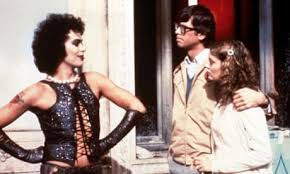
In 1975, Richard O'Brien, a British born, raised on a New Zealand farm unemployed actor in London wrote the London stage musical show, The Rocky Horror Show. This light hearted romp through cinema and pulp fiction history in Richard's life has become via the movie version a monstrous global gestalt. In the movie, transvestitism, drugs and Frankenstein creation merges with the resignation speech of President Nixon as the father figure. O'Briens in 1984 and in The Rocky Horror Show torture the moral citizen that perversity is normal. A Frankenstein monster is being created that in the not so distant future will consume us all from objective moral reality.
Menander (342-290 B.C. ) the Athenian playwright of manners

Menander was the leading figure of Athenian New Comedy, a theatrical style that focused on everyday life, social relationships, and character-driven humour rather than politics or satire.
Menander transformed Greek comedy by shifting away from political satire (as seen in Aristophanes) toward:
Everyday domestic life
Romantic entanglements
Misunderstandings and mistaken identities
Moral lessons wrapped in humour
Only one of Menander's works, The Grouch, survives in full. This play and the fragments of the others reveal his talent for intricate plotting, empathetic characters, and sharp social observation.
Menander’s comedy is:
Character-driven rather than spectacle-driven
Focused on middle-class life and realistic social situations
Built around ethical dilemmas, reconciliation, and human flaws
Known for its wit, warmth, and psychological insight
Even though most of his work survives only in fragments, his impact on Western drama is unmistakable.
Whom the Gods love die young- Menander
Roger Hall (1939 -) The New Zealand Playwright of bad manners

Roger Hall is New Zealand’s most successful and best‑known playwright. His comedies—often warm, sharp, and socially observant—have shaped Kiwi theatre for nearly 50 years.
Born: in England
Moved to NZ: 1957
Breakthrough play: Glide Time (1976), later adapted into the TV series Gliding On
Body of work: 40+ plays, including Middle-Age Spread, Conjugal Rites, Who Wants to Be 100?
Style: Comedy/drama with social critique and strong Kiwi cultural flavour
Roger fought for decades for good quality New Zealand children's television. That is the quality television of my youth when watching with my family one channel black and white television was the main highlight of our evenings. In the 1990s, he wrote to the New Zealand public. "I give up." It was not for want of public support. But Fred Dagg's descendants had taken over New Zealand television and were not going to give it away. Starting from the 2000s, the New Zealand public have switched off their television. The boomer generation watch the news. The other generations snatch views at idle moments.
Roger in his theatre memoir, recalled unexpectedly sharing a hotel with a young female. As a gentleman playwright, he booked two bedrooms. Her clear disappointment startled him. She wanted to be a Roger Hall groupie.
Said by a woman on hearing a school boy had impregnated a girl in Middle- Age Spread. Oh but that's impossible.
The restricted life of Athenian women

Women in Athens lived highly restricted public lives, with their social world centred almost entirely around the home, family, and religious activity. Despite these limits, they played essential roles in maintaining households and participating in civic religion, which gave them some social visibility and influence.
Athenian women were legally excluded from public life. They could not vote, hold office, or speak in court.
Movement in public spaces was limited; women typically appeared outside only when escorted by a male relative or servant.
Their legal identity was tied to a kyrios (male guardian), who controlled property and legal matters.
Most social interaction for Athenian women occurred within the household, which they managed.
They managed servants and slaves They supervised food preparation and textile production (weaving was a major domestic task).
They raised children and prepared daughters for marriage. They maintained household finances.
These duties were considered essential to the functioning of Athenian society.
Religion offered women their most significant public role.
Women participated in: major festivals, ritual processions and sacrifices, and in temples as high ranking priestesses.
Religious festivals (including women only) allowed women to gather, socialise, and exercise a degree of civic presence otherwise denied to them.
Although confined, women still formed social networks:
Female relatives (mothers, sisters, aunts) formed the core of their social world.
Neighbours and other women in the household (including slaves) provided companionship.
Ritual gatherings—especially women-only festivals—were important social outlets.
These interactions helped create a shared female culture within the constraints of Athenian society.
A woman’s social status was defined by her roles as:
Wife
Mother of legitimate heirs
Manager of the oikos (household)
Marriage was arranged, and women were expected to maintain modesty and respectability, which further limited their public social life.
A small number of women achieved celebrity:
Aspasia of Miletus, a consort of Pericles, known for her intellect. Enemies of Athens blamed the Peloponnesian war on her seductive influence on Pericles
Agnodice, a legendary female physician
Xanthippe, the hen pecker wife of Socrates.
The social life of women in ancient Athens was domestic, communal, and religious, but tightly controlled by law and custom. While they lacked political rights and public freedom, women played indispensable roles in maintaining households and participating in religious life—two pillars of Athenian society.
The debate did women attend the theatre is unsettled. The respectable women likely avoided the comedies and satyr plays where the actors paraded with giant phalluses.
The Athenian soldier statesman Themistocles, credited for winning the second Persian war would wryly comment. "The Athenians rule the Greeks, I rule the Athenians, my wife rules me. My toddler son rules my wife." Most men in Athens would chuckle knowingly at this arch typical household.
Lysisistrata by Aristophanes

Lysistrata is a comedy by Aristophanes in which the women of Greece—led by the Athenian Lysistrata—launch a bold, humorous, and politically charged plan to end the Peloponnesian War. Their strategy? A sex strike until the men negotiate peace.
Lysistrata gathers women from Athens, Sparta, and other Greek regions to propose a radical idea: withhold sex until the men agree to stop fighting.
The women swear an oath and seize the Acropolis, which houses Athens’ treasury—cutting off war funding. Men and women clash comically as desire, politics, and power dynamics collide. Eventually, the men—frustrated and desperate—agree to negotiate peace, and the play ends with reconciliation and celebration.
There is a famous scene when the man is desperate for sex with his wife. His wife is only bothered about the right environment including removal of their baby. In reality, Greek women who resisted marriage rites faced rape. The Greek men always had the upper hand both figuratively and literally. However, the social and sexual status of women customarily gave them plenty of leverage in and outside the marriage bed. Pericles would not have said his gripe about women if it was true that women were always seen and not heard.
New Zealand's women's liberation
a

New Zealand women got the vote in 1893. By then, there was no restriction in N ew Zealand on male suffrage for British subjects except for lunacy and imprisonment. The class wars in Britain had not taken much hold in New Zealand. The upward mobility of the New Zealand people had seen to that. So New Zealand women European and Maori got the vote full cloth. To quote Samuel Clemens. "If voting made any difference, they wouldn't let us do it." He was being the jester. Voting in the nineteenth century did not move mountains but it could level hills. The great majority of New Zealanders were united in their aspirations for middle class status and their loyalty to the British sovereign and Empire. Elections had become mostly dull affairs of administration and support for the Empire. Votes for women and prohibition (banning drinking alcohol) enlivened voting more than anything else. It was said prohibition campaigns attracted more public interest and contention than elections. In a society with few regular recreations other than the pubs and alcohol, women and their male supporters came to believe that alcohol was "the curse of the working classes". Suffrage for the women would bring in prohibition. Prohibition would make family and social life seem like heaven. William Reeves' wife, Maud saw to it that he voted for women's suffrage in Parliament. Reeves wrote in his children's history book, Long White Cloud. "It came as a surprise to most to learn next year that the House of Representatives was in favour of women's suffrage." Was William hinting at the Lysistrata effect? New Zealand became the first country in the world to give women the vote. New Zealanders love New Zealand firsts. Bernard Shaw, gave an ironical point by his character Lady Fanshawe in his 1909 pro suffragette play, Press Cuttings. "The New Zealand women have the vote. What is the result? No poet makes a New Zealand woman his heroine. One might as well be romantic about New Zealand mutton." When I heard a BBC dramatisation of Press Cuttings in 1993, the centennial year of New Zealand women's suffrage, I was amused all the cutting lines opposing suffrage, were omitted. Lady Fanshawe was making a point that the spiritual and domestic influence of women over men would be lost when they turned into politicians. However, denying women the vote became untenable when women owned property, were well educated, and employed men who had the vote.
From the 1970s, women abandoned their subordinate positions in society and employment. They now more or less make the laws and run the institutions and the media. They liberated themselves and made themselves a pain for men. However, many hard working women fully deserved the new property rights laws that gave them half share of their husbands' properties. They would no longer be called farmers' wives, and their husbands have the conjugal right to rape them. However mutatis mutandis. Men still virtually monopolise the dirty and dangerous work. They are now hedged in and rendered helpless by female red tape safety laws. Their ranking as fisheries compliance officers is under pay"equity laws" ranked with librarians.
Pericles (495 B.C. -429)
Pericles was one of the most influential figures of ancient Greece—a statesman, orator, and general who shaped Athens during its Golden Age. His leadership transformed the city into a cultural and political powerhouse, leaving a legacy that still defines democracy and classical civilisation today.
Pericles' Funeral Oration to fallen Athenian soldiers in 431 B.C.

Our constitution does not copy the laws of neighbouring states; we are rather a pattern to others than imitators ourselves. Its administration favours the many instead of the few; this is why it is called a democracy.
In short, I say that as a city we are the school of Hellas; while I doubt if the world can produce a man, who, where he has only himself to depend upon, is equal to so many emergencies, and graced by so happy a versatility, as the Athenian.
Sir Robert Stout (1844- 1930)

Robert Stout was one of New Zealand’s most influential public figures — a two‑time Premier (Prime Minister) and later the 4th Chief Justice of New Zealand. He was a major force in shaping the country’s legal and political landscape, especially in the late 19th and early 20th centuries.
He had a large distinguished family. Friends would remark how Sir Robert whom junior Ministers, Judges and civil servants quailed to was at home the meekest sat upon man they had ever encountered. Like Themistocles, he focused on the affairs of State and the law, and left domestic affairs to his tyrant wife and children.
Sir Robert Stout spoke about Victoria University (then Victoria University College) many times, mostly in the context of higher education, rationalism, and the role of universities in New Zealand. His most concrete statements relate to his belief that universities should promote broad intellectual development, free thought, and public access to knowledge.
Stout repeatedly argued that universities must develop “the whole mind” and not merely train for professions. This aligns with his long‑standing advocacy for rationalism, secular education, and intellectual independence.
As a prominent figure in New Zealand’s intellectual life, Stout viewed universities as institutions that should elevate public debate, support free thought, and encourage civic responsibility. His involvement in education policy and his role as a university chancellor elsewhere show that he consistently promoted these ideals.
Stout often argued that education—especially higher education—was essential for social reform, democracy, and equality. This broader philosophy shaped his support for Victoria University and other educational institutions.
In 1974, the Victoria Professor of Classics was chatting to a woman on a Wellington bus. Naturally, he thought well of himself as a Professor. He told her his profession. She looked at him in astonishment and said. "You are not telling me they are still teaching that useless redundant subject at Victoria." He printed her comment on the Classics Department stationary. Its boorishness startled him, a Canadian native.
Future generations may curse her generation in their graves.
The Great Debunkers and Satirists
Lucian was a second‑century A.D. Greek‑language satirist, born in Asia Minor, and is widely regarded as one of the sharpest comedic voices of the ancient world. His works mocked philosophers, religious superstition, and human pretension with a wit that still feels modern. He has influenced Renaissance humanists, science fiction and modern satire.
Lucian ridiculed:
Philosophers who took themselves too seriously
Religious charlatans
Supernatural beliefs
Social pretensions
His humour was irreverent, skeptical, and often fearless.
Lucian's A True History—a parody of travel tales—includes:
Space travel
Alien life
Interplanetary warfare
It is often considered the earliest known work of science fiction.
A True History
Lucian gathers a crew and sails west past the Pillars of Heracles (Gibraltar) driven by curiosity rather than purpose. They land on a bizarre island where:
A river of wine flows.
Trees grow women as fruit, and kissing one makes you drunk; sleeping with one kills you.
Sensing danger, they flee—only to be caught in a colossal storm.
The storm hurls their ship into the air, and after seven days they land on what they think is Earth… until they meet soldiers riding giant vultures. They’ve arrived on the Moon.

Samuel Butler in New Zealand

Samuel Butler 1835-1902 was born in England at an Anglican rectory. Samuel's father was a parson child beater who was a literal bible believer. Samuel reacted not by atheism and licentiousness but by being a free spirit. He graduated in Classics at Cambridge. Samuel prepared for ordination into the Anglican clergy but lost his faith after bad experiences with baptised Christian children. In 1859, like many other settlers he sailed to New Zealand to escape from his family. He became a successful sheep farmer in Canterbury. On his sheep station, he wrote his famous novel, Erewhon published in 1872. Erewhon is set in a country that geographically resembles Canterbury, and socially and satirically contemporary England. In Erewhon, all machines have been abolished. The sick are punished, and the criminals are medically treated. Samuel wrote, in Canterbury. "New Zealand seems far better adapted to develop and maintain in health the physical than the intellectual nature... there is much nonsense in the old country from which people here are free." Attributed to Samuel, is the proverbial, "In Canterbury ditch diggers are more valued than poets".
In 1863, The Press newspaper in Christchurch published Samuel's letter captioned Darwin among the Machines. His letter compared machine evolution to human evolution. "In the course of ages, we (humans) will find ourselves the inferior race".
Samuel Butler clashed with Charles Darwin. Samuel accepted Darwinian evolution but always insisted there was an intelligent design in evolution. All organisms, argued Samuel, carry "an ancestral memory" that makes them strive for their next stage in evolution and perfection. Samuel's evolutionary theory had precedents in the science of others. However, it could not displace Darwinian evolution as the new religion to replace literal Christianity.
Samuel engaged in the social life of the Canterbury elite. In 1864, he returned to England but continued to maintain relations with Canterbury acquaintances. Samuel, as a self confessed Ishmael, fell between two stools. The Anglican Church and scientific materialism. He died in 1902 in relative obscurity despite his dilettante life in literature, music composition, science and art. But English publishing gave him a niche for his writings. Today in cancel culture, he would be reduced to blogs and Amazon books. His posthumous semi autobiography, The Way of All Flesh published in 1903 was a best seller and established his reputation as a major satirist and free thinker.
Samuel Butler, who never married, maintained life long relations with young men. That of course makes him now one of the literary queers. However, that is anachronistic. Samuel's lifestyle reflected the contemporary Hellenistic cult of the Platonic love of young men. If he ever consummated it, it would have filled him with shame and horror. In that Hellenism, his career runs parallel to the New Zealand Crown Colony Attorney General William Swainson.
William Swainson (1809-84)
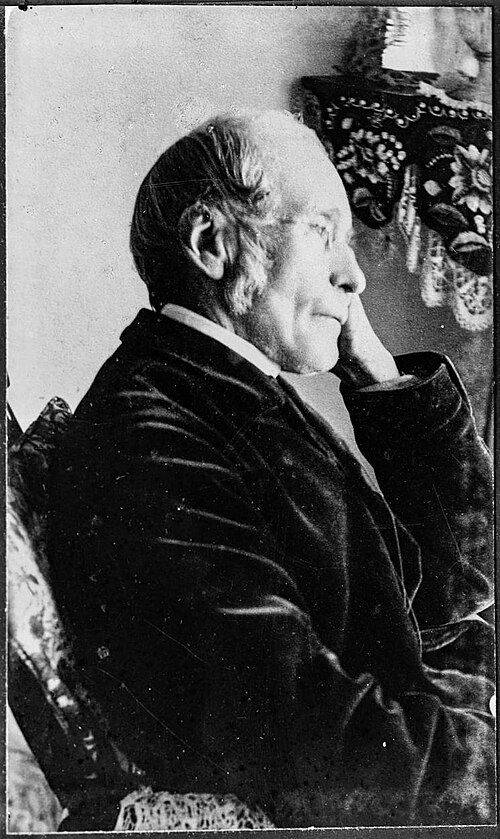
William Swainson was the second Attorney-General of the Crown colony of New Zealand from 1841 to 1856. William's Maori boatman and handyman, Mohi became his bromance companion and next door neighbour from 1880. Actually Mohi lived in a whare, a Maori house which has been unkindly compared to a dog kennel. Swainson described Mohi in his will as "his old friend". When Mohi died in 1890, George Grey led the funeral procession. Mohi was buried "no more than a leap away from Swainson's grave". Swainson died unmarried.
Plato's Republic
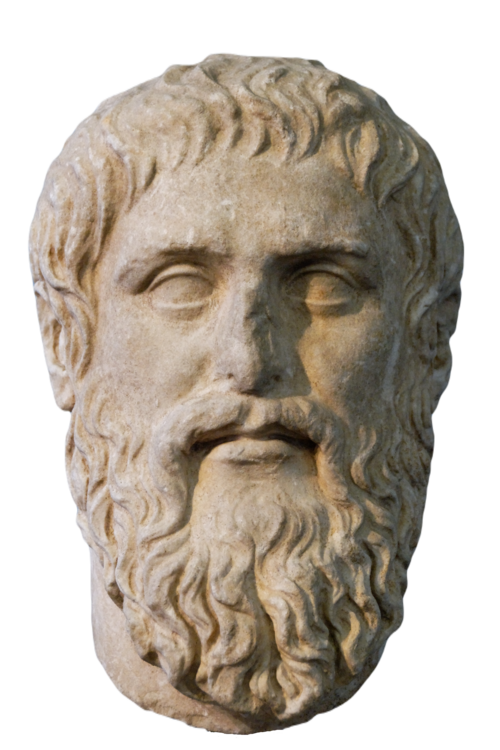
Plato stands as one of the foundational figures of Western philosophy, shaping metaphysics, ethics, politics, and the very method of philosophical inquiry.
Plato (c. 427–347 B. C.) was an Athenian philosopher, a student of Socrates, and the teacher of Aristotle, forming one of the most influential intellectual lineages in history. He founded the Academy in Athens, often considered the first university in the Western world.
He was born into an aristocratic Athenian family
Plato wrote dialogues—philosophical conversations featuring Socrates as a central figure.
These texts explore justice, love, knowledge, the soul, politics, and the nature of reality.
Plato’s philosophy is built around several enduring concepts:
Theory of Forms — the idea that beyond the physical world lies a realm of perfect, eternal “Forms” (e.g., Justice, Beauty).
Allegory of the Cave — a metaphor for enlightenment and the difficulty of grasping true reality.
Tripartite Soul — reason, spirit, and appetite must be in harmony for a just life.
Philosopher‑King — in The Republic, he argues that societies should be governed by those who truly understand the Good.
Plato shaped:
Metaphysics (what is real?)
Epistemology (how do we know?)
Ethics (how should we live?)
Political theory (what is justice?)
Education (the role of inquiry and dialogue)
His ideas influenced early Christian, Jewish, and Islamic philosophy and continue to anchor modern philosophical debates.
Plato believed that most politicians are not truly qualified to rule, because they pursue power, wealth, or popularity rather than truth and justice. For him, political leadership should be based on wisdom, not ambition.
Plato lived through political chaos in Athens—war, corruption, and the execution of Socrates. The legal lynching of Socrates shocked him. He went on a foreign tour to recover and learn wisdom. He returned to found his Academy and pursue philosophy instead of his forbears' practice of politics.
Plato’s solution was radical: Only those who genuinely understand the Good, through long philosophical training, should govern.
He believed philosophers:
Seek truth rather than power
Are less likely to be corrupted
Understand justice at a deep level
Can resist manipulation by public opinion
This is where the famous idea of the philosopher‑king comes from.
Plato was especially wary of democratic politics. In Book VIII of The Republic, he argues that:
Democracy can reward flattery over expertise
Citizens may choose leaders who tell them what they want to hear
Excessive freedom can lead to disorder
Disorder can open the door to tyranny
He wasn’t attacking any specific historical figure—he was describing what he saw as structural weaknesses in political systems.
Plato thought good political leadership is extremely rare, because it requires a combination of moral integrity, philosophical insight, and self‑discipline that few people develop.
Quotes of Plato about Democracy:
Democracy is a charming form of government, full of variety and disorder, and dispensing a sort of equality to equals and unequals alike.
The father fears his sons, and the son feels no shame before his parents… the teacher fears the pupils and the pupils despise their teachers.
The excess of liberty, whether in states or individuals, seems only to pass into excess of slavery.
The people have no understanding, and only repeat what their leaders tell them.
Plato went to live in Syracuse to implement in practice his theories of rule by a Philosopher- King. That ended three times in disaster. The tyrant of Syracuse Dionysius 11 was non teachable. The tyrant ended his career as a school master in Athens. Plato's Court enemies poisoned the mind of Dionysius 11 by charging, the Athenians having failed to conquer Syracuse by arms were now trying to conquer Syracuse by Platonism.
Peter Thiel's Palantir
Peter Thiel (1967-) is a German‑American tech entrepreneur, billionaire investor, and influential conservative political figure. His estimated net worth places him among the world’s richest individuals.
Peter was born in Germany. He has citizenship in Germany, United States, and New Zealand. He is Chairman of Palantir Technologies. His political identity is Conservative/libertarian-leaning activist and major donor to right-wing causes.
Peter has shaped Silicon Valley’s culture and politics in unique ways:
Helped build PayPal, one of the foundational companies of the modern internet economy.
Backed Facebook, earning billions and influencing its early direction.
Built Palantir, a major data‑analytics and defence contractor deeply embedded in America and Israel military and government operations.
Funds ambitious, sometimes controversial ideas through the Thiel Foundation, including the Thiel Fellowship (which pays young people not to attend college).
Peter continues to appear in reporting related to U.S. conservative politics, including ties to figures like J.D. Vance and Donald Trump.
Palantir has had surging demand for its AI‑driven military and analytics tools
Admirers see Peter as a visionary who challenges conventional thinking. Critics view him as an anti‑democratic technocrat whose ideas about society and governance are extreme.
Peter arrived in New Zealand as a kind of tech saviour. Government officials believed he could help transform the country into a global innovation.
Peter was granted citizenship in 2011 after spending twelve days in the country—approved under an “exceptional circumstances” clause because officials believed he could boost New Zealand's tech sector.
Pundits described him as someone who could attract global talent and capital to New Zealand.
Peter viewed New Zealand as a safe haven—geographically isolated, politically stable, and resource‑secure
Friends said he saw New Zealand as a refuge in case of a global crisis.
His Wānaka property with its underground bunkers remains, but its future is unclear.
Palantir is an American based data analytics and AI company known for building powerful platforms used by governments, militaries, and major corporations. At its core, Palantir specializes in integrating massive, siloed datasets and turning them into operational intelligence — whether for counterterrorism, supply‑chain optimisation, healthcare, or enterprise analytics.
Palantir Technologies Inc. is a publicly traded software company founded in 2003. It builds platforms that allow organisations to combine, analyse, and act on large volumes of data.
Gotham — Used by intelligence agencies, defence organisations, and law enforcement for counterterrorism, investigations, and mission planning.
Foundry — A commercial and government platform for enterprise data integration, analytics, and operational decision‑making.
Apollo — A continuous delivery and deployment system that manages software across secure, distributed environments.
AIP (Artificial Intelligence Platform) — Palantir’s AI layer enabling organisations to deploy large‑language‑model‑driven workflows at scale.
Palantir has experienced rapid growth, driven by government contracts and expanding commercial adoption:
However, early 2025 saw a 16% stock pullback due to concerns about valuation and broader tech‑sector corrections.
Palantir has aggressively expanded beyond U.S. government work:
Europe: Major deals with the UK NHS, plus projects in Germany, France, and the Nordics.
Asia-Pacific: Partnerships in Japan (SOMPO), South Korea, and Australia.
Middle East: Work in energy analytics and critical infrastructure.
This expansion is central to Palantir’s strategy to become a global enterprise software leader.
Palantir’s work often intersects with national security, surveillance, and military operations, leading to ongoing ethical debates:
Predictive policing concerns: Civil liberties groups argue Gotham enables intrusive surveillance; Palantir disputes this.
Defence sector influence: The company is increasingly positioned as a challenger to traditional defence contractors.
Geopolitical criticism: CEO Alex Karp’s public support for Israel during the 2024 Gaza conflict was highly controversial.
Palantir sits at the intersection of AI, national security, and enterprise digital transformation. Its platforms are deeply embedded in:
American and vassals' defence operations
Intelligence analysis
Healthcare systems
Energy and industrial operations
Financial services
Disaster response and logistics
Its influence is growing as organisations seek to operationalise AI and unify fragmented data ecosystems.
Peter Thiel's Quest For Immortality
Peter has invested heavily in longevity science. He is deeply motivated by the idea of dramatically extending human lifespan, possibly indefinitely, if science allows.
Peter has publicly argued that society is too accepting of ageing and death. He has said ageing should be treated as a disease that science can cure.
He has poured hundreds of millions of dollars into companies trying to slow, reverse, or reprogram ageing:

Plutarch (c.46 A.D.- c.119)

Plutarch was a Greek biographer, philosopher, and priest. He became one of the most influential writers of the ancient world, shaping Western ideas about character, leadership, ethics, and history.
Plutarch’s works influenced major thinkers and writers for centuries—Montaigne, Shakespeare, Goethe, and political leaders of the French Revolution drew inspiration from him. His writing helped define the genres of biography and moral essay in Europe.
Parallel Lives
A series of paired biographies of Greek and Roman figures.
Each pair compares two leaders—e.g., Alexander the Great & Julius Caesar—to explore character and virtue.
Intended to promote mutual respect between Greeks and Romans and to provide moral exemplars.
Moralia
A vast collection of over 60 essays on ethics, religion, politics, education, and more.
Includes everything from philosophical dialogues to practical advice.
Plutarch was born in a small town in Boeotia, Greece. He came from a prominent family and received a deep education in philosophy, rhetoric, and literature. He held local magistracies and maintained close ties with Roman elites, eventually receiving Roman citizenship.
His approach—using biography to explore moral questions—remains a model. His works offer a window into the ancient world while also speaking to timeless human concerns.
Plutarch lived in an era when Greece had turned itself into a Classical museum for the omnipotent Roman Empire. The Roman Empire's ruling classes were bi-lingual in Latin and Greek. Latin served them for State ceremony and Latin culture. Greek served them for discourse. Greece was a political back water. mired in its past Their political squabbling amused the Romans who recalled their school lessons in Thucydides and Herodotus. Plutarch arguably uniquely in his native Greek sought a common cultural ground for both Greek and Roman history.
After the death of Aristotle, Greece gradually sank into a moronic land. The Mediterranean world outside Greece had a rebirth into a glorious bi-lingual Greco-Roman culture. I am reminded of New Zealand when an education of eager beavers replaced a professional culture from the 1960s. Mono linguists become the greatest thinkers but when they lose their cultural prestige, they become the most retarded. Populists like Cleon and Muldoon replaces them. Muldoon once said. He never diligently studied French at school because he couldn't see the use of it. The bi-lingual Romans built an Empire but never soared to the intellectual heights of the mono- lingual Greeks.
In practice, the New Zealand white people have always been mono linguists. But until the 1960s, professional education created a professional culture appreciative of non English languages and cultures. Maori since the middle nineteenth century have been bi-lingual in English and Maori. The monolingual white New Zealanders built an advanced modern country in a hundred years. The bi-lingual Maori have out witted them since the 1960s.
Plutarch claimed to be "an eclectic philosopher". In the Classical world, schools of philosophy weren't just states of mind. They were cults with their own ceremonies and priesthoods. As an eclectic, Plutarch observed and wrote about the moral condition of all humankind. Official Roman history in Plutarch's era, made monsters or ghosts of Spartacus and Brutus for violently upsetting public order and starting wars. Plutarch made moral heroes of them both. Spartacus for ending physical slavery, Brutus for ending mental slavery. Plutarch wrote Julius Caesar received divine justice because he aimed to be King. Plutarch lived a life of privilege and public esteem because eclectic philosophy in Roman eyes was not concerned with official history, only moral ideas.
Two millennial later, Plutarch's writings became the models for the American and French revolutions. In 1778, George Washington showed his new revolutionary army officers a performance of Joseph Addison's Cato, a Tragedy. Many iconic lines from the American revolution are paraphrases from this play. Cato, a Stoic philosopher, chose suicide over submission to Julius Caesar. I suppose Washington was hinting this is all you will be able to do if you lose the war.
An Eclectic Judgment
Maybe, in 4000 A.D. my words will resonate in a revolutionary army.
"There's a kernel of truth in the feudal origins and symbolic language of the Crown, which can feel archaic or mystical to outsiders (or fuel sovereign citizen-style theories). But in 2026, citizens in these countries enjoy robust property rights, democratic accountability, and legal protections comparable to (or better than) many republics. The monarch doesn't "own" lives or property in any meaningful personal sense—the Crown is an abstract institution representing the state and continuity of government.This setup provides stability (head of state above politics) while evolving with democracy. Criticisms of monarchy as undemocratic or elitist are fair game for debate, but claims of literal ownership or tyrannical self-preservation don't hold up against how these systems actually function. If anything, the persistence of these realms shows pragmatic adaptation rather than medieval absolutism. The real power lies with parliaments and voters, not the palace" - Grok
The Crown moves deadly via its agents to crush even Royal brothers and wives. Consider the fates of the Dukes of Kent and York. Not to speak of the late Princess Royal. The humblest sovereign citizen who flees with his children to save them from the woke Family Court is shot in the bush by Crown agents like a dog.
Democracy as it is understood under Westminster rules has become a sham and a scam. In 1918, the British Prime Minister Lloyd George was terrified of a workers revolution as had happened the year before in Tsarist Russia. Most English centenarians in a poll in the year 2000, named the 1917 Russian revolution as the biggest political event in their lives. So the Welsh wizard declared Great Britain a Democracy by almost doubling the male suffrage to full suffrage, and extending the suffrage to middle class women over thirty. The new enfranchised men, the usually poorest and more revolutionary, had the opium of the vote to settle them down. But the middle class women, their youthful idealism already crushed, made sure a Socialist Government would not take over Blake's green and pleasant land in the 1918 election.
The arcane rules of Westminster Parliaments have continued as a club to preserve the privileges of the ruling class. The new members of Parliament might be former tradesmen. But they soon learn to play the Westminster game. New Zealand got full suffrage in 1893. But Democracy remained a radical and subversive expression. After 1918, the lie of Democracy was propagated and endlessly repeated that almost everyone believed what they could not see with their own eyes.
Until the 1980s, political Parties did on mostly the periphery, try to implement their manifestos in Government. Rousseau's social contract still mattered. But since the 1980s, political leaders in Western countries have prided themselves on doing the opposite of their political promises. Politics is the only profession not bound to contractual law. Parliament at a midnight session can do what most pleases it, usually its own entitlements. The origin of Westminster Parliament were the Lords and Squires of England. They at least had class and were the most educated. Now they have been succeeded by con artists and political hacks. They over the decades have brought the once proud Western nations to a third world perdition that they are often barely recognisable. Political movements such as Fascism and Communism offered the prospects of alternate political systems but World War Two crushed the former, and the Cold War the latter.
A hidden ruling class made up of financiers and celebrities took over Western countries. In 2026, they have been exposed in the Epstein files as cannibalistic, sadistic pedophiles. History has gone full circle back to the ambrosia (human flesh) and sadistic pedophile divine rulers of mount Olympus.
As the junior Classics Lecturer at Victoria University in 1974 predicted. The arcane often monstrous practices of Parliaments have had their day. Government by social media and data collecting should replace it. I offer solutions in my Amazon novel, The No Girl Talk Club.
Elon Musk predicts in a decade all the work will be done by A.I. and robots. Everyone will live like millionaires. Elon advocates a universal high income UHI. Then everyone will be totally free to pursue their own interests. Humans may ultimately need to neurolink with A.I. to preserve their control and their sanity.
Without the daily distractions of working for a living, humanity could live like Plato's philosopher's Kings. That is they don't live like the Epstein class.
The Thirty Tyrants
The Thirty Tyrants were a Spartan‑backed oligarchy that ruled Athens for about eight months in 404–403 B.C. Their regime is remembered for its violence, political purges, and dismantling of democratic institutions.
They were a group of thirty oligarchs installed by Sparta to replace Athenian democracy after the city surrendered. Their mandate was to rewrite the constitution, but they quickly turned into a repressive junta.
Key figures
Critias — the most extreme and influential leader, known for his harshness and anti‑democratic ideology.
Theramenes — a more moderate member who later opposed the regime’s brutality; he was executed by Critias.
The Thirty Tyrants:
Executed about 5% of the Athenian population.
Confiscated property from citizens.
Exiled thousands of democratic supporters.
Built their regime on surveillance and State-sponsored denunciations to identify and eliminate potential dissenters.
Democratic exiles regrouped in Piraeus and fought back. In 403 BCE, they defeated the forces of the Thirty. The oligarchs fled and were eventually killed or driven out, allowing Athenian democracy to be restored.
The Thirty Tyrants became a lasting symbol of:
The dangers of concentrated power
The fragility of democratic systems under external pressure
The resilience of Athenian democracy, which rebounded after their fall
The ruling ideology of the Thirty Tyrants was a blend of extreme oligarchic authoritarianism, anti‑democratic conservatism, and pro‑Spartan political alignment. Their regime was not guided by a coherent philosophical program so much as by a practical commitment to concentrated elite power, enforced through violence and exclusion.
The Thirty restricted political rights to a hand‑picked group of 3,000 wealthy citizens, excluding the vast majority of Athenians from legal protections or participation in government. This reflects a deliberate ideological rejection of democracy in favor of rule by a small, privileged class.
Their policies dismantled democratic institutions, purged democratic leaders, and attempted to erase the political culture of broad civic participation that had defined Athens.
Their ideology was inseparable from their methods: mass executions, property confiscations, and exile.
Critias, the most influential member, was an associate of Plato and a radical oligarch. He embodied an ideology that combined:
contempt for democracy
admiration for Spartan discipline
belief in rule by an intellectually “superior” elite.
His personal extremism shaped the regime’s character.
That terrible history had a happy ending. The Democracy that replaced it established the Periclean Athens that has resounded through the ages as the model of an elitist Democracy. That however did not stop Athens executing Socrates in 399 B.C. That was from charges of impiety and intellectually corrupting the youth of Athens.
In 1975, I sat in Albert Park with my parents and siblings. A Fred Dagg was declaiming to the park crowd. At this point, Fred Dagg ceased being funny. Some people, he shouted, go to University to contribute society. Other people go to University on the tax payer to dodge contributing. "Lloyd Lloyd", giggled my siblings. My mother was complaining I was wasting my bursary by eating an icecream.
When decades later, my parents said to me, they had always supported me like with the others. It was on the tip of my tongue to say. "I don't recall sheep jokes."
I at the time of the Albert Park encounter, had been writing a University essay on the Thirty Tyrants. I felt a hollowness that my research would not register with my country people. I was now after a childhood preciousness, having to live in their grey, work a day suburban adult world.
A year later, a journalist from the New Zealand Herald followed the Professor of Classics around for a day at Auckland University. The journalist ended up supportive. But I could read his dull witted incomprehension. Here was a charming fossil to be preserved for nostalgia.
Fifty years later, when the thirty tyrants of Peter Thiel and his tribal Trojan horse take over the land, I feel a certain schadenfreude.
I smile at the fatuous law students having to learn tribal nefarious tikanga. Sixty five years ago, New Zealand law graduates learnt Roman Law, the foundation of their law studies. That was replaced by monkey tricks. Roman law would have taught the legal profession first principles, not to get mixed up in tikanga that would eventually override both Westminster Parliament and private property.
At my orientation at Auckland University in 1975, I asked the young man sitting beside me what was the presiding Dean's Department. "Classics," said the young man with the sniggering contempt only New Zealanders are capable of to anything profound. I froze.
Greek Tragedy as performed in Athens and in New Zealand

Sophocles was one of the three great tragedians of ancient Athens, widely regarded as the most successful playwright of his era. He wrote over one hundred and twenty plays. His innovations—especially adding a third actor and reducing the role of the chorus—reshaped the structure of Greek drama and influenced playwrights for millennia.
Sophocles was celebrated for nearly fifty years, winning at least twenty-twenty four first prizes in dramatic competitions.
Only seven complete tragedies remain, but they are foundational to Western literature:
The most famous are the Theban plays (Oedipus Rex, Oedipus at Colonus, Antigone), which explore fate, leadership, family loyalty, and moral conflict.
Why Sophocles is in the Western canon
Dramatic innovation: Introduced a third speaking actor, allowing more complex character interactions.
Character depth: His protagonists are psychologically rich, driven by strong moral convictions that lead to tragedy.
Influence on Aristotle: Oedipus Rex is repeatedly cited in Poetics as the model tragedy.
Cultural impact: His plays remain central to theatre, philosophy, and literary studies worldwide.
Sophocles wasn’t just a playwright—he was a dramatic architect whose innovations shaped the entire trajectory of Western theatre. His surviving works remain some of the most studied and performed tragedies ever written.

The more than one jumper that launched a million groans. David Bain in his first trial in Dunedin in 1994. for the massacre of his family. David was convicted of the massacre with a gun of his parents, two sisters and one brother in 1994. David in 2009 was found not guilty in a second trial. He came out of prison a tanned, well educated young man. Middle class crime is now common in New Zealand and so New Zealand has rural middle class prisons. David's case was taken over by a charismatic ex All Black rugby champion Joe Karim. David's most high profile accuser was author James McNeish. That made it no contest. James wrote a very dull psychoanalytic book on the case. Joe wrote a gripping eloquent book on case. Both ironically referred to ancient history. James, Greece, Joe Egypt. James foolishly brought up Ancient Greece in a television debate with Joe. Joe shrewdly snorted at the thought that ancient history has any reference at all and immediately won over the small minded New Zealand public. I think James had a good point that David at the time of the murders was in the chorus in the rehearsals of the Sophocles play, Oedipus Rex. Any suggestion of a third party murderer is immediately dismissed as impossible. The surviving Bain relatives were convinced of David's guilt.
Joe and David won over the media and most of the New Zealand public. David's supporters ran a Michael Jackson empathy tinged with aggression campaign. Their supporters thronged the Court room in the second trial and veiled threats were were given to Jury members. David was publicly viewed as a New Age guy persecuted by redneck bigoted cops. My mother was fanatical about his innocence. I think she had guilt that when I was David's age she had not supported me much against the New Zealand Fred Daggs.
One issue overlooked in the trials was the choice of words on the Bain computer after the massacre. "You are the only one who deserved to stay." That is supposed to be a reference to David. Who would use the flip word stay to mean keep alive? Robin Bain the accused old hippy father or generation X David? Robin more likely might have written, "Cool it man". Generation x might more likely write stay. New Zealand Justice at least for high profile cases has become a dog's breakfast or a casino.
A world scholar on the play, Oedipus Rex, has the name David Bain. In 1991, he published an academic paper that argued that Oedipus only metaphorically murdered his father and slept with his mother. The people of Thebes drove him to believe this. The Thebans had abandoned their ancestral Gods and their tyrant Oedipus was cast from hero to scapegoat to atone for his sins. The title of this paper is "Oedipus: Evidence And Self Conviction?" David Bain was doing Classics in 1994, the year of the murders. I imagine this academic theory by scholar David Bain might have plagued on the mind of this geeky Kiwi David Bain. Oedipus had four children, two sons and two daughters. The same as Robin Bain. On the weekend of the murders, it was reported that Laniet, the younger daughter, was going to confront Robin with her incestuous accusations. The massacre blocked this. There is also the co-incidence of the missing glasses. He was wearing his mother's glasses in the weeks before the massacre. When the police arrived at the murder scene, he asked them to get them for him. They were broken in his bedroom. One lens of them was found in his murdered brother Stephens' room. At the end of this Sophocles' play, Oedipus tears out his eyes so as not to witness the horror of his patricide and incest. Did the play drive David into an optics psychosomatic condition? The Crown Prosecution and police did pick up on the parallels between Oedipus Rex and the Bain murders. however they were always pooh poohed by the defence. David's defence lawyer described the Sophocles' play as no more than road rage. That was the argument of scholar David Bain. The tyrant Oedipus only accidentally killed an old man at the cross road and was later falsely accused of killing his father.


Lauren
Medea murdered her infants after exile from barbaric Colchis to a new life in Greece. She endured cultural and physical isolation. She lamented her exile and in revenge broke the strongest female taboo.
Lauren murdered her infants after exile from Zuma's South Africa to a new life in New Zealand. She endured cultural and physical isolation in the Covid era. She lamented her exile and in a psychotic state broke the strongest female taboo. At least that was the interpretation of the Judge. The Jury convicted her of murder. When you murder children don't expect a sympathetic Jury. Unlike Jason, Medea's husband, there is no record her husband was other than supportive. However, she feared the abandonment of her children should her husband remarry.
Herodotus Book Seven: The Spartan exiled King Demaratus explains the Greek Dorian ethos to King Xerxes.
"Want has at all times been a fellow-dweller with us in our land, while Valour is an ally whom we have gained by dint of wisdom and strict laws. Her aid enables us to drive out want and escape thraldom. Brave are all the Greeks who dwell in any Dorian land; but what I am about to say does not concern all, but only the Lacedaemonians. First then, come what may, they will never accept your terms, which would reduce Greece to slavery; and further, they are sure to join battle with you, though all the rest of the Greeks should submit to your will. As for their numbers, do not ask how many they are, that their resistance should be a possible thing; for if a thousand of them should take the field, they will meet you in battle, and so will any number, be it less than this, or be it more."
John Clark was a brilliant satirist who as Fred Dagg captured the Kiwi uncouth vernacular. His 1975 unofficial anthem song, We Don't Know How Lucky We Are is in the Kiwi popular canon. The Kiwis miss his irony. His popularity as Fred Dagg made him almost a fugitive from public humour.
I was down the Plough and Chequebook,
the night before last
There's a guy down there on the floor
with his brain at half-mast
I said "You're looking really bad mate
your eyes look like strings"
He says "Get me an eight will you please
I can't see a thing"
We don't know how lucky we are, mate
We don't know how lucky we are,
Me stock agent's got a beach place
where he spends most of his days
His wife bit the dust down there last year
got eaten by a couple of crays
And his two littlest daughters
got killed by a whale
I said "Are you going down there this year mate?"
He says "Fred, right on the nail"
"We don't know how fortunate we are to have that place
We don't know how propitious are the circumstances Frederick"
So if things are looking really bad you're thinking of givin' it away
Remember New Zealand's a cracker and I reckon come what may
If things get appallingly bad and we all get atrociously poor
If we stand in the queue with our hats on we can borrow a few million more.
We don't know how lucky we are, mate
We don't know how lucky we are. We don't know how lucky we are, mate
We don't know how lucky we are.
Me father-in-law's been feeling pretty pleased with himself:
He's been living in Greece for the good of his health.
I said, "How was the climate? And how was your year?"
He says, "The climate's too hot, you can't get a beer,
The sheilas look like blokes, and of course the blokes are all queer,
The Turks and the Arabs, well, they live far too near,
and if you want a really good time, you might as well live here."
We don't know how lucky we are, mate
We don't know how lucky we are.
Post Coda
The Greek who "discovered" the atom.
Democritus was an ancient Greek philosopher, best known for formulating the earliest atomic theory
Democritus was born around 460 B.C. into a wealthy Northern Greece family. Most ancient accounts agree on his birthplace, though details of his early life are uncertain. He inherited a substantial fortune, which he used to fund extensive travels in pursuit of knowledge.
His father was said to be wealthy enough to host the Persian king Xerxes, and after his father’s death, Democritus devoted his inheritance to education and exploration.
Democritus traveled widely across the ancient world, reportedly visiting Egypt, Babylon, Persia, and possibly India and Ethiopia. These journeys exposed him to mathematics, astronomy, and various philosophical traditions. He later claimed that no one of his time had traveled more or learned from more scholars than he had.
His travels deeply shaped his thinking, especially his admiration for Egyptian mathematicians and Babylonian scholars.
Democritus was a prolific writer, credited in antiquity with around seventy- eighty treatises covering topics such as ethics, physics, mathematics, cosmology, biology, and even military tactics. None of his original works survive; what we know comes from later writers, especially Aristotle.
His writing style was admired for clarity and breadth, and he was considered a polymath.
Democritus is most famous for developing the atomic theory of the universe alongside his teacher Leucippus. He argued that:
Everything is composed of indivisible, eternal atoms.
Atoms move through the void (empty space).
Differences in matter arise from atoms’ shapes, arrangements, and motions.
This theory was revolutionary, proposing a natural, mechanistic explanation of the world rather than relying on divine intervention.
Democritus emphasised cheerfulness, moderation, and the pursuit of a well‑ordered soul. His focus on happiness and inner balance earned him the nickname “the laughing philosopher.”
Democritus is considered one of the most important Pre‑Socratic philosophers. His ideas influenced later thinkers, including Aristotle (who often disagreed with him) and indirectly shaped the development of Western philosophy. His atomic theory, though rejected in antiquity, was later validated by modern science.

The New Zealander who "split" the atom
Ernest Rutherford, Baron Rutherford, was a New Zealand physicist who was a pioneering researcher in both atomic and nuclear physics. He is reputedly "the father of nuclear physics". Two other scientists working under his direction split the nucleus. His face is on New Zealand's highest money denomination.
Ernest's birth and upbringing in New Zealand is the story of the South Island pioneering families who out of a wilderness built a first world nation starting from two decades before his birth in 1871 to his death in 1937. His father was an artisan and his mother a school teacher. He was buried in Westminster Abbey near Charles Darwin and Isaac Newton.

"Later on, one may say, the whole Hellenic world was convulsed; struggles being every, where made by the popular chiefs to bring in the Athenians, and by the oligarchs to introduce the Lacedaemonians. In peace there would have been neither the pretext nor the wish to make such an invitation; but in war, with an alliance always at the command of either faction for the hurt of their adversaries and their own corresponding advantage, opportunities for bringing in the foreigner were never wanting to the revolutionary parties. The sufferings which revolution entailed upon the cities were many and terrible, such as have occurred and always will occur, as long as the nature of mankind remains the same; though in a severer or milder form, and varying in their symptoms, according to the variety of the particular cases. In peace and prosperity, states and individuals have better sentiments, because they do not find themselves suddenly confronted with imperious necessities; but war takes away the easy supply of daily wants, and so proves a rough master, that brings most men’s characters to a level with their fortunes. Revolution thus ran its course from city to city, and the places which it arrived at last, from having heard what had been done before, carried to a still greater excess the refinement of their inventions, as manifested in the cunning of their enterprises and the atrocity of their reprisals. Words had to change their ordinary meaning and to take that which was now given them. Reckless audacity came to be considered the courage of a loyal ally; prudent hesitation, specious cowardice; moderation was held to be a cloak for unmanliness; ability to see all sides of a question, inaptness to act on any. Frantic violence became the attribute of manliness; cautious plotting, a justifiable means of self-defence. The advocate of extreme measures was always trustworthy; his opponent a man to be suspected. To succeed in a plot was to have a shrewd head, to divine a plot a still shrewder; but to try to provide against having to do either was to break up your party and to be afraid of your adversaries. In fine, to forestall an intending criminal, or to suggest the idea of a crime where it was wanting, was equally commended until even blood became a weaker tie than party, from the superior readiness of those united by the latter to dare everything without reserve; for such associations had not in view the blessings derivable from established institutions but were formed by ambition for their overthrow; and the confidence of their members in each other rested less on any religious sanction than upon complicity in crime. The fair proposals of an adversary were met with jealous precautions by the stronger of the two, and not with a generous confidence. Revenge also was held of more account than self-preservation. Oaths of reconciliation, being only proffered on either side to meet an immediate difficulty, only held good so long as no other weapon was at hand; but when opportunity offered, he who first ventured to seize it and to take his enemy off his guard, thought this perfidious vengeance sweeter than an open one, since, considerations of safety apart, success by treachery won him the palm of superior intelligence. Indeed it is generally the case that men are readier to call rogues clever than simpletons honest, and are as ashamed of being the second as they are proud of being the first. The cause of all these evils was the lust for power arising from greed and ambition; and from these passions proceeded the violence of parties once engaged in contention. The leaders in the cities, each provided with the fairest professions, on the one side with the cry of political equality of the people, on the other of a moderate aristocracy, sought prizes for themselves in those public interests which they pretended to cherish, and, recoiling from no means in their struggles for ascendancy engaged in the direst excesses; in their acts of vengeance they went to even greater lengths, not stopping at what justice or the good of the state demanded, but making the party caprice of the moment their only standard, and invoking with equal readiness the condemnation of an unjust verdict or the authority of the strong arm to glut the animosities of the hour. Thus religion was in honour with neither party; but the use of fair phrases to arrive at guilty ends was in high reputation. Meanwhile the moderate part of the citizens perished between the two, either for not joining in the quarrel, or because envy would not suffer them to escape.
Thus every form of iniquity took root in the Hellenic countries by reason of the troubles. The ancient simplicity into which honour so largely entered was laughed down and disappeared; and society became divided into camps in which no man trusted his fellow. To put an end to this, there was neither promise to be depended upon, nor oath that could command respect; but all parties dwelling rather in their calculation upon the hopelessness of a permanent state of things, were more intent upon self-defence than capable of confidence. In this contest the blunter wits were most successful. Apprehensive of their own deficiencies and of the cleverness of their antagonists, they feared to be worsted in debate and to be surprised by the combinations of their more versatile opponents, and so at once boldly had recourse to action: while their adversaries, arrogantly thinking that they should know in time, and that it was unnecessary to secure by action what policy afforded, often fell victims to their want of precaution. " Thucydides The Peloponnesian War.

Berlin 1945


Comments