Rome Was Built In A day Part Three
Updated: 3 days ago

Emperor Nero and his young blade friends perform in the Lupercalia festival outside Romulus' legendary hut on the Palatine hill. The nervous young woman holds out her hand to receive a whack to supposedly induce child birth.
In his Epistulae Morales (Moral Letters), the Stoic philosopher and tutor to Emperor Nero, Seneca had an aha moment about the prime lesson of Stoicism. Seneca told Lucilius about a gladiator who had been:
badly wounded,
exhausted from repeated fights,
and kept under guard so he could be forced back into the arena.
The gladiator would be compelled to fight again — not for honour, but for spectacle. His life was no longer his own. So he chose a Stoic solution.
The gladiator went to the latrine. He seized the cleaning stick and forced it down his throat with both hands. He killed himself by choking on it.
Seneca wrote that even a man with no philosophical training understood the Stoic truth: Freedom lies in the ability to choose one’s death when life becomes servitude. He achieved the Stoic ideal of a free death better than many philosophers. Seneca concluded that philosophy is not words but action. The gladiator, a slave of the arena, proved himself freer than his masters.
For a biography of Seneca, read Rome Was Built In A Day 44 B.C. To 55 A.D.
Seneca's letter echoed Pauline Christianity which had its origins when he was philosophising over this tormented gladiator. All are spiritually equal in God's sight. The letter shows both the connection to Christianity and the huge chasm that separates ancient Rome from Christian history. Classical philosophy was not just a state of mind. It was para religion with its own cultic practices. It never crossed Seneca's and his followers' minds to pity the slave and seek humane treatment of him.
The letter became one of the most cited Stoic events in history.
It created :
Roman moral exempla (examples), where the gladiator appears beside Cato and Socrates.
Later Stoic manuals, which used the story to illustrate the doctrine of exitum voluntarium (voluntary exit).
Early Christian martyr literature, which admired the idea of choosing death over moral compromise.
The gladiator became a canonical figure in the Roman imagination: the slave who understood freedom better than free men. Early Christian martyr literature admired the gladiator's example of choosing death over moral compromise.
Thyestes
Thyestes is a Latin tragedy written by the Stoic philosopher and dramatist Seneca. The play is based on the Greek myth of the House of Atreus, focusing on the bitter feud between the brothers Atreus and Thyestes.
There may have been private readings or performances in small, select gatherings. Seneca's plays are closet dramas for rhetorical exercises and philosophical contemplation.
The play is infamous for its depiction of extreme cruelty, particularly the theme of cannibalism and child trafficking, which underscores the moral and psychological corruption of its characters. Thyestes is one of his most famous tragedies, centred on the cursed House of Pelops and the cycle of vengeance between Atreus and Thyestes. The play depicts psychological horror, moral corruption, and cosmic disorder.
I listened to an audio recording. My review to the producer was. "A horrible and creepy play. The murders and cannibal feast of Thyestes' children was a cheese pizza."
Accusations of cannibalism were common against non Roman cults. The bete noire of Roman morality, Catiline was accused of cannibalism. Did Nero's court at its most depraved rituals practise it? Thyestes and Atreus at the cannibal feast recalled to me the jerky feasts of the Epstein files.
Saul Who Became Paulus (Shorty) c. 1. - 64-7 A.D.

A grotto painting in late fifth century Ephesus
Saint Paul — originally Saul of Tarsus — was the most influential early Christian missionary, whose letters form the intellectual core of the New Testament. His conversion on the road to Damascus reshaped the entire trajectory of Christianity. He transformed Christianity from a Jewish Messianic sect to a universal religion. He claimed, his contemporary, a Galilean Jesus, was the Messiah predicted by the Torah Hebrew prophets, Isaiah and Daniel. Jesus was crucified by the Roman Prefect of Judaea Pontius Pilate who was mindful of the Emperor Tiberius. The Pharisee temple priesthood had arrested Jesus for blasphemy and handed him over to the hand washing Pilate. Jesus' followers fled and regrouped later to start a new Jewish sect.
Saul was born in Tarsus, Cilicia (Anatolia), a Jew educated as a Pharisee under rabbinic tradition. He was by trade a tent maker or leather worker. As a religious leader, he employed his trade to supplement his income. He belonged to the trading and cultic ancient world. He did not have slaves which set him apart from Rome's religious and literary elites. He employed youth religious apprentices. One was half Greek, half Jew, Timothy whom he circumcised to please the Jewish Christians. That does not sound entirely kosher.
Paul’s early identity as a strict Pharisee is central: he understood Jewish law deeply, which later shaped his theological arguments.
The Damascus Conversion
On a mission in c.33 A.D. to suppress the heretical Christians, Paul experienced a vision of Jesus near Damascus — the turning point of his life. The New Testament Acts describes a blinding light, a voice (“Saul, Saul, why persecutest thou me?”), and three days of blindness before baptism by Ananias.
Ananias was a devout Jew and leader of the Christian sect in Damascus. By taking in and curing the stricken Saul, Ananias was a testament to a revolution in Jewish practices and thought. The Pharisees sought Saul's death. After Saul's conversion, the Jewish Christian sect and the Gentile Jesus religion drifted apart by recriminations until they could no longer assimilate.
Paul in his letters and his reported sermons never quoted Jesus who was subversive to the Jewish leadership. Instead, Paul turned Jesus' crucifixion and later mysterious disappearance and sightings into a novel Jewish and Hellenic cross hybrid religion.
"Jesus died, for our sins according to the scriptures, that he was buried, that he was raised on the third day according to the Scriptures, Paul's Letter To The Corinthians." Paul then went on to elaborate historical and theological explanations that because Christ (Messiah) conquered death, believers have ultimate victory over it.
Judaism has always ignored Paul or treated him as a Jewish turn coat and deceiver. However there is no question, Paul was a religious and moral visionary.
Saul was named after the first Israel King, celebrated by his successor King David. By a consonance sound change, Saul became Paul, a common Roman name meaning Shorty. Before his martyrdom, Paul disguised himself as the little faintly amusing ranter at the market place.
This aha conversion made him the Apostle to the Gentiles, finally convinced that the Gospel must reach non‑Jews without requiring adherence to Jewish law. Paul was legally a Roman. That was not recognisable until he announced it to avoid imprisonment. He was schooled in Koine (common) Greek, scriptural Hebrew and Aramaic. He likely also had street Latin to preach in Rome. Paul's Roman citizenship was a bequeath from his recent ancestors. Out of that privilege, Paul seemed to have absorbed the Roman aha spirit. He preached to the Roman Procurator (Governor) of Judaea Festus who considered him insane and sent him to Rome to be judged by Nero. Seneca had earlier stood trial before Lucius Gallio, Proconsul of Achaia (southern Greece) the Stoic older brother of Seneca. Lucius had declared this was a religious Jewish issue and closed proceedings. It is not known if Lucius reported to his younger brother about this ranting fellow and his sect. No letters between them are recorded.
Paul preached the gospel throughout the eastern Mediterranean — Anatolia, Greece, and eventually Rome — founding communities and writing letters.
He preached :
Gentiles need not follow Mosaic law.
Faith and grace took precedence over legal observance.
Paul faced hostility, arrests, and long imprisonment in Rome.
In the New Testament, thirteen letters are attributed to Paul; seven are widely accepted as authentically his. These letters — Romans, Corinthians 1 t 2, Galatians, Philippians, Thessalonians, Philemon — are the earliest Christian theological writings.
His core themes are :
Salvation by grace, not works
The universality of Christ’s message
The unity of believers
The role of the Spirit over the letter of the Law.
Paul died obscurely in Rome, under Nero’s persecution. As a Roman citizen, he was most likely beheaded like Cicero.
His writings and missionary work would turn Christianity into a world religion.
Quinquennium Neronis (The Good five years of Nero's Rule)
Roman pundits even the second century A.D. Emperor Trajan — praised this period as the happiest and best years of the early Empire, marked by reduced taxation, mild administration, and relative political calm.
Nero was from sixteen to twenty one years old, under the supervision of Seneca and the Praetorian Guard Prefect, Burrus.
Government was moderate, restrained, and financially generous.
His mother, Agrippina’s malign influence was increasingly contested.
Post Quinquennium Neronis

After Nero's murder of Agrippina in A.D. 59, his reign pivoted from Seneca's Stoicism and Burrus' moderation to a volatile, theatrical, and increasingly violent autocracy. Nero's murder of his mother was considered the prime culprit of his worst impulses.
Later in A.D. 59, after Agrippina's murder, there came about the famous amphitheatre riot in Pompeii.
Pompeii–Nuceria gladiatorial riot of A.D. 59
This was a violent brawl between spectators from Pompeii and the neighbouring town of Nuceria during a gladiatorial game. Nero and the Senate punished Pompeii severely.
Insults between Pompeians and visiting Nucerians escalated :
Stones and then weapons were drawn.
The Pompeian crowd, being larger, overwhelmed the Nucerians.
Many Nucerians were injured or killed, and survivors returned home mourning the deaths of children and parents.
The Nucerians appealed to Nero. He referred the matter to the Senate, which imposed penalties:
Pompeii was banned from holding gladiatorial games for 10 years.
Collegia (fan clubs and associations involved in the riot) were dissolved.
The Roman sponsor, Livineius Regulus and others were exiled.
Archaeology later showed that Pompeii’s amphitheater continued to be used after A.D. 62, suggesting the ban may not have been strictly enforced.
An Imaginative Reconstruction
The Pompeii Amphitheatre
The sun is high, the crowd restless. The amphitheatre is packed: Pompeians in their bright local colours, Nucerians in travel‑stained cloaks. A gladiator — a Pompeian favourite — lies defeated. The Nucerian referee signals the execution stroke in response to the raised thumbs of most Nucerians.
The Pompeian stands erupt in outrage.
“No! Mercy! Mercy for him!”
The referee ignores them. The Nucerian gladiator's blade falls. A gasp, then a roar.
Pompeians surge to their feet.
“You butchered him! You dogs of Nuceria!”
Stones fly first — small, sharp, snatched from the dusty ground. The Nucerians answer in kind, shouting back across the arena.
“Pompeii for Pompeii! Death to Nuceria!
“Down with Sulla’s colonists! Down with Rome’s yoke!” “Italy for Italy! Pompeii for the Pompeians!”
A few frenzied and bold voices shout
“Mother fucker! Matricide!”
The crowd surges, a wave of bodies, stones, and shouts. The amphitheatre becomes a battlefield of civic pride and old resentments.
In the evening in the palace.
Seneca and Burrus stand in a portico. Nero sits nearby, plucking at his lyre, absorbed in tuning a new melody. The Emperor hums softly, oblivious.
Burrus shakes his head. “A riot over a gladiator. Campanians never change.”
Seneca smiles thinly. “Oh my, Burrus — their slogans. Italy for Italy. Old ghosts stirring again.”
Burrus snorts. “Ghosts? Just hooligans with stones and too much wine.”
Seneca folds his hands. “Still — civic pride can turn into civic insolence. We must respond firmly.”
Burrus nods. “Firmly, yes. But with decorum. If we crush them too hard, we make martyrs. If we ignore them, we invite chaos.”
Nero strums a flourish, entirely uninterested.
Seneca glances at him. “Our Princeps practises his art. We shall practise ours.”
Burrus sighs. “Very well. I’ll prepare the report for the Senate. They can impose the penalties. Ten years without games should cool Pompeii’s blood.”
Seneca’s eyes narrow with wry amusement. “And perhaps remind them that Rome still governs Italy — not the other way around.”
Nero begins to sing softly, oblivious to the statecraft unfolding behind him.
True History : There is no record the riot turned political. Classical authors are biased against rioters. But Argentinian sports crowds still cheer for the Malvinas. Rumours were reported by historian Seutonius in the second century, that Agrippina practised her sexual favours on her adolescent son Nero.
The political balance collapsed. Burrus and Seneca became sidelined. Nero’s post adolescent vanity and artistic obsession began shaping policy.
Nero began to see himself as a performer‑emperor rather than a ruler.
Agrippina’s death is the psychological rupture that divided the “good years” from the “bad".
Nero now prioritised artistic self‑expression over governance.
He trained intensively in singing, lyre, and acting.
He performed privately for select audiences.
He participated in public competitions in Greek festivals.
He grew hostile to senatorial expectations of dignity and restraint.
This is the period when Nero’s personality — theatrical, insecure, craving applause — begins to dominate policy.
He became paranoid like Tiberius and Caligula. His executions of suspected conspirators was tempered by the Stoic warning of Seneca ."You can kill anyone you like except your successor."
The Piso Conspiracy
The Piso conspiracy (A.D. 65) was a large, multi‑layered plot to assassinate Nero and replace him with Gaius Piso, involving Senators, Equestrians, Praetorian officers, freedmen, and literary figures. It collapsed through confessions under torture, triggering a devastating purge and marking the beginning of the end of his reign.
The plot formed when discontent with Nero’s increasingly autocratic and erratic rule reached a breaking point, Piso, a popular Patrician became the figurehead, although the driving force came from Praetorian officers. Burrus had died. Seneca was the eminence grise.
The conspirators’ motives varied:
Some wanted a better Emperor.
Some wanted to restore the Republic.
Some feared Nero’s escalating violence after the murders and suspicious deaths of Agrippina, other Royal relatives and Patricians.
Their plan: Kill Nero during public games, escort Piso to the Praetorian Camp for acclamation.
An Imaginative Reconstruction
Seneca’s villa outside Rome is quiet at dusk. The gardens are still; the slaves have been dismissed early. Only one lamp burns in the portico. The charismatic poet, nephew of Seneca, Lucan arrives.
Seneca steps forward, embracing him lightly. “Marcus,” he says, “You look as if you’ve been wrestling with your own shadow.”
Lucan : I have been wrestling with boredom.
They walk inside. Seneca gestures to a table covered with scrolls — and a fresh wax tablet.
Seneca : Rome needs a new epic poem.
Lucan : Epic poems are passé, Uncle. Virgil finished the genre. The Aeneid is a mausoleum. Who wants to build another?
Seneca’s voice drops : Rome needs a poem that breaks the mausoleum open.
Lucan : You’re not talking about literature.
Seneca : No. I’m talking about Nero.
Lucan sits.
Lucan : Then speak plainly.
Seneca : There is a movement. Quiet, careful, but growing. Men who have had enough of Nero’s theatrics, his murders, his contempt for the Senate. They need direction. They need a symbol. They need—
Lucan : An image. Not grey old men whispering in porticoes. Something that strikes like lightning.
Seneca : Yes.
Lucan stands, pacing.
Lucan : A single revolutionary poem.
Seneca : You have already begun one.
Lucan stops. “De Bello Civili (On the Civil War) is an epigramma (a short pointed poem). It is about a soldier dying at Pharsalus. His ebbing blood is an allegory of the open wound of Rome. At the end of the poem, we find out the reality. He was a peasant who could be from either army. Calling it De Bello Civili is risky but even Nero would smile at the end.
Seneca smiles.
Seneca : Marcus. Keep that dying soldier scene. But make it the climax of a revolutionary epic poem. After the foul murder of Pompey, console the readers and listeners with the line, ' Our Pharsalus will live for ever'. Show Julius Caesar as a force from Hades. You make Pompey the tragic hero of a dying Republic. You strip the Gods from the world and leave only human ambition and ruin. That is politics.
Lucan’s eyes flash.
Lucan : Caesar must be shown as he truly was — not the self‑serving figure of his Commentarii, but a destructive spirit who tore the Republic apart. A man whose victories were funerals.
Seneca : And Pompey?
Lucan : The Republic’s last noble champion. Not perfect. But human. Worth mourning.
Seneca : This is what the conspirators need. Not speeches. Not daggers. A vision. A Republic worth restoring.
Lucan hesitates.
Lucan :I am not interested in politics.
"No,” Seneca says softly : But you are interested in truth.
Lucan : Truth inspires.
A long silence follows.
Lucan : Like you, Uncle, I am tired of a pampered life. If we fail, you can depart as a Stoic — calm, serene, a philosopher dying as he lived.
Lucan smiles darkly.
Lucan : And I can depart as Cassius. Not the Cassius who was the last of the Romans. The other Cassius who also assassinated Julius Caesar and was a prolific poet. You never see his works now because of purges and his poetry, unlike mine, is ho hum.
Seneca : And if we succeed?
Lucan’s voice rises, lyrical : Then you will be the Brutus of the second Republic. And I — I will be Ennius reborn.
Seneca : After the restoration, statues will be erected of us.
Lucan laughs.
Lucan : And my poem — Bello Civile — will replace the Aeneid in Roman schools.
Seneca places a hand on his nephew’s shoulder.
Seneca : Then write it. Not as entertainment. As a weapon.
Lucan : I will.
The lamp flickers. Outside, Rome hums with oblivious life. Inside, two men — philosopher and poet — seal a pact that will destroy them both.
Seneca’s study is dim, the shutters half‑closed against the afternoon glare. Lucan stands by the window, restless, his fingers tapping the sill as if marking out a meter.
Seneca watches him quietly.
Seneca : You seem troubled, Marcus.
Lucan laughs — a short, bitter sound.
Lucan : Troubled? No. Merely remembering how quickly fame evaporates.
Seneca gestures for him to continue.
Lucan : Do you recall, Uncle, when they called me the second Virgil? When Nero himself praised my verses? When the Court hung on every recitation?
Seneca : You were the brightest young poet in Rome.”
Lucan’s smile twists.
Lucan : And then — in a moment of madness — I ruined it.
Seneca raises an eyebrow.
Lucan : It was a boys’ night at the tavern. The usual crowd — young Patricians, half drunk, boasting about horses, mistresses, and verses. Someone suggested we go to the public lavatory — the big one near the Forum — because the acoustics made even bad jokes sound grand.
Seneca raises an eyebrow.
Seneca : The public lavatory.
Lucan : Yes. A poet’s temple, apparently. The place was packed. Marble seats, echoing chambers, men laughing, shouting. Some hanger on poet recited a line from one of Nero’s poems. You know the one. The ridiculous metaphor about a thunder‑clap shaking the heavens.
Seneca closes his eyes.
Seneca : I remember.
Lucan : Well, I gave a loud fart and then answered it with a riposte. ' You could believe it thundered beneath the earth.'
Seneca winces.
Lucan spreads his hands
Lucan : The entire room froze. Then — panic. Men leapt up, wrapped their togas around themselves, and fled the lavatory like frightened geese.
He laughs bitterly.
Seneca : And of course it got back to Nero. Every detail. Every echo.
Seneca sighs.
Seneca : Marcus…
Lucan sits heavily.
Lucan : After that, it was over. No more invitations. No more recitations. No more praise. I was no longer the second Virgil. I was the man who mocked the Emperor’s poetry in a lavatory.
Seneca : And now?
Lucan’s voice steadies : Now I write for Rome, not for Nero. The Bello Civile will outlive his songs. My disgrace will become my weapon.
Seneca : Then let that night be the beginning, not the end.
Lucan : You know what I like about the public lavatory? In the lavatory, there are no women intruding. No courtiers. No sycophants. No one judging every gesture. We can be boys together — loud, foolish, unguarded. A place where Rome’s masks fall off.
He laughs bitterly.
Lucan : Strange, isn’t it? The only honest place in the capital is a marble room full of men relieving themselves.
Seneca : Honesty is rare everywhere.
Lucan : That night, we were free. The Bello Civile is my revenge. My truth. My Republic. Let Nero have his glory. I will give Rome a poem that outlives him.
Seneca’s voice softens :Then write it, Marcus.
Lucan looks toward the shuttered window, where the last light of evening fades.
Lucan : In the lavatory, we were boys together. In the poem, Rome will be a Republic again.
The house of Gaius Piso is shuttered for the night. A single brazier burns in the atrium, its glow casting long shadows across the marble floor. The conspirators gather in silence — men who have already crossed the threshold from discontent to treason.
Seneca stands slightly apart, hands folded, watching the door.
Lucan enters.
He carries a wax tablet under his arm, its surface darkened with fresh writing. His expression is taut, controlled, but his eyes burn with the fever of creation.
Piso : Marcus Lucan. You said you had something to show us.
Lucan : Not a plan. Not a speech. A vision.”
Subrius Flavus : A poem?
Lucan : A weapon.
He steps into the circle of lamplight and opens the tablet.
Lucan : This is the new passage. The one Seneca urged me to write. The one Rome needs.
The conspirators fall silent.
Lucan begins to read — not theatrically, but with a cold, deliberate intensity.
He describes Caesar as a force from the underworld, a man whose ambition scorches the earth behind him. He paints Pompey as the Republic’s last noble shadow, standing against a tide of darkness. He shows Rome as a world without Gods, where destiny is replaced by human ruin.
When he finishes, no one speaks for a moment.
Subrius Flavus :This is not poetry. This is prophecy.
Asper : You have made Caesar into the image we need — the destroyer, not the founder.
Piso : Marcus, this passage… it gives us what speeches cannot. It gives us Rome’s soul.
Lucan closes the tablet.
Lucan : Epic is dead. Virgil buried it. What I write is counter‑epic — a poem against divinity, against tyranny, against the lie that Julius Caesar saved Rome.
Seneca : This is the image the Republic needs.
Piso places a hand on Lucan’s shoulder.
Piso : Your poem will be our standard. Our rallying cry. Our justification.
Lucan : Then let it begin.
The conspirators bow their heads — not in worship, but in recognition.
Words have entered the conspiracy.

Lucan’s villa outside Rome is silent except for the faint splash of water. The bath is warm, perfumed lightly with myrrh — a poet’s indulgence even at the end. Lucan sits in the pool, shoulders tense, eyes fixed on the rippling surface.
He speaks to no one at first.
"Seneca’s death,” he mutters, “was messy. They say he whimpered like an infant.” A bitter smile. “The philosopher of calm, undone by his own body.”
He shifts, the water lapping against the marble.
Lucan :I will not die like that. My death will be for the ages.
His slave physician stands nearby, trembling. Lucan ignores him.
“Epicharis,” he says, voice tightening. “She is mostly at fault. What should have succeeded… collapsed because she gossiped.” He pauses, then adds with a sour laugh: Women cannot keep their mouths shut. Then a freedman betrayed us. A freedman can never forget his old resentments.
He leans back, staring at the ceiling.
Lucan : Still… unlike me.( His voice drops). I told the torturers everything when I saw the instruments. Epicharis told them nothing. She died a true Stoic death.
He closes his eyes.
Lucan : I will not be outdone. Open the vein.
The physician kneels, hands shaking, and makes the cut. Blood begins to seep into the water, turning it a muted red. Lucan inhales sharply — a flash of pain — but clamps down on the instinct to cry out.
He begins to recite.
Not softly, but with the full rhetorical force of a public recitation: The soldier feels life ebbing as the crimson tide spreads.
His voice wavers, but he continues, forcing each line through clenched teeth: He stands, though dying, and the earth drinks his strength…”
The water darkens. Lucan’s breath grows shallow.
He recites again, louder, as if performing for an audience only he can see: Thus falls the champion of a broken Republic…
His head tilts back against the marble. The physician calls his name, but Lucan does not answer. He is lost inside his own poem, dying in the world he created — a final act of defiance, a final performance.
The bath grows still.
True History : "Once, in a public lavatory, after emitting an unusually loud noise from his bowels, he recited a half-line by Nero while the other occupants fled in alarm: 'You might suppose it had thundered beneath the earth'." - Vita Lucani ( Life of Lucan) Seutonius.
Petronius

Titus Petronius - Nero’s arbiter elegantiae — was a Senator, aesthete, and assumed author of the Satyricon. He lived a life of cultivated leisure, rose to high office, shaped Nero’s court culture, and died by suicide in A.D 66 in the fall out from the Piso conspiracy. Satyricon is a sybaritic and satirical counterpart to De Bello Civile.
Petronius was known for refined taste, wit, and a lifestyle of elegant idleness — “turning night into day,” as Seneca complained. Yet when placed in office, he proved competent and energetic.
Arbiter elegantiae — Nero relied on Petronius as the court’s judge of taste.
The Satyricon is a picaresque, fragmentary novel following Encolpius, Giton, and Eumolpus through a world of freedmen, frauds, and decadence — a vivid portrait of everyday Roman life in slangy, colloquial Latin.
Petronius’ downfall came from Tigellinus, Nero’s rival favourite. A bribed slave accused Petronius of involvement in the Piso conspiracy. Soldiers placed him under house arrest. Realising Nero had turned against him, Petronius chose suicide.
He refused Stoic theatrics, pointedly rejecting Seneca’s philosophical self‑presentation.
His final act was sending Nero a detailed list of the Emperor’s vices, then breaking his signet ring to protect others.
This death cemented his reputation as Rome’s supreme ironist: a man who met death with style rather than moralising.
Petronius was almost a unique Roman for his sardonic nature. In that, he seemed to have taught Nero.
Tacitus says Petronius sent Nero a libellus (document) listing the Emperor’s vices. The Satyricon does not literally do this. But Tacitus as a moralist historian might have used coded language to disguise what he considered a trashy and pornographic novel..
Petronius was a a satirist, an author who preferred insinuation to accusation.
A libellus could be:
a satirical narrative
a character portrait
a fictionalised allegory.
The Satyricon is fragmentary — exactly what you’d expect if:
Petronius circulated parts privately,
or if Nero suppressed or confiscated sections,
or if the text was never meant for public release.
The idea that the Satyricon is the libellus is speculative, but it fits Petronius’ temperament: he would humiliate Nero aesthetically.
Giton is mentioned as sixteen — the age Nero became emperor.
Petronius was a master of coded court allegory. A sixteen‑year‑old boy, fought over by older men, is a perfect metaphor for:
Nero’s youth
his sexualization by the court
his vulnerability to manipulation
his status as a prize to be possessed.
Giton is:
beautiful,
passive,
terrified of abandonment,
and constantly pressured by older men.
This is Nero’s early reign in allegorical form.
In the Satyricon, Encolpius and Ascyltos fight over Giton with:
jealousy,
moral posturing,
manipulative rhetoric,
and emotional blackmail.
This mirrors:
Seneca’s attempt to shape Nero intellectually,
Burrus’ attempt to shape him politically,
Agrippina’s attempt to shape him maternally,
and the general competition of the court for influence over the teenage emperor.
Petronius encoded political rivalry as sexual rivalry. Or he was portraying sexual competition by Seneca and Burrus over Nero? Paedophilia was rife in the imperial and senatorial class as it has been discovered in the Epstein class. Encolpius and Ascyltos are also thieves and con artists. Petronius may be casting an ironical overlook at the sordid history of the Empire since Romulus.
An Imaginative Reconstruction
The villa at Cumae is quiet, too quiet. Petronius sits at a low table near the open window, the sea wind stirring the parchment. His physician waits in the next room, pretending not to listen. The guards outside pretend not to watch. Everyone knows what is coming.
Petronius dips his pen into ink.
“Very well,” he murmurs. “If Nero wants a confession, he shall have a story.”
He corrects his half completed manuscript about a boy — sixteen, beautiful, frightened, pulled between older men who claim to love him. A boy who wants to escape but cannot. A boy named Giton.
Petronius smiles thinly.
“Let them puzzle over that.”
He writes Encolpius and Ascyltos fighting over the boy, each swearing devotion, each lying, each desperate for possession. He sharpens their jealousy until it becomes grotesque. He makes their rivalry ridiculous, theatrical, humiliating. He makes them bandits like in Rome's origins.
“Seneca and Burrus,” he whispers. “Or Agrippina and Seneca. Or Tigellinus and every other parasite. Let Nero decide whom he sees.”
He pauses, listening to the distant surf. The ink dries on the pen.
Next comes the banquet.
Petronius closes his eyes and remembers Nero’s dinners — the staged entrances, the choreographed slaves, the dishes shaped like constellations, the poets forced to applaud, the freedmen who acted like Royalty. He remembers Nero’s laughter, loud and childish, echoing through rooms lined with gold.
He begins to write about Trimalchio.
A man swollen with wealth, drunk on applause, terrified of silence. A man who performs his own greatness because no one else will. A man surrounded by flatterers who pretend to adore him, and who flee the moment he turns his back.
Petronius writes quickly now, almost feverishly. Every detail is a blade.
He gives Trimalchio absurd monologues, grotesque dishes, tasteless jokes. He makes the freedman’s court a carnival of vulgarity — Nero’s court seen through a mirror smeared with wine and grease.
He laughs once, quietly.
Peetronius : Let our former horse trader and Praetorian Prefect Tigellinus read this. He will choke on it.
He writes until the lamp burns low. The physician enters, hesitant.
Physician : Master… the guards ask if you intend to sleep.”
Petronius waves him away.
Petronius :Not yet. I have one more cruelty to add.”
He completes a scene: Giton, terrified, clinging to whichever man promises safety. A boy who never learns that none of them care for him — only for the power that comes from possessing him.
Petronius sets down the pen.
“That,” he says softly, “is Nero.”
He rolls the manuscript, ties it with cord, and seals it with his ring. Then, with a sudden decisive gesture, he breaks the ring in two.
Petronius : No one else will suffer for this.
He hands the scroll to his physician.
Petronius : Send it to the Emperor. Tell him it is my confession.”
The physician : Will he understand it?
Petronius smiles — the weary, elegant smile of a man who has lived too long.
“Oh yes,” he says. “He will understand everything.”
He rises, gestures toward the bath, and says calmly: Now. Let us finish.
The Palace
The scroll lies where Nero threw it, half‑unrolled on the marble floor. Tigellinus waits until the Emperor’s footsteps fade down the corridor, then bends to pick it up. He handles it delicately, as if it were poison.
He reads quickly, lips tightening at each line. Giton. Sixteen. Rival paedophiles. A grotesque banquet. A freedman swollen with wealth and self‑importance. A court of flatterers. A boy‑emperor treated like a prize.
He closes the scroll.
Tigellinus : This will not do.
He steps into the adjoining chamber where a small group of trusted Praetorians stand at attention. They look uneasy; they heard Nero’s outburst.
Tigellinus speaks softly, almost conversationally : Petronius has written a confession.
The men exchange glances.
Tigellinus continues, voice smooth as oil : A confession of his own corruption. His own decadence. His own crimes. He has disguised them as fiction, but the meaning is clear.
He taps the scroll.
Tigellinus : Trimalchio is Petronius. A freedman’s vulgarity. A man drunk on luxury, mocking Caesar’s taste.
A Praetorian : But, sir… the Caesar said—
Tigellinus cuts him off with a glance.
Tigellinus : Caesar is distressed. Petronius was once close to him. Old affections cloud judgment.
He walks slowly across the room, holding the scroll like evidence.
Tigellinus : We must help Caesar see the truth. Petronius was not warning him. He was mocking him. He was boasting. He was confessing his own vices and projecting them onto Caesar.
He stops, turning the full weight of his gaze on the men.
Tigellinus : Petronius was dangerous. Too clever. Too subtle. Too admired.
He lowers his voice : And he died elegantly. That is the worst insult of all.
He rolls the scroll tightly.
Tigellinus : We will say Petronius wrote this to justify himself. To portray his crimes as art. To accuse Caesar of the very sins he committed.
He hands the scroll to the captain.
Tigellinus : Burn it. But first, make copies.
Captain : Copies, sir?
Tigellinus :Yes. Copies. Select passages. Circulated discreetly. Let the Senate hear whispers of Petronius’ arrogance. Let them believe he died not as a martyr of taste, but as a decadent traitor.
He smiles faintly.
Tigellinus : And let Caesar hear those whispers. He will forget his grief. He will remember his anger.
The captain bows and leaves.
Tigellinus stands alone, looking toward the corridor where Nero disappeared.
He murmurs to himself: Petronius understood everything. But he forgot one thing. I decide how a man is remembered.
The Downfall Of Nero
Nero’s downfall in A.D. 68 was not caused by one event but by a cascade of political, military, financial, and reputational failures that accumulated over several years. By that year, every pillar of his power—Senate, army, Praetorian Guard, provinces—had abandoned him.
The East loved Nero because he embodied Greek and Syrian cultural ideals far more than Roman ones. To Greeks, Syrians, and Anatolians, Nero was not a failed Emperor — he was a performer‑king, a patron of cities, a liberator from Roman austerity, and a ruler who treated the East as the cultural heart of the empire. His downfall in Rome only intensified his legend in the East.
This Eastern tradition went back to Hellenistic kings like the Seleucids and Ptolemies.
Nero fitted this perfectly. To the East, he resembled a successor to Alexander’s cultural Kingship
Most in the West hated this. The East adored it.
To the East, Nero was the first Roman Emperor who saw them as more than equals, not inferiors.
Nero’s disappearance from Rome in A.D. 68 created a vacuum of rumour.
Easterners believed:
Nero had escaped.
Nero would return.
Nero was divinely protected .
Nero was destined to rule in the East.
This gave rise to the Nero Redivivus myth — the belief that Nero would come back from the dead or return alive..
Three Nero claimants appeared.
No other Roman emperor inspired resurrection cults. Saint Augustine reported on the Nero cult as the anti- Christ in the fifth century.
The Army Revolt Against Nero
In early A.D. 68, The Gallic Roman Pro Praetore (Governor) of Gallia Lugdunensis, Julius Vindex initiated the revolt against Nero, rallying Gallic elites and denouncing Nero’s tyranny and fiscal oppression.
He declared support for Galba as Emperor. He did not seek the Emperorship himself. He perhaps believed the Roman armies would not accept an Emperor from outside Italy.
Although he his forces were defeated,, his uprising triggered the downfall of Nero’s regime, leading to Nero’s suicide weeks later. Vindex’s revolt was the first major provincial uprising against the Julio‑Claudian dynasty. It showed how deeply Nero had alienated both provincial elites and Roman Senators.
In a speech before a Gallic assembly, Vindex declared as reported by the third century historian, Dio Cassius, "Will anyone then style such a person, Caesar, Imperator and Augustus? They were held by Augustus and by Claudius, whereas this fellow might most properly be called Thyestes, Oedipus, Alcmeon or Orestes."
Vindex is revealing as a descendant of Gallic aristocratic tribesmen whose first century B.C. ancestors received Roman citizenship and under Claudius progressed to Roman Senators. Vindex most likely had Roman blood , and certainly a Classical education. His ideal of an Emperor was Augustus and Claudius. He abandoned his sacred army oath to his Emperor Nero to restore such an Emperor. That was a Roman army aha moment. He might have superstitiously considered his Latin name, Vindex (the avenger) who would bring down the Julio Claudian dynasty of Julius Caesar. In Rome, crowds staged brawls so they could call out for vindex (a protector).
An Imaginative Reconstruction
The Domus Aurea (Golden Palace) glows, gold leaf catching every flicker of torchlight. Nero lounges on a low couch, fingers drifting lazily across the strings of his lyre.
Three courtiers approach, pale and sweating.
"Caesar,” Nero's secretary begins, bowing low. “Rome faces ruin.”
He lists the disasters in a trembling rush:
the treasury nearly empty
soldiers unpaid and beginning to loot
Plebeians rioting for food and shelter
uprisings in Gaul, Germany, Britain, and Judaea.
The words echo strangely in the gilded hall.
Nero plucks a single, perfect note.
Nero : There is always the lyre.
The courtiers freeze — then, thinking it a jest, burst into sycophantic laughter. Their voices ring hollow against the gold.
Nero does not laugh.
Once the palace doors close behind them, the courtiers stop. The distant roar of the starving city rolls across the hills.
The chief courtier : He wasn’t joking.
The others stare at him, horrified.
A decade later. Titus of the Flavian dynasty reigns as the new Emperor of Rome.
The great hall of Ctesiphon shimmers with bronze and lapis. Incense drifts in slow coils above the assembled nobles, and the tall silver doors open with a groan that echoes like a temple ritual. All eyes turn toward the figure entering the court.
He come barefoot, as Nero had performed in Greece, his lyre cradled against his chest. His hair falls in the same loose curls; his face carries the same soft, theatrical melancholy. Even the way he breathe seems from imperial memory.
A murmur ripples through the Parthian Court : Nerō.
The word passes from mouth to mouth, half‑whisper, half‑prayer.
The lyre player pauses at the threshold. He lifts the lyre and pluck a single note — bright, trembling, unmistakably Neronian yet strangely at home in the Eastern hall. The sound hangs in the air like a spell.
King Vologases leans forward on his throne, the gold lions at his feet catching the torchlight.
Vologases : We will speak Greek so as not to be understood by my outer circle.. You cross my border with no army, no escort, no claim but your words. Why should the King of Kings receive you?
The singer bows with the same languid grace Nero used on stage in Greece. He answers not with words but with music — a rising, mournful melody that everyone associates with Nero’s final performances. The hall falls silent. Even the guards lower their spears.
The song tells a story:
betrayal in Rome
exile
the fall of a dynasty
the promise of return..
The Parthians listen as though hearing a tragedy.
When the last note fades, Vologases speaks again, softer now : Rome says Nero died ten years ago.
The singer raises his head. His voice, when he finally speaks, is low and theatrical
Singer : Rome lies.
He steps forward, the lyre still in his hands.
Singer :I was driven out by traitors. I crossed deserts and mountains. And the people follow me — Greeks, Syrians, Armenians — singing my songs, calling my name. I come not as a fugitive, but as the Emperor who honours the East.
Vologases studies him. The charisma is undeniable.
Outside the palace, crowds press against the gates, chanting, waiting, believing.
The King’s fingers taps the arm of his throne — a sign of calculation.
Outside, the crowds roars, chanting the Emperor’s name — a name reborn in the East, ready to reshape the world with a lyre instead of legions.
Vologases raises his hand, and a guard steps forward, ushering in an older man with a neatly trimmed beard and the calm bearing of one accustomed to courts. His robe is simple but dignified — the mark of a diplomat.
He bows deeply.
Diplomat : Great King, you summoned me.
Vologases gestures toward the singer.
Volgases : You met Nero when he was still a youth. You saw him before Rome wrapped him in gold and shadows. Look at this creature . Tell me do you see Nero?
The diplomat approaches slowly, studying the singer’s face with the careful gaze of someone trained to read men, not masks. The singer holds himself still, letting the torchlight fall across his features.
The diplomat circles him once, then twice, as though searching for a memory buried beneath decades of politics.
Finally, he speaks.
Diplomat : I was close to Nero only when he was a boy. Later, his courtiers always separated me from him. They did not want me to see his weakness.
He pauses, eyes narrowing.
Diplomat : The boy Nero looked like him… but I cannot be sure. Oh King, I cannot be sure.
A murmur ripples through the guards. Vologases exhales slowly, neither disappointed nor surprised.
Volgases turns to the singer.
Volgases : You appear Syrian or Greek. Not Roman. But the Julians came from Anatolia, so perhaps that explains it. Or perhaps your mother was a whore.
The singer stiffens.
Volgases : King Vologases, my mother Agrippina was a Patrician. She did not mix with pantomime dancers and singers.
Vologases smiles— thin, amused, dangerous.
Vologases : When your grandfather Germanicus died, my father King Artabanus from our House of Arsacid declared public mourning. He had wanted to co-rule the world with Germanicus. He met Germanicus and his description of him does not at all resemble you. If Rome fragments again under its Caesar‑claimants, Parthia may defeat and conquer it. In that case — pseudo or true — we will restore you, and your descendants, to the Roman throne.
The singer steps forward, eyes gleaming with ambition.
Nero : I plan to become a Hellenic King, like the Seleucids. I will rule the West under your lordship, ruler of the East. Together we will rule the world.
The diplomat bows his head, uncertain whether he has witnessed madness, genius, or destiny.
Vologases smiles again — this time with the satisfaction of a man who sees opportunity in every shadow.
Vologases : Then let the world believe Nero lives.
Outside, the crowds roar, chanting the Emperor’s name — a name reborn in the East, ready to reshape the world with a lyre instead of legions.
Vologases: Then let Rome tremble.
The singer bows again, and the Court rises in acknowledgment. For a moment — a dangerous moment — it seems as though Nero has truly returned, reborn in the East, ready to reclaim the world with a lyre.
The torches in the hall burn low, their smoke curling like dark ribbons toward the vaulted ceiling. Vologases sits back on his throne, fingers steepled, eyes fixed on the man who claims to be Nero. The singer stands poised, his lyre hanging at his side like a badge of office.
Vologases: I cannot be sure either way. You may be Nero… or you may be a clever Greek with a talent for mimicry. But either way, you will be useful to me.
He rises from the throne, the gold lions at its base gleaming in the dim light.
Vologases: Nero stopped a war that would have made widows and orphans across Asia. Rome forgets such things. Parthia does not.
He paces slowly, speaking as though reciting a memory older than the Parthian Empire itself.
Vologases : Almost six hundred years ago, the King of Persia — my predecessor in this domain — gave refuge to the Athenian Themistocles. Why? Because he saved Persia from destruction in the Hellespont.
He turns sharply, studying the singer's face.
Vologases : I hate Titus because his family are imperial imposters. If Rome descends into chaos again, we will restore you, and your descendants, to the Roman throne.
The singer lifts his chin, eyes gleaming with ambition.
The hall falls silent.
Vologases studies him — the curls, the posture, the practised melancholy, the dangerous charisma. Whether he is Nero or not no longer matters so much..
Vologases : Then let the world believe Nero lives. You will continue to travel through my Empire with your lyre, your song stories and your followers. One day, we may call you to return to Ctesiphon to join us in an invasion of the West or you will disappear in the Parthian desert.
True History : Nero when warned of impending catastrophe did say. "There is always the lyre". That became a proverbial joke. With public order restored in the Roman Empire, the singer perished. He was identified as a Greek Syrian Terentius Maximus.
Gnaeus Corbulo c. 6 - 67 A.D.
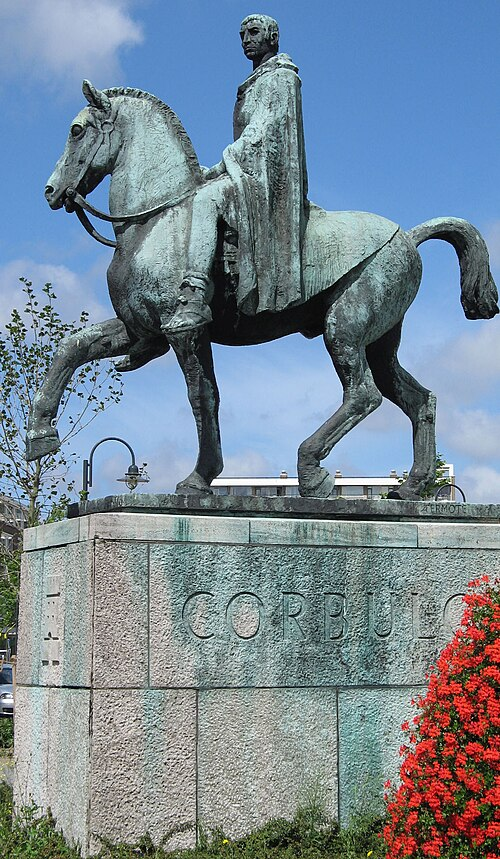
Corbulo was Nero’s most illustrious general — a stern, highly competent commander who restored Roman power in Armenia, won major victories in Germania, and was ultimately forced by Nero to commit suicide allegedly because his son-in-law was involved in a conspiracy. He came from a distinguished senatorial family and was a brother-in-law of Caligula. Nero sent Corbulo to resolve an Arminian sovereignty crisis. Corbulo installed an Herodian Prince, Tigranes as King of Armenia. After King Volgases drove out Tigranes and re- installed his brother Tiridates as King of Armenia, Corbulo re-invaded Armenia. At this moment, a Roman-Parthian war was imminent. Rome had been humiliatingly defeated by Parthia under Corbulo's short term replacement, Paetas. Instead, Cobulo had an aha moment to negotiate a peace over Asia that would please as victors both Nero and Vologases. Nero gave him imperium maius over Roman Asia to negotiate a lasting peace that lasted for fifty years until a new Roman Emperor Trajan sought military glory.
The Peace Settlement
Tiridates agreed to travel to Rome.
He received the Armenian Crown from Nero.
Armenia remained a Roman client kingdom.
Asia and the Roman Empire were spared a ruinous war.
Corbulo became a legend as a model Roman general.
The Batavian War
The Batavian War was a short revolt led by Julius Civilis, in which the Batavians nearly broke Roman control of the Rhine frontier — but were defeated when Rome regrouped under Vespasian. Batavia was disarmed, and forced back into the Roman alliance.
The war unfolded during the chaos of A.D. 69. Civilis — a Batavian chief and Roman officer used this moment to try to free Batavia and create a new Germanic power centre
Causes of the Revolt
Batavian resentment — heavy recruitment demands, loss of privileges, and the disbanding of the Batavian imperial bodyguard.
Roman civil wars— Civilis used the confusion to make his own rebellion.
Germanic nationalism — Civilis invoked ancestral freedom and tried to unite the tribes of the Rhine.
Civilis struck fast:
Overran Roman forts along the Lower Rhine.
Destroyed Roman detachments piecemeal.
Won over other major German tribes.
Made two legions surrender.
Inspired revolts across Germania Inferior (Lower Germany).
For a moment, Rome’s entire northern frontier looked about to collapse.
Civilis proclaimed that the Batavians would lead a new Germanic confederation.
Once Vespasian secured the throne, Rome finally responded:
Quintus Cerialis was sent north with fresh legions.
Roman discipline returned.
Germanic tribes began to doubt Civilis’ promises.
The Batavian revolt lost momentum.
Quintus advanced methodically, retaking forts and pushing Civilis back toward Batavian territory.
The decisive phase came in late AD 70:
Quintus crossed into Batavian territory.
Civilis’ Germanic allies melted away.
The Batavian army was forced into retreat.
Civilis attempted a final stand but could not match Roman numbers or discipline.
Civilis met Quintus over a bridge for negotiations — the sources break off here, but the outcome is clear:
Batavia submitted.
Batavia was reintegrated into the Empire.
Civilis disappeared from history.
Batavian privileges were restored, but under tighter Roman control.
The Batavians continued to serve as elite auxiliaries for centuries.
Batavia lost its bid for independence, but remained one of Rome’s most valued military communities.
Otho Redeemed Rome and became a Stoic Legend


Galba was proclaimed Emperor by his troops in Hispania and joined a wider rebellion against Nero. As support for Galba spread, the Senate ratified him as the new Emperor, and Rome’s citizens and Praetorian Guards deserted Nero.
Declared a public enemy, Nero fled and allegedly committed suicide. Galba marched into Rome and was declared Emperor by the Senate in 68 A.D. But Galba was universally hated for his summary executions, austerity, avarice and broken promises.
Otho, who expected to be the successor to Galba, met conspirators who carried him to the Praetorian camp. The Praetorians quickly rallied to him. Galba marched into the Forum but found no effective support. Praetorians killed Galba. On the same day in 69, the Senate ratified Otho as Emperor.
Otho immediately faced a rival, Vitellius, whose legions in Germania marched on Italy. Otho fought bravely — and may have won — but after losing a critical battle, he told his officers he would not “spill more Roman blood for his sake,” and then committed suicide.
This Stoic act allowed Vitellius to take the Emperorship, ratified by the Senate.in 69 — briefly — before Vespasian's legionnaires defeated him in further bloody battles. Vespasian's Emperorship was ratified by the Senate in 69. Thus began the Flavian dynasty.
Emperors that were replaced by a hostile successor had their histories focused on their immorality and goriness. Vitellius received punishment that otherwise belonged to the more Eastern Roman centuries.
Vitellius received the hatred of Romans more like a Roman enemy than a disgraced Emperor. He replaced the traditional Italian -born Roman Praetorians with his riotous German troops. To the Romans, this was a traditionally dreaded enemy occupation
Prior to the Epstein files and Israel's present mania, I dismissed the more lurid Roman ales as rhetorical exercises.
An Imaginative Reconstruction
Night had settled over the sacred grove of the Batavians, a ring of ancient oaks rising like pillars around a clearing lit only by a single fire. The Rhine murmured somewhere beyond the trees, its dark waters carrying the voices of the Gods. Civilis stood alone, the torchlight flickering across the bronze rings of his armour.
From the shadows emerged the Germanic priestess, Veleda. — tall, veiled, her hair braided with river‑reeds and wolf fur. Her eyes shone with the pale, unsettling clarity of one who lived half in this world, half in another.
She raised a staff carved with spirals of Celtic and Germanic symbols intertwined. When she spoke, her voice seemed to come from the trees themselves.
"Julius Civilis," she said,“ son of Batavians, breaker of Roman chains.”
Civilis felt the atmosphere tighten. He had come seeking guidance, but the priestess looked at him as though she had been waiting for him.
She stepped closer : Hear the will of the Gods of river and forest.”
The fire flared. A gust of wind spiraled through the clearing, lifting sparks into the night like ascending stars.
You will strike when Rome is blind. You will be hailed as the Liberator of the Batavians.
Civilis felt his breath catch. The word liberator echoed through the grove like a drumbeat.
Veleda circled him, her staff tracing patterns in the air.
Veleda : From your war will rise a great Germanic Empire.
Her eyes blazed.
Vleda : Its western throne will stand among the tribes. Its eastern capital will bear your people’s name — Batavia — a city of river‑Kings and free men.
Civilis felt the words strike him like hammer blows. Batavia — not a village, not a tribe, but a capital. A future carved from rebellion.
The priestess lowered her staff.
Veleda : This is the path the Gods have shown. Walk it or let another take your destiny.
The wind died. The fire shrank. The grove fell silent.
Civilis stood alone again, but changed — as though the prophecy had carved a new shape inside him.
He bowed his head.
Civilis : I will walk it.
And the Rhine, dark and ancient, seemed to whisper its approval.
The villa of Quintus
The afternoon light slants across the villa’s peristyle, turning the marble columns gold. One eye Civilis limping and Quintus walk slowly beneath them, the sound of their sandals echoing against the stone.
Civilis : When I met the Roman commander over the River Nabalia, I had thought I would be meeting my boyhood friend, Quintus. But then I soon found out it was a trick. He was another Quintus, a faithful servant of his Emperors.
Quintus laughed uneasily.
Quintus : It was my trick. He sent you an epistle signed Quintus that he would meet you at the Nabalia bridge. If you agreed to Rome's really generous terms, he would guarantee your safe exile in his household. This is the new humane age orchestrated by the Divine Claudius when he granted Caratacus an unshackled exile in Rome . You were tricked but not garroted. Your people have survived although severely reduced as Rome's allies. If you had refused the peace terms, your birth would be the worst thing that ever happened to Batavia, instead of the second best thing. The best thing would have been not to rebel.
Civilis : As directed in the epistle, I swam across the river in the evening into the arms of
Quintus Cerialis. He brought me a toga, a cloak, and attendants to take me into Italy and this villa. He had to swear the Jupiter oath to me, he was not taking me away to be executed.
Quintus : I recalled you telling me in Rome, your people's prowess in swimming in rivers. Here you will remain as my faithful Batavian comrade from my boyhood who gave good services to Rome. No one will believe you are the enemy of Rome, Civilis living under my roof. Just another Civilis, a common Roman name among Rome's Batavian allies.
Civilis : I and my people achieved glory and then ruin. Quintus… what happened to you? We expected great things. When we were boys in Rome, everyone said you would be another Agrippa, another Drusus. But all that happened was : you joined several religious colleges, rose through the senatorial ranks, became Consul under the boy Emperor Nero, later a census collector in Gaul, and then retired here to your villa. Your biggest fame is your name with your fellow Consul Ordinarius (Ordinary Consul) is publicly dated for that year.
Quintus smiles faintly — not offended, but weary, as though he has heard this question many times.
He rests his hand on a column.
Quintus : What happened to me? My family happened.
Civilis frowned.
Quintus continued, voice low but steady : You remember my father — Lucius Saturninus. Bless his name. After Caligula fell, he stood in the Senate and proposed the damnatio memoriae of the entire Julio‑Claudian line. Augustus included. My father was born in the Cleopatra war. His heart always ached for the return of the old Republic.
Civilis blinked. He had forgotten that damnation memoriae and had never understood its full significance.
Quintus : Claudius never forgot it. And he never forgot what was reported about me either — that at my toga virilis, drunk on wine and pride, I boasted I would be either Brutus or Caesar. My father went into shock but everyone else laughed at just a wine soaked youth.
Civilis gave a thin, rueful smile.
Quintus : Not the sort of thing an Emperor likes to hear about a promising young Patrician.
Civilis looked at him with new understanding.
Civilis : So your family lived under suspicion.
Quintus : Under sufferance and surveillance, Civilis. We were tolerated, not trusted. I advanced — yes — but never too far, never too fast. A Consulship was permitted. Anything more would have been… provocative. I have preserved my family's name and fortune. My father served as Praefectus Urbae (Mayor ) soon after his blunder in the Senate. When he died after fifteen years as Praefectus Urbae, Nero ordered against the advice of Seneca, a public funeral and statues as if he was a member of the imperial family, not
a Senator preoccupied all that time with merely making Rome liveable for its non senatorial classes. My family have speculated that was another example of Nero's droll humour. Nero first showed himself in his first military password. "The best of mothers". We all thought such a nice boy.
Quintus gestured toward the quiet gardens.
Quintus : So I retired. Rome has a long memory. My family will belong to the great might‑have‑beens of Roman history.
Civilis was silent for a moment, then spoke softly.
Civilis : And you think my name might belong to the ages?
Quintus turns to him, eyes steady.
Quintus : Yes. You reached for something larger than yourself. You failed — but failure does not erase legend. Rome remembers its rebels more vividly than its obedient servants. We have the Libri Sibylini (Sibylline books). You Batavians have the priestess prophet, Veleda. Prophecies may speak of ages yet unborn.
Civilis : Everyone thinks my support of Vespasian at the start of the civil wars was a deception. But I did support him as Batavia's strongest ally. Then Veleda' prophesies turned my head to folly.
Quintus places a hand on Civilis’ shoulder.
Quintus : Your people may yet remember you as the man who tried to free them. And centuries from now, when prophecies ripen, when nations rise and fall, your name may stand at the beginning of something vast. Batavia might then fight and defeat a new Rome. The capital of Egypt was named Thebes by Homer to connect it to the Boeotian city of the Tyrian Prince Cadmus. Maybe one day, the capital of the East will be named Batavia.
Civilis looks away, toward the distant hills.
For a moment, neither man speaks.
The Dream of Civilis
The villa is silent. Only the cicadas sing in the warm Italian night.
Civilis lies on a couch in the guest room, the shutters half‑open, the moonlight falling in pale bars across the floor. Exhaustion pulls him downward, and soon he drifts into a sleep deeper than any he has known since the revolt.
The Dream Begins
He stands on a high hill above a vast plain. Not Italy. Not Batavia. Somewhere else — somewhere that feels both familiar and impossibly distant.
Below him stretches a great city, its walls white as bone, its towers rising like spears. Wide rivers cut through it, crossed by bridges of stone and iron. Banners flutter from every gate, emblazoned with a golden crown, lions, a sword and arrows.
A voice whispers behind him: Batavia.
Civilis turns. No one is there.
He is now standing in a vast hall, its roof supported by pillars carved with strangely familiar images. Warriors in strange armour march past him, their helmets crested with iron wings.
At the far end of the hall sits a throne of black oak.
Upon it rests a crown — heavy, intricate, forged of gold and river‑stone.
A herald proclaims in a Germanic language he barely understands : The Keizer of the Nederlands -Indie.
Civilis feels his breath catch. The hall echoes with cheers.
But then he notices something stranger still.
On the wall behind the throne hangs a great tapestry — a map of the empire. And in its eastern quarter, embroidered in bright thread, is a single word: Batavia
— the capital of the East.
The name strikes him like a blow. A distorted echo of his homeland. A future built on memory, not geography.
The tapestry shifts. Images ripple across it — battles, rivers, tribes uniting, legions breaking, Batavian ships sailing to the ends of the earth.
And then Civilis sees himself.
Not as he is now — grey, defeated, living in exile — but as a legend
standing on a riverbank with a raised spear
leading tribes across the Rhine
defying Rome
crowned in firelight by a priestess whose face he can not see.
The crowd in the hall chant a name: Civilis the Liberator!
He staggers backward.
Civilis (whispering): No… I failed. I lost. I—
But the dream does not listen.
The herald speaks again: He who began the freedom of the Nederlands.
He whose revolt lit the first flame.
Civilis feels tears sting his eyes — not of pride, but of confusion, grief, and the terrible ache of possibility.
The hall dissolves.
Civilis awakes in the villa, heart pounding, the moonlight still lying across the floor.
He sits up, breathing hard.
Quintus’ words return to him: Prophecies may speak of ages yet unborn.
Civilis presses his hands to his face.
Civilis: Veleda :Were you a fraud? Or did you see a world I will never live to witness?
Outside, the cicadas sing on, indifferent to the rise and fall of Empires.
The sun is sinking behind the hills, turning the villa’s courtyard amber. Civilis and Quintus walk slowly beneath the colonnade, the air warm and still.
Civilis : Quintus… tell me something. How did a simple provincial soldier — Vespasian — become Emperor of Rome? Founder of a new dynasty? I knew him only as a commander. Nothing more.
Quintus smiles, the kind of smile Romans use when discussing fate, irony, and politics all at once.
Quintus : Ah, Vespasian. A man of Sabine mud and soldier’s boots. Do you know, Civilis — it was prophesied at his birth?
Civilis raises an eyebrow.
Civilis : And everyone laughed, I assume.
Quintus : Of course. A prophecy that a provincial mule‑breeder’s son would rule Mare Nostrum (Our Sea Lands ). Ridiculous.
He pauses, letting the irony settle.
Quintus : But Rome has a habit of being ruled by the men it least expects.
Civilis nods slowly.
Civilis : And even from Judaea? I heard rumours.
Quintus’ smile widens.
Quintus : Yes. While he commanded the legions in the war against Judaea, a Jewish prophet — or fraud, or visionary, much like your Veleda — proclaimed that Vespasian would become the Mashiach. That their Jewish prophets had foretold him. That he would perform miracles. That he would bring a new world rule of peace and order.
Civilis blinks.
Civilis: A Jewish prophecy made him Emperor?
Quintus : It certainly helped. Prophecy is a powerful thing when an army wants to believe it. And when Rome is tired of chaos.
He gestures lightly with his hand.
Quintus : This prophecy of Josephus that he whispered in Vespasian's ear has become the new ruling verbum (ideology ). It has replaced the Julio‑Claudian verbum. A new dynasty needs a new story.
Civilis laughs — a deep, surprised laugh.
Civilis : So Vespasian rose on prophecy, just as I fell on prophecy.
Quintus laughs with him.
Quintus : Rome is built on prophecy, Civilis. Some prophecies raise men up. Others bury them.
They stand together for a moment, sharing the strange, bitter humour of men who had lived long enough to see how fate plays tricks.
Quintus claps Civilis lightly on the shoulder.
Quintus : We will speak of this no more. Come — cena (dinner) awaits.
They turn toward the villa’s interior, the lamps already lit, the smell of bread and herbs drifting through the doorway.
And behind them, the last light of the sun fades from the columns — as though closing the chapter on prophecy for the night.
Josephus c.36 - c.100 A.D.
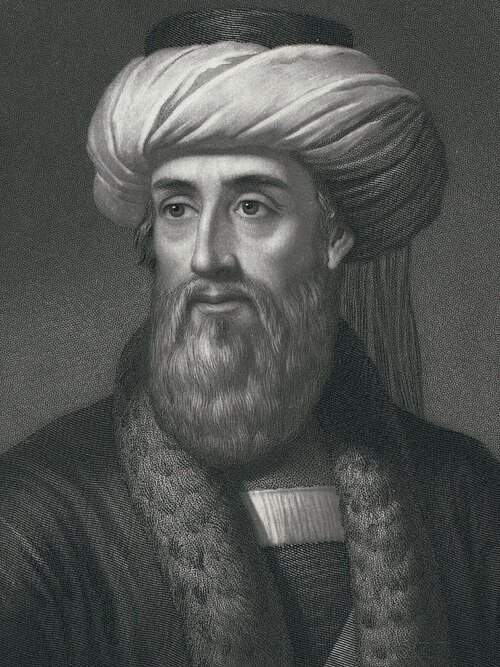
Josephus (Yosef ben Matityahu) was a 1st‑century A.D. Jewish priest, general, and historian whose writings — The Jewish War and Antiquities of the Jews — are our most important non‑biblical source for the history of Judaea.
Josephus was born in Jerusalem, into an aristocratic priestly family, In his youth, he explored the major Jewish sects — Pharisees, Sadducees and Essenes — finally joining the Pharisees, a choice that shaped his later political realism.
Returning to Judaea from Rome, Josephus was appointed commander of Galilee when the first Jewish revolt against Rome broke out.
After a long siege, he surrendered to Vespasian.
He then claimed: Jewish prophecies foretold Vespasian’s rise to the Emperorship. When Vespasian became Emperor, Josephus was freed and became a client of the imperial household.
To many Jews he was a traitor, to Romans he was a valuable informant.
After the war, Josephus lived in Rome, receiving citizenship and a residence. There he wrote the works that define his legacy:
The Jewish War — The first Jewish-Roman War 66-74 A.D.
Antiquities of the Jews — history of the Jewish people from creation to his own era
Life — his autobiography, largely defending his conduct in Galilee
Against Apion — a defence of Judaism against Gentile
critics.
Josephus' books are indispensable to understanding his era. He gives the only non biblical detailed descriptions of Jewish society, sects, politics, and the Herodian dynasty.
In The Jewish War, Josephus records the story that he personally rescued three men crucified by the Romans. One of the three men survived the cross. That may be Josephus' inside joke of Jesus' resurrection. In the gospels, Jesus is crucified with two robbers. Josephus' account of Jesus is most likely an interpolation by Christians. Rabbinical Jews were forbidden to mention Jesus except as a curse. Josephus records in his early life he was an Essene. Modern scholarship has argued the Essenes were the early Christians. The gospels' reference to the young man who could not follow Jesus because he would not give up his great wealth ma.y be a sly biblical reference to Josephus.
.
In his Antiquities, Josephus tells the story of of upper class Roman women, Paulina and Fulvia (golden haired) in Rome in the era of Tiberius and Pontius Pilate. Paulina by trickery is induced to sleep in the temple of Isis with an imposter called Mundus who has convinced her he is the Egyptian God of the dead Anubis. Three days later, the imposter divulges the trick and boasts to Paulina of his success.That sounds like a Pharisee slanderous allegory of Christianity and the mission of Saint Paul. Paulina as Paul. Anubus is death and has an ironic connotation with Egyptian magic. Mundus is Latin for the world. Paulina is tricked and raped by the world. The trick is divulged by Mundus after three days. The story of Fulvia tells of "a man who was a Jew, but had been driven away from his own country by an accusation laid against him for transgressing the law... He then living in Rome professed to instruct men in the wisdom of the laws of Moses." He tricked Fulvia to send to Jerusalem treasures with which he and his followers enriched themselves..This sounds like a slander of Saint Paul. There are no other records of the stories of Paulina and Fulvia. Nor does Antiquities say why they were mentioned,
Jewish sects have throughout their history characteristically fought and slandered each other and then united under external threat. The Christian Jewish sect was from Jesus' crucifixion in c.30 to the first Jewish war in 66 A.D., mostly tolerated by the temple Priesthood as a charitable God fearing Jewish sect. At the outbreak of the Jewish war, the Christians committed the cardinal sin of flight in imminent expectation of Christ's second coming. To the Jewish leadership, the Christians forsook their heritage and could no longer be counted as Jews. An eternal curse was laid, some years later, that barred them contact with Jewry. Saul was now dead. The few remaining Jewish Christians became the Ebionites (the poor ones) observes of Jewish ritual within the Jesus cult but who rejected the resurrection. Jewish Christians also became the heretical Nazarenes who rejected Saint Paul but accepted Jesus' resurrection and return.
Both disappeared from records by the fifth century. But the Jewish Christian cult, even if only surviving as memories, was surely too enticing to die completely. In the seventh century, an Arab trader, Muhammad became influenced by Judaism and Christianity. He fashioned a new religion Islam. In Islam, Jesus is Al Masih (a prophet and messenger of God), In Islam, Jesus will return to defeat the anti-Christ. In the Talmud, Jesus floats for eternity in excrement.
An Imaginative Reconstruction
The lamps burn low in the imperial dining hall. For once, the atmosphere is not oppressive.
The Senators arrived expecting the usual austerity from the new Emperor Galba: plain food, severe conversation, and endless lectures on old Roman virtue. Instead the Emperor is unexpectedly genial. The most expensive of wines circulate. Senators laugh more freely than they had in months. Even those who fear the Emperor notice, that the elderly Emperor
is now serene
At the head of the hall, Galba rises.
"Amici mei (my friends)," he announces, "we shall conclude with a diversion."
The hall quietens..
Galba : A tragedy play discovered among the papers of Seneca.
That produces astonishment.
Quintus nearly drops his cup.
Galba and literature?
Several Senators exchange curious smiles. One can imagine some hackneyed Greek myth.
The kind of academic tragedy fashionable among rhetors (teachers of rhetoric).
Slaves draw back the dining couches from the centre of the hall.
The actors enter.
Quintus frowns at once.
They wear not Greek costume but Roman dress. This will be a fabula praetexta (A Roman historical tragedy).
The performance begins.
The audience stirs.
Then goes utterly silent.
Recognition spreads through the hall.The masks are not generic theatrical faces. They have been copied from now overthrown public statues and surviving public portraits,
One actor bares the face of Nero.
Another wears the delicate features of Octavia.
A third carries the proud, severe countenance of Agrippina the Younger.
A murmur runs through the benches.
Quintus sits forward.
He has heard rumours of a fabula praetexta being covertly rehearsed.
This is not Seneca.
The language lacks the master's violent brilliance.
There are no thunderbolts of rhetoric.
No metaphysics.
The dialogue is well mannered.
Quintus' eyes drift across the hall.
Curiatius Maternus, a known rhetorician and tragedian's eyes are fixed firmly upon his wine.
Soon Quintus feels a deeper unease. The treatment of the Julio-Claudian dynasty is slanderous.
Even the divine Augustus emerge stigmatised during the civil wars as a bloody tyrant.
Quintus feels a chill.
This is political weaponry
He remembers the famous play, Brutus.
A theatrical piece first.
Then, through endless repetition, accepted as the history of the foundation of the early Republic
Generation after generation forgot where drama ended and history began.
What is an invention upon the stage becomes truth in Rome.
The slander almost elegant in its efficiency.
A few Senators exchange alarmed glances.
Then comes the biggest horror.
A new character enters.
The camp executioner (the Prefect of the Praetorian Guards).
The actor's elderly mask gleams beneath the lantern light.
Recognition strikes him like a physical blow.
His father's face.
Several Senators immediately notice his reaction.
Heads turn.
Then turn away very quickly.
On stage, the Prefect protests.
Yet he is ordered forward to conduct executions.
One murder.
Then another.
The audience watches in petrified silence.
Quintus stares.
The absurdity scarcely matters.
His father had served as Praefectus Urbi years before these events.
The Urban Prefect did not carry out imperial executions.
That belonged to the Praetorian Prefect.
Any educated Roman knows the distinction.
Accuracy is irrelevant.
The image is what matters.
The audience will remember only one thing.
A man bearing his father's face became Nero's butcher.
The final scene concludes.
Octavia is exiled.
The chorus laments.
The actors withdraw.
Polite applause rose uncertainly through the hall.
Galba appears pleased.
Quintus rises immediately.
He does not seek farewells.
He simply walks out.
The crowd parts before him.
Men who eagerly greeted him earlier now find urgent reasons to look elsewhere.
Some become fascinated by cups.
Others by walls.
Others by absolutely nothing at all.
No one wishes to be seen speaking with him.
Not tonight.
Not after that performance.
As he descends the palace steps, a belief settles over him.
A purge is coming.
The play has been an announcement.
Not entertainment.
Announcement.
Enemies have been identified.
Families marked.
Histories rewritten.
And his own house stands first among the condemned.
The old curse.
His father's role in advocating the damnation of the divine Augustus.
Decades passed.
Decades mean nothing.
In Rome, memory can sleep for generations and wake hungry.
The streets below the Palatine are dark.
Torches flicker in the winter air.
Ahead, another figure emerges hurriedly from the shadows.
A Senator's cloak.
A familiar gait.
Marcus Otho.
The future-that-never-was.
The disappointed heir.
He too is leaving early.
He too understood.
Quintus lengthens his stride.
Quintus : Otho.
The man starts violently.
He turns.
Even in torchlight his face looks pale.
Quintus steps close enough that no passerby could hear.
Quintus : No more dallying."
Otho stares.
Quintus :We are all in danger."
The words hang between them.
In the distance come faint sounds from the palace above.
Music.
Laughter.
The Emperor is still celebrating.
Quintus lowers his voice further :Get the Praetorians ready at dawn for tomorrow's blow against this Caesar usurper.
Otho's eyes widens.
For a moment he seems unable to breathe.
Then Quintus delivers the final sentence : Restore an Augustan rule for the Roman people.
The silence that follows feels immense.
Otho looks up toward the dark silhouette of the palace.
Then back to Quintus.
Terror fills his face.
Not disagreement.
Recognition.
He knows.
The game has reached its end.
Slowly, he nods.
Once.
Only once.
Then he turns and disappears into the Roman night.
Neither man looks back.
High upon the Palatine, Emperor Galba's feast continues uninterrupted, while beneath the hill the first movements of another Emperor's birth is already beginning.
That dawn, Quintus gets a note delivered to his home from Galba. Galba wrote. He only now has learnt about the mask of his father in the play. He had ordered the play only to remind the Senate of their cowardly betrayal of the Republic and hope they would do better. All the overthrown statues and portraits of the non Senator Praefectus Praetorio ( Praeetorian Prefect), Burrus had been defaced. A Greek mask maker found his father Lucius Saturnus' statues still erect. He read the inscription Praefectus and copied the face. Galba would issue the next day a proclamation about this slander on his esteemed father. He invited Quintus to a palace lunch the next day. That event would signal Quintus' favour in his imperial household.. Quintus rushed frantically to the Praetorian camp but the blow against the Emperor was too far advanced. He later remembered ruefully. The Plebeians had protected his father's statues out of gratitude for his fifteen years for their welfare as Praefectus Urbi.

True history : The Romans appear to have been the first civilisation to develop historical drama into a distinct literary genre.
Roman historical tragedy (fabula praetexta) was a distinctly and popular
Roman genre that never achieved the canonical status of Greek and Roman mythological tragedy. Because it dealt with Roman history and contemporary political power, it became increasingly dangerous to sustain under the Empire. Roman historical drama rarely showed Gods and their acts. Ghosts and omens were mostly shown.
The play Octavia is the only extant Roman historical tragedy. It is traditionally attributed to Seneca. Modern scholars insist as it prophesises Seneca's death, Seneca could not have written it. Some later scholarly discussions have proposed the Senator, and dramatic poet Curiatius Maternus as a plausible candidate. There is no record it was ever performed in the Roman era. Nor is there a record, Otho killed himself from a woman's counsel.
Emperor Vespasian 9- 79 A.D.

Born Titus Vespasianus to a Sabine equestrian family, Vespasian was the first of the Flavian Emperors . He built his career through military service.
While commanding Rome’s forces in Judaea, Vespasian was proclaimed Emperor by the eastern legions in 69 A.D..
His allies defeated Emperor Vitellius.
The Senate recognised his Emperorship in 69 A.D..
He was the first Emperor succeeded by his natural son, Titus, establishing the Flavian dynasty.
He ran the Empire modestly and peacefully except for some major building projects. This restored imperial and financial stability.
Vespasian is remembered as one of Rome’s most successful Emperors—frugal, practical, and effective. His reign restored order after chaos, set up a durable dynasty, and reshaped Rome’s urban landscape. He died reportedly joking on his deathbed: “I think I’m becoming a God.” As a provincial Italian and soldier, Vespasian might have been speculating.
Vespasian kept the imperial bureaucracy, but he shifted its staffing away from imperial freedmen towards equestrians (middle class).
Vespasian preserved the administrative machinery built under Claudius, yet he rebalanced it:
Equestrians became the backbone of procuratorial (imperial provincial, administrative and financial) offices.
Freedmen were expelled from high‑level decision‑making roles and confined mostly to household or technical functions.
The bureaucracy itself remained intact and even expanded, but with a different social composition.
Reducing freedmen influence restored much of the influence and prestige of the senatorial and equestrian classes.
Equestrians (middle class) provided a more professional, career‑based administrative class, especially for finance, taxation, and provincial oversight.
Vespasian kept the imperial system. However, he replaced the hated freedman dominance with a respectable equestrian class — a reform that shaped the Roman state for the next century.
The State funeral of Augustus proclaimed his divine apotheosis. An eagle was released to fly up from the smoking bier into the sky, as the new God Emperor. Tiberius received a State funeral but no apotheosis. Caligula after a secret funeral was re-interred in the Augustus Mausoleum. Claudius received a State funeral and the divine eagle apotheosis. Nero's private burial in his father's family tomb became a shrine for laying flowers by his admirers for generations. Vespasian received a State funeral and the divine eagle apotheosis. The imperial funeral formality was now established. If a pagan Emperor was not disgraced or died violently, or died outside Rome, he received a State funeral and divine apotheosis. Not always accompanied with the eagle release. Vespasian's funeral became a legend when the official archimimus (chief mimic of the deceased) shouted, “Give me a hundred thousand sesterces and throw me into the Tiber!” The mimic received indignatio militum (beaten by the Praetorians). Vespasian had become unpopular for his stinginess in public spending combined with raising taxes. To complaints about his urine tax, Vespasian had retorted. "Money doesn't stink."
The Colosseum
The Colosseum is the Flavian Amphitheatre, built by Vespasian, and his successor sons,Titus, and Domitian on the drained lake of Nero’s Domus Aurea. It seated roughly 50,000–80,000 spectators and hosted gladiatorial combats, beast hunts, mythological dramas, and early mock naval battles.
It stood an enormous freestanding amphitheatre — unlike earlier Roman arenas dug into hillsides — built partially of concrete, arguably Rome's most important technical invention.
Titus inaugurated it in A.D. 80 with 100 days of games.
Vespasian built it as public altruism, replacing Nero’s private lake with a monument symbolising his Flavian imperial family's stability and generosity. It became the icon of imperial spectacle, engineering, and mass entertainment.

Roman Britain

Rome conquered Britain from 43 to 84 A.D., beginning with Claudius’ invasion and ending with Agricola’s northern campaigns and his recall. Claudius prohibited the Celtic Druid religion. In 61 A.D., the Roman army invaded the island of Mona in north Wales which was a major Druid stronghold, and destroyed the Druid sacred groves. Without their religious sanctuaries, the Druid priesthood became extinguished by the end of the Roman Empire. Druid beliefs and ritual practices blended into non Christian sorcery and witchcraft.
By Pro Praetor (military Governor) Agricola’s retirement, Rome controlled most of the island south of the Highlands.
Agricola gathered the sons of tribal leaders and had them trained in Latin, Roman rhetoric, and Roman administration. They soon spoke Latin better than the Gauls according to Tacitus in his De Vita et Moribus Iulii Agricolae (On the Life and Morals of Julius Agricola).
They were encouraged to wear togas, a visible marker of Roman identity and elite status. Agricola's position as Pro Praetor overrode Roman law forbidding non citizens wearing the toga.
Agricola delegated the building of temples and Roman houses, creating a Roman civic landscape that would shape behaviour and expectations .
Britons eagerly adopted arcades, baths, and banquets.
Agricola’s aim was to make local elites dependent on Rome and ready to serve as middlemen of imperial administration .
Agricola believed that uncultured Britons were more warlike, and that giving them elite Roman habits would :
make them less rebellious
bind them to Roman prestige and lifestyle
prepare them to govern Britain on Rome’s behalf,
and ensure long‑term stability without constant military force.
This became the classic Roman strategy: conquer by arms, hold by culture. Agricola and Tacitus propagated an imperial Romanised strategy as the most effective policy. of pacification.
Britain after Agricola never had a native Briton revolt again. When Briton rebelled after Agricola, it was as a Romanised province.
An Imaginative Recreation
The morning mist still clung to the parade ground at Londinium when Agricola beckoned Tacitus to walk with him. The Governor’s cloak is pinned high, his expression unusually animated.
Agricola : Tacitus. We make a new policy. We replace the conditions that bred the Boadicea revolt. No more chiefs left half‑Roman, half‑hostile. We take their sons, put them in togas, and teach them Latin. We make them citizens in spirit and will eventually in law.
Tacitus (cautiously) : A bold experiment.
Agricola smiles : More than an experiment. A proven success. Come. I will show you.
The school stands near the forum, its portico hung with wax tablets and maps of the Empire. Inside, boys of the Iceni, Trinovantes, and Catuvellauni sit on benches, their hair braided in native fashion but their tunics Roman.
Agricola strides in. The boys scramble to their feet.
Agricola : Sit, boys. Today I ask a question. Remember everyone must only speak Latin.
Agricola folds his arms : What has Rome done for you?
A boy, calls out : The roads!
Another chimes in: The aqueducts!
A third: The baths!
Tacitus presses his lips together, amused despite himself. Agricola nods gravely.
Agricola : Yes, yes — the roads, the baths, the law courts, the peace. Quite right.
Agricola clears his throat : Now tell me: whom do you admire most?
Agricola allows himself a small, expectant smile.
The boys shout in unison: Queen Boadicea!
A ripple of laughter resounds through the room — cheeky, irrepressible, very British.
Agricola blinks, taken aback. Then one boy — tall, red‑haired, with the unmistakable bearing of the Iceni — stands.
Boy : She was my grandmother. She told my mother. One day we will drive Rome out. But we will keep all their good things. My grandmother poisoned herself sooner than be a slave.
All the other boys cheer and whoop.
Agricola looks at him for a long moment. Then he nods slowly.
Agricola : You show Stoic wisdom and Plautine comedy, boy. But everyone be careful with your tongue. Rome is patient — but not endlessly so. Remember in your lessons what happed to all the Roman rebels.
The boys bow their heads, though their smiles remain.
As they step back into the sunlight, Tacitus murmurs : They remain in servitude.
Agricola glances at him, but says nothing.
As they depart from the school, Agricola says quietly : It is the same everywhere even in Judea. When the Jewish Messiah returns, the Jews expect him to keep our Roman infrastructure. Keep our taxes low, and our rule moderate and they always eventually acquiesce. But we are never popular like their former rulers and rebels.
Tacitus sits alone, stylus poised, the wax tablet reflecting the lamplight. Outside, the night over Rome is quiet — the kind of quiet that lets a man hear his own judgments.
He has returned from Britain only weeks before, carrying with him the memory of the northern roads and of a Governor who tried — earnestly, sometimes awkwardly — to make Rome beloved in a land that had never asked for her.
Tacitus warms the stylus between his fingers. He begins with the easy parts: Agricola’s lineage, his modesty, his discipline. These flow smoothly. But then he reaches the section on Britain — the part that has stuck in his mind.
He remembers the schoolroom.
The boys in their half Roman half barbarian attire. Agricola’s proud question. The laughter. The name Boadicea shouted with the force of inheritance.
And the Iceni boy’s declaration: We will drive Rome out one day — but we will keep all these good things.
Tacitus had murmured the line then, almost involuntarily: They remain in servitude.
Now he must decide whether to write it.
He presses the stylus into the wax, then lifts it again. He thinks of Agricola — loyal, earnest, hopeful. He thinks of the boys — sharp‑eyed, half‑converted, half‑defiant. He thinks of Rome — a city that calls its dominion civilisation.
He writes slowly: They were gradually led into the charms of vice, the lounge, the bath, the elegant banquet — and this, in their ignorance, they called civilisation, when it was part of their slavery.
He pauses. It is true.
A soft knock. Agricola steps into the room, cloak still smelling faintly of the British rain.
Tacitus turns the tablet face‑down.
Agricola smiles : Writing?
Tacitus : Your life.
Agricola laughs lightly.
Agricola : Make me better than I was.
Tacitus studies him — the man who tried to Romanise Britain with schools and togas, who believed that loyalty could be taught like grammar.
Tacitus : I will make you as you were.
Agricola inclines his head.
When Agricola leaves, Tacitus lifts the tablet again. He rereads the line. He does not change it.
Some truths, he thinks, must be written even when they sting.
He sets the stylus to the wax once more, shaping the future memory of a man he admired — and the quiet question of an Empire he served.
Tacitus has arranged the tablets neatly on the table, smoothing the wax with a care that betrays his nerves. The house on the Caelian Hill is quiet; the lamps burn low. Agricola arrives without ceremony, as he always does, cloak folded over one arm, expression calm and curious.
“Is this it?” he asks.
Tacitus : Your life.
Agricola smiles. “
Agricola :A modest subject.
Tacitus does not answer. He gestures to the seat. Agricola sits, adjusts the lamp, and begins to read.
He reads of his youth, his discipline, his refusal of luxury. He smiles at the passages describing his military service in Britain — the long marches, the cold camps, the stubborn tribes.
“You make me sterner than I was,” he says.
Tacitus replies softly : You were stern enough.
Agricola reads on. His brow tightens as he reaches the line — the one Tacitus had hesitated over.
Agricola : So that is how you judge civilisation in Britain.
Tacitus : It is how history will judge it.
Agricola looks back at the tablet.
Agricola : You are not wrong. But I tried, Tacitus. I truly tried.
“I know,” Tacitus says. “That is why I wrote the truth. Not flattery.”
He reads of his recall by the former Emperor Domitian — the cold reception, the quiet retirement, the dignity with which he bore imperial jealousy. He reads of his restraint, his patience, his refusal to complain.
When he finishes, he sets the tablet down gently.
Agricola : You have written a monument Not to me — but to the idea that a man may serve Rome without serving tyranny.
Tacitus’ voice is low : I wrote it because I feared Rome would forget such men.
Agricola stands. For a moment, he rests a hand on Tacitus’s shoulder — a gesture rare for him, almost paternal.
Agricola : Let them read it. Let them know what we tried to do.
Tacitus nods, unable to speak.
Agricola turns toward the door. Before leaving, he looks back once more.
Agricola : You have written me honestly. That is all a man can ask.
He steps out into the Roman night, leaving Tacitus alone with the tablets — and with the knowledge that he has preserved a life, and judged an Empire.
Tacitus and Agricola sit in the quiet garden of the Caelian house, the evening warm, the lamps just lit. The tablets of the Agricola lie between them, still open.
Agricola taps one with his finger.
Agricola : That boy. The tall one. The one who spoke of driving Rome out. He is Boadicea's grandson.
Tacitus :I suspected as much. His bearing, his fire. But his Stoic and mocking turn of phrase. (Tacitus hesitates, then adds) : It made me wonder whether he is the bastard son of a Roman soldier who raped Boadicea's daughter.
Agricola’s head snaps up, his voice suddenly testy.
Agricola : Tacitus — no. That story is a lie. A convenient one. Invented by Seneca to shield Nero’s government from blame.
Tacitus : You are certain?”
Agricola leans forward, his tone firm, almost offended.
Agricola : In peaceful territory, if a Roman soldier rapes a non slave, he is executed. The legions know this. Discipline is the spine of the Empire. The tale of rape was a political cover, nothing more.
Tacitus looks down at the tablet.
Tacitus : Then what was the real cause?
Agricola’s voice lowers : Usury, Tacitus. Seneca’s usury. He poured money into Britain at interest, then demanded repayment all at once. He crushed the tribes under debts they could never repay. That — not some invented outrage — lit the fire of revolt.
Tacitus' stylus trembles slightly in his hand.
“You ask me to write that?” he says quietly.
Agricola : I ask you to write the truth.
Tacitus exhales, long and slow.
:
Tacitus : I can write of tyranny. I can write of cruelty. But Rome’s usury… That is a subject the Senate fears more than swords.
Agricola : Then write what you can. History might understand the rest.
Tacitus closes the tablet gently, as though sealing away a dangerous thought.
"They remain in servitude,” he murmurs — but now the line carries a new weight, heavier than before.
Agricola does not contradict him.
True History : There are only two ancient sources for the Boadicea uprising. They are Tacitus and Dio Cassius. Dio Cassius in the early third century A.D could be less reticent about old history. Only Dion Cassius mentions usury as a cause for the war. Revisionist historians claim, the British American colonies rebelled against the Bank of England, not the King of England. There is no record Agricola denied the rapes story. But as a servant of the Empire, he might say that.
Emperor Titus 39-81 A.D

Titus Vespasianus ruled from 79 to 81 A.D. after the death of his father, Vespasian. He is famed in history :
The conquest of Jerusalem. Titus commanded the final stages of the First Jewish-Roman War. Jerusalem was captured and the Second Temple was destroyed.
Titus became Emperor shortly before the Mount Vesuvius that destroyed Pompeii and Herculaneum. Ancient sources praised his efforts to aid the victims.
Ancient writers portrayed Titus as a uniquely popular ruler, calling him the "delight of the human race". Despite reigning for only about two years, he gained a reputation as a benign ruler. Dio Cassius cynically wrote. "If he (Titus) had ruled a long time, it might have been shown, that he owes his present fame more to good fortune than to merit."
Titus became deeply in love with Berenice, the Jewish princess, the daughter of King Agrippa 1. This romance was unpopular in Rome as reviving memories of Mark Antony's infatuation with Cleopatra. Titus through his relationship with Berenice's Jewish Messianic heritage most likely developed a belief in a universal King of Peace and Justice. Herod The Great, Agrippa 1 and Titus aimed to be both King David and Solomon. Titus would say there was only one thing in his life he felt bad about. No Roman author appeared to understand what. It was surely his destruction of the Second Temple.
Titus died in a fever. According to later historians, his younger brother and successor Domitian caused his death by having him packed in ice.
The Herodian Kings
.
The Second Temple in Jerusalem was originally built by the Jewish exiles who returned from Babylon exile in 538 B.C.
Herod was the Roman client king of Judaea in his capital Jerusalem. He ruled from 37 until his death in 4 B.C.
Herod came from an Idumaean (Edomite) family that had adopted Judaism That made the Herodian dynasty often considered imposters as descended from Eseau. With support from Rome, Herod secured the throne of Judaea.
The Herodians as client Royalty secured Roman citizenship. Herod launched enormous construction projects. His most famous achievement was the ornamental expansion and rebuilding of the Second Temple, known as Herod's Temple. He also built Caesarea as the great Roman Hellenistic show case of the Herod dynasty.
Herod ruled under Roman authority while retaining local control. His political skill allowed him to survive Roman power struggles.
Ancient records describe him as increasingly suspicious and paranoid. He executed several members of his own family, including his wife and sons. .
After Herod the Great's death, Augustus divided the kingdom among his sons. Herod Archelaus became Ethnarch (tribal ruler of Judea, Samaria, and Idumea, while his brother Herod Antipas received Galilee and Perea as tetrarch (subordinate ruler).
Herod Archelaus was unpopular and was removed by Augustus. Judea and Jerusalem then came under imperial Roman administration, eventually ruled by Prefects including Pontius Pilate.
This is the historical context of Jesus' trial. The New Testament wrongly calls Herod Antipas Basilleus (King) instead of Ethnarch.
Herod Agrippa I
Herod Agrippa 1 was a grandson of Herod the Great. Agrippa's father had been executed by Herod The Great. He was the last Herodian ruler to govern a kingdom nearly as large as that of his grandfather.
He was raised in the Imperial Court in Rome from the age of about six. There he was acculturated and became allies of Caligula and Claudius. Tiberius imprisoned him for favouring Caligula as his successor. The new Emperor Caligula immediately released him and rewarded him with the title of Rex (King) and former territories of Herod The Great. Claudius rewarded him with more Judaean territories until he governed a Kingdom nearly as large as that of his grandfather. But as with Herod the Great, he remained a client King of Rome.
Unlike most Herodian rulers, he was generally popular with Jews because he publicly observed Jewish customs while maintaining good relations with Rome. Through his father Aristobolus, he strengthened his legitimacy by being directly descended from the Maccabee Jewish Royal dynasty.
Josephus' report of Agrippa 1 s death in Antiquities of the Jews :
Agrippa I was in Caesarea attending games held in honour of Claudius.
He appeared wearing a spectacular robe woven entirely of silver, which shone brilliantly in the morning sunlight.
The crowd acclaimed him as a God.
He did not reject this.
He then saw an owl, which he interpreted as a bad omen, and was immediately seized by severe abdominal pain.
After suffering for five days, he died.
Josephus's description of the dazzling silver robe illustrates Agrippa I's blending of Judaean and Roman Hellenistic cultures. Caesarea was very much an Hellenistic city. His acclamation as a God was a direct challenge to Roman rule. Claudius was still a mere mortal.
His death ended the brief restoration of a united Herodian kingdom. Afterwards, Judea again came under Roman imperial administration. Claudius declared that his son Agrippa 11 was too young at seventeen, to be Rex of Judaea. Instead, Rex of Judaea was replaced with a Procurator (imperial tax officer). Procurators were equestrian imperial Governors of troublesome small provinces. The previous Roman Governors of Judaea had been Prefects. Claudius was surely being disingenuous. A decade later, Seneca might have had Agrippa in mind in, Apocolocyntosis divi Claudii (The Gourdification of the Divine Claudius). A God is kicked down from Mount Olympus to be a clerk in Hades.
Emperor Domitian 51-96 A.D.

Domitian was the younger son of Vespasian, the brother of Titus, and the last Emperor of the Flavian dynasty. He succeeded Titus upon his death.
Ancient writers portrayed Domitian as a tyrant, which shaped his reputation for centuries. Modern historians view him favourably, noting that despite his authoritarian style he was also an effective administrator and ruled for fifteen years.
Domitian accepted the title Dominus Et Deus Noster (Our Lord And God). He ordered all written document to so refer to him. Domitians' public celebration of imperial birthdays and religious sacrifices in honour of Emperors continued under most later pagan Emperors.
"The Empire, which for a long time had been unsettled and, as it were, drifting, through the usurpation and violent death of three Emperors, was at last taken in hand and given stability by the Flavian family. This house was, it is true, obscure and without family portraits, yet it was one of which our country had no reason whatever to be ashamed, even though it is the general opinion that the penalty which Domitian paid for his avarice and cruelty was fully merited." De Vita Caesarum ( The Lives of the Caesars ) Seutonius
Emperor Nerva c. 30-98 A.D.

Marcus Nerva was Roman Emperor from AD 96 to 98 and was ascribed by Machiavelli as the first of the"Five Good Emperors". He became Emperor after the assassination of Domitian and restored political moderation and cooperation with the Senate after Domitian's executions and Court debauchery.
An Imaginative Reconstruction
Civilis's Funeral
Civilis's urn was interred with quiet Batavian funeral rites on Quintus's family estate.
The mourners are dispersing . A cold autumn wind moves among the cypresses. The dead man had been known for twenty six years simply as Civilis, an Italian landowner with a Batavian accent living quietly.
Two old men remain.
Quintus stands straight despite his years, his toga drawn tightly against the wind.
Nerva leans heavily upon a staff, his face lined with fatigue.
"Nerva."
"Quintus."
They embrace as old friends.
" How many years have we been together in the Senate ?" Nerva asks
Quintus : Thirty years.
Neva : And you were already teaching me on the first day.
Quintus smiles.
Quintus : You were a nervous young advocate who spoke too quickly.
"And you," says Nerva, "thought yourself another Cato."
Quintus :I still do.
For the first time all day, Nerva laughs.
The silence returns.
Both men look towards the tomb.
Nerva : We have buried many friends.
Quintus : Too many.
Nerva : The Republic is finally dead.
Quintus : No. The Republic became old. Like us.
Nerva's hand tightens around his staff.
Nerva : You did not invite me here merely to mourn.
Quintus : No.
Nerva :
I thought not.
Quintus looks about to ensure they are alone.
Quintus : The conspiracy has reached its final stage.
Nerva does not appear surprised.
Nerva : Against Domitian?
Quintus :Against Domitian.
For a moment neither speaks.
Quintus : It began with a child.
Nerva : A child?
Quintus : Puer nudus ad divinationem adhibitus. (A naked boy employed for divination).
Nerva raises an eyebrow.
Quintus : The page boy divined from a mirror a list of imperial courtiers marked down for execution. Domitian's steward was on the list.
The old Senator watches Nerva's expression carefully.
Quintus : The steward showed the list to everyone named.
Nerva's face darkens.
Quintus : The marked for death courtiers came to me later.
Nerva : What did they want?
Quintus (quietly.) : A Caesar.
Nerva stops walking.
Nerva : They chose you.
Quintus : Yes.
Nerva : For Jupiter's sake, Quintus.
Quintus : They told me plainly. If I refused, they would still murder Domitian and that would bring civil war. Domitian is now a maniac. As was Caligula, no delay can be allowed for his elimination. Better a civil war than his mania. The Praetorian Guards and the Roman people love the Flavian dynasty. The Guards will not copy, proclaiming Claudius.
Nerva : Exactly.
Quintus : The new Caesar must be proclaimed on the same day as the elimination of the old Caesar. Order must be restored on the same day. Otherwise, Pro Praetors and legion
naires who are always on the urge to go a looting and choosing a new Caesar will march on Rome. The new Caesar will then reward his legionnaires. They will empty the Treasury. Remember the civil wars after Nero.
The old men exchange a long glance.
Nerva : What did you tell them?
Quintus : I told them my family is cursed.
Nerva frowns.
Quintus : My father stood in the Senate and advocated the damnatio memoriae of the Divine Augustus.
Nerva : The old story again.
Quintus : The old story remains true.
The wind whistles.
Quintus : My house is not destined for Caesars not even for history books. I am now the pater familias of many households. My two sons Lucius and Quintus have been Consuls. That is solely my domain. They chose me because every other Senator in Rome is complicit in Domitian's crimes except me and you who has been dying from indigestion for the last twenty years.
Nerva sighs : I suppose you have another candidate in mind.
Quintus : I do. I named you.
Nerva shakes his head.
Nerva : If the Senate proclaims me, I will accept out of amor patriae.
Nerva is strangely calm about this call of destiny .
Quintus : There are conditions.
Nerva : I expected as much.
Quintus :When matters are settled, you adopt the Spanish born Roman and Pro Praetor of Germania Superior, Trajan, as your son and successor.
Nerva : A provincial but a Romanus nobilis.
Quintus : There is another condition.
Nerva : Of course there is.
Quintus :The Praetorians must be bribed to execute the assassins.of Domitian.
Nerva nodded : Publicly I will oppose it as the new Caesar of clemency.
Quintus : The Imperial household must learn it cannot replace a Caesar.
Nerva : After my death, Trajan executes the Praefectus Praetorio (Prefect of the Imperial Guards) for mutiny against Caesar.
A faint smile touches Quintus's lips.
Quintus : A perfect Roman chain of betrayals.
Nerva : A perfect Roman chain of necessities.
The two old men clap wrists.
Quintus : Then swear it.
Nerva : I swear. Jupiter Optimus Maximus (Jupiter Best and Greatest).
The vow hangs heavily in the air.
Quintus : And when the last account is settled. Trajan is Emperor. As the final surviving assassin of a Caesar, I will share the Stoic death of Seneca.by opening my veins.
Neither man speaks for a long while.
Finally, Nerva looks back towards the tomb.
Nerva : There is one last matter.
Quintus smiles faintly.
Quintus : I wondered how long you would wait.
Nerva stands facing the tomb.
Nerva : I put the question. The question I always avoided. Was Civilis the Batavian rebel?
For twenty six years the secret has remained.
Quintus gazes towards the tomb.
Quintus : I can answer now. Yes.
Nerva closes his eyes.
He had known the answer before asking.
Quintus : When the rebellion ended, I settled him on a dilapidated remote estate in Bruttium. He fitted there as a fellow brute. The Caesars and the Senate except you and me forgot about him. Sometimes he was visited by Batavian war veterans and asked to swear on the Jupiter oath he is not the rebel. He always replied with a smile he could not swear to a Roman God. And he lived in Italy
all these years. He privately had a Roman marriage with my cross eyed hunch backed last born daughter Verginia. I would have exposed her. But I was away and when I returned, my late wife and our children had made her a play thing. Then they abandoned her as a freak. When I ordered the marriage, Verginia wept. Then to my astonishment, after the suicide of Otho, she suddenly pleaded to marry him on the Bruttium estate with him, her, her old nurse and a faithful old man slave. They all stayed in Bruttium. Civilis never ventured out of the estate. Verginia only ventured out to worship at the local shrine of Saturn. They raised Roman children who raised Roman children.
Nerva : The wolf finally adopted the rebel.
Quintus :The wolf adopts everyone eventually.
Both men stand silently.
Before them lies the tomb of the man once feared as the enemy of Rome.
Behind them waits the fall of an Emperor.
Above them, the evening star appears.
For the last time in their lives, the two old Senators stand together between one age and another.
As Quintus walks alone back to his villa a hunch backed woman behind a tree walks beside him.
Quintus (startled) : I saw you Verginia at the start of the funeral and then you slipped away.
Verginia : Pater, I can now tell you the final mystery.
Quintus : Tell me.
Verginia : I loved Otho as only a cross eyed hunch backed girl who only worshipped Saturn and my namesake ghost of the Twelve Tables martyr virgin child. He and my nurse alone were kind to me and touched. me. Otho never violated me but he would kiss me and fondle my breasts when only my nurse was a witness.
Quintus purses his lips.
Verginia : We kept a coded correspondence which my nurse passed between us. I was in a deep distress from the civil war. Whenever I saw a child, I would think of the killings and start crying. My nurse took my note to the camp of Otho. I had written to him. Even if you win this civil war, thousands and thousands will die because of your vanity. Do instead, the Stoic death of Marcus Brutus. Take your sword and plunge it into your entrails. Vitellius or anyone else can be Caesar. But stop the killings now. The dawn after he received my note, in his bed, from under his pillow, he plunged a dagger into his chest.
Quintus : If I had known your immorality with the living Otho, I would have put you away. But I started a civil war and you ended it. Go in peace.
The Senate Proclaims Nerva
The Curia (Senate) is packed.
Word of Domitian's death has travelled through Rome with astonishing speed. Senators who spent years in silence now speak openly in clusters beneath the statues of their ancestors.
At last a Consularis, Quintus, rises
The chamber gradually falls silent.
He stands unmoving for several moments before speaking.
Quintus : Patres Conscripti
Fifty five years ago this Senate assembled on a day much like this one.
The murmuring ceases.
Quintus : An Emperor had been murdered. Mare Nostrum (Our Sea Lands ) stood leaderless. Men feared civil war. Men hoped for liberty.
He looked slowly around the chamber.
Quintus : Many voices were raised for the restoration of the ancient Republic.
I am ashamed to say that among those voices was my own father.
Several Senators exchange glances.
Quintus : Do not pretend surprise. It is no longer a secret. After the death of the accursed Caligula, many good men believed they could restore the constitution of Cato and the old Republic.
He pauses
Quintus : They were wrong.
A few heads nod.
Quintus : Not because they lacked courage. Not because they lacked virtue. They were wrong because the world had outgrown such things.
His arm sweeps west and east.
Quintus : Our sea lands stretch from the Pillars of Hercules to Syria. Our legions stand on the Rhine, the Danube, the Euphrates and the deserts of Africa. The Republic that governed a city could not govern Mare Nostrum.
A murmur of agreement moves through the Senate.
Quintus : It was recognised even then.
Quintus's voice deepens : A Jew recognised it. The Jewish prince Agrippa, standing before your grandfathers, persuaded this Senate of the folly of attempting to turn back time.
He bows his head slightly.
Quintus : For that service he was rewarded by Claudius with a crown and made Rex Judaeorum. The Jews thereafter acquired ambitions beyond what Rome, indeed the world would tolerate They lost their King. They did not return to a Prefect. They were given a Procurator to humble and tax them. They were later scattered to the winds. Yet that is not today's question.
He strikes the floor once with his staff.
Quintus : The question before us is Rome. Fifty-five years have taught us much.
We have learned that even Emperors require counsel. We have learned that power without wisdom becomes madness. We have learned that fear breeds tyrants.
A brief silence follows.
Quintus : And we have learned that the Senate survives.
Many Senators smile grimly. Not all of them had expected to survive Domitian.
Quintus : We no longer govern Rome alone.
Senators : No!
Quintus :But neither are we servile. We are Stoic guardians.We are Stoic counsellors. We are the Stoic memory of the state.
The Chamber erupts in applause.
Quintus raises a hand for silence.
Quintus : Therefore, Patres Conscripti, I place before you the name of one whose wisdom exceeds his ambition. A man seasoned by age. A man disciplined by philosophy. A man guided by Stoic moderation. A man whom all of you know.
He turns towards Nerva.
Quintus : Nerva.
The name echos through the chamber.
Quintus : We have endured the rule of an Emperors advised by a Stoic."
A ripple of laughter moves through the senators.
Quintus : Let us now have a Stoic emperor.
More laughter follows
Quintus : Let us have a Princeps who understands restraint. Let us have a Princeps who understands duty. Let us have a Princeps who understands Rome.
He raises both hands.
Quintus : I therefore call upon the Senate of the Roman People to proclaim Nerva Imperator Caesar Augustus.
The chamber explodes : Nerva Augustus! Augustus ! Nerva !
The cries echo from the walls.
When the noise has finally subsided, Quintus speaks one final time : In memory of my blessed father, whose highest honour was Praefectus Urbi. In memory of all who suffered under tyranny. In memory of the liberty of Rome.
He looks up at the statue of Victoria.
Quintus : I further move that the memory of Domitian be condemned.
A wave of voices answers him : senatus consultum, senatus consultum, senatus consultum.
Quintus lowers his head.
Quintus : So let it be recorded. The Imperator is dead. Long live the Imperator
And on the very day an Emperor fell, the Senate proclaimed his successor.
True History : Domitian made a list of people he planned to execute. The list came into the possession of palace courtiers who found their own names on it. They resolved to strike first. After Domitian was assassinated in his bed chamber by his courtiers, the Senate on the same day proclaimed Nerva Emperor. Nerva was a respected elderly sick Senator. Nerva pleaded for clemency for the assassins. But the Praetorian Guards broke into the palace and executed them in the presence of the distressed Emperor. Nerva soon after, proclaimed Trajan his adopted son and successor. Trajan, was a Roman of Italian descent born in Hispania (Spain ), serving as Pro Praetor of Germania Superior (Upper Germany). Nerva died less than two years after his appointment as Casar. The Praetorian Prefect who executed Domitian's assassins, Trajan dismissed and later executed. Some historical sources say, a puer nudus ad divinationem (a naked boy diviner) saw on a polished surface the names on a note in Domitian's bed chamber. There is no record any person urged Otho to kill himself.


Comments